
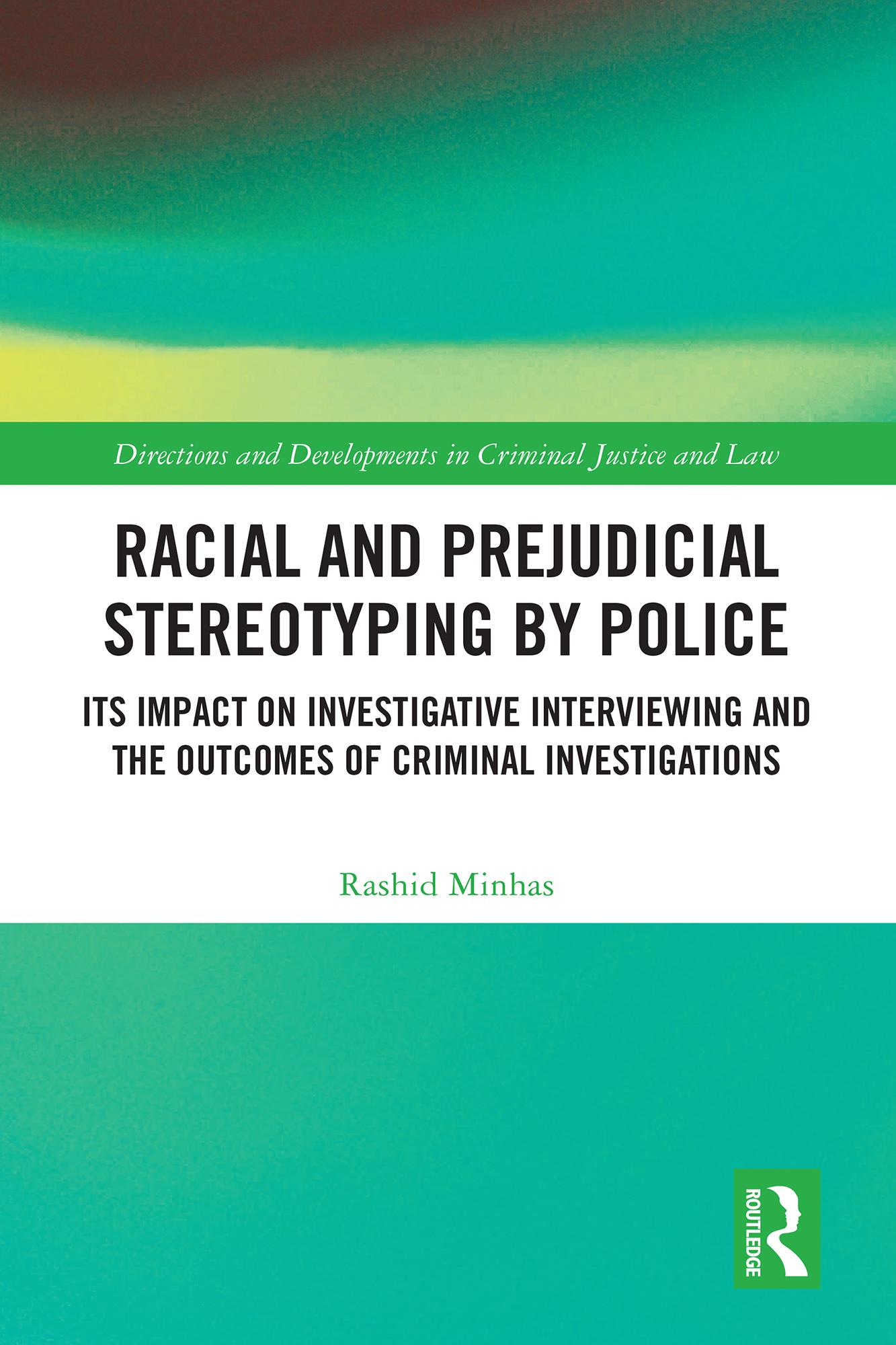
This book uncovers the influence of racial and prejudicial stereotyping during police investigation of suspects from stigmatised communities. It examines the under-researched aspect of whether and how negative stereotypes appear to influence the police interviews, investigative decision-making, and outcomes of criminal investigations when officers investigate individuals from stigmatised communities as suspects of crime.
In the United Kingdom, the United States, and Europe, the war on terror has been argued to impact adversely on existing race relations policies in the aftermath of terrorist activity in both the United States and Europe. Recent research has suggested that changes in legislation and counterterrorism measures have contributed to the construction and reinforcement of the Muslim community as a suspect, which, in turn, may result in police bias and prejudice towards members of Muslim communities. Based on novel and groundbreaking research studies, the author examines whether such police bias could influence the police investigation and interviewing processes concerning individuals from the suspect community as well as the outcome of a criminal investigation.
The author introduces the Minhas Investigative Interviewing Prejudicial Stereotyping Scale (MIIPSS), an instrument developed and used to assess the level of police interviewers’ racial and prejudicial stereotyping towards suspects from stigmatised groups, and maintains that its use would serve to minimise the influence of racial and prejudicial stereotypes on investigation. It is further suggested that the training of police officers on the implications of such prejudicial (racial/ religious) stereotyping is essential to improving interviewing performance, case outcomes, and community cohesion.
This book will benefit academics, researchers, police officers, lawyers, social policy officers, and probation officers across the globe.
Pay easily by card, Klarna, Apple Pay or Google Pay. Not happy? You always have a 14-day money-back guarantee. Read more in our terms. If you have any questions, email us at hello@memmo.org.
Memmo makes studying easier – wherever you are in the world. We bring your course books and smart study tools together in one place: summaries, quizzes, podcasts and flashcards. Plus Ted, your study buddy who answers anything you wonder. Over 50,000 students already study here – built to help you learn faster and stress less.