
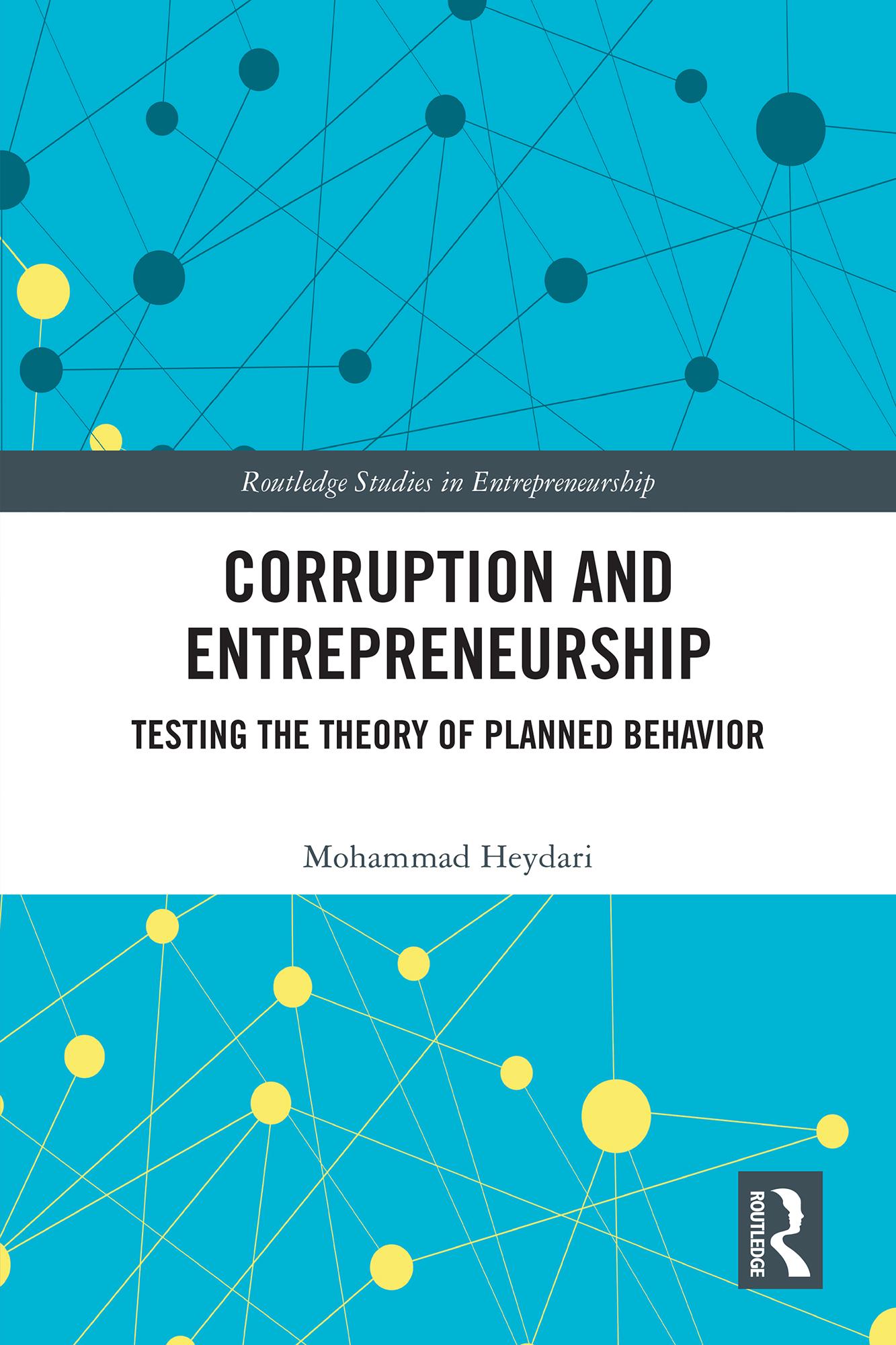
This book examines corruption as a collective behavior problem for entrepreneurs. In particular, it considers Azjen’s theory of planned behavior (TPB) to explain perceived corruption and its effects on entrepreneurship.
Heydari argues that behavioral intentions are shaped by variables such as attitude, subjective norms and perceived behavioral control. He proposes the novel Heydari Behavioral Synthesis Theory (HBST) model and applies it to two case studies to highlight the institutional, individual and societal factors that may inhibit entrepreneurial behavior. He concludes that corruption may persist not just because of difficulties in monitoring and prosecuting, but because it is systemically pervasive and discourages individual countermeasures. He closes by looking at anti-corruption policies and outlining future research directions.
Arguing that widespread corruption may be theoretically mischaracterized in the literature, this book is of interest to policy-makers, researchers and postgraduate students in the fields of management science, industrial and organizational psychology, entrepreneurship and corruption studies.
Pay easily by card, Klarna, Apple Pay or Google Pay. Not happy? You always have a 14-day money-back guarantee. Read more in our terms. If you have any questions, email us at hello@memmo.org.
Memmo makes studying easier – wherever you are in the world. We bring your course books and smart study tools together in one place: summaries, quizzes, podcasts and flashcards. Plus Ted, your study buddy who answers anything you wonder. Over 50,000 students already study here – built to help you learn faster and stress less.