
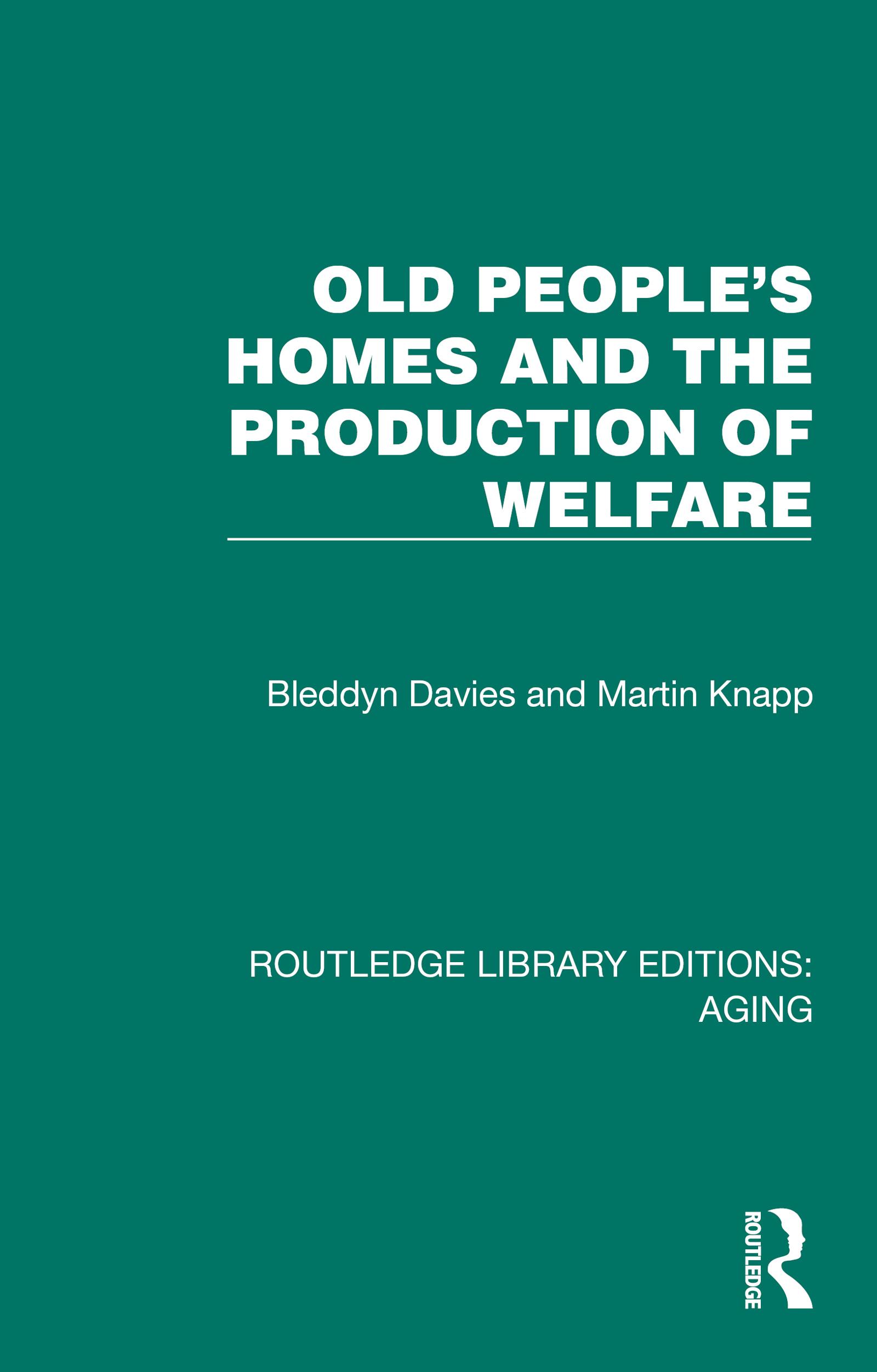
In 1980 old people comprised over half the clients of Local Authority Social Services Departments and accounted for about half of their resources, yet until then residential care of the aged had been a backwater of both research and practice. During the 1970s a large research literature had developed on the subject, particularly in the United States. However, studies had been partial in their focus on issues, making no attempt to draw together their arguments to create a model that described and evaluated competing theories about what it is that determines the quality of residential life. Originally published in 1981, Bleddyn Davies and Martin Knapp filled that gap in this book.
The authors discuss not only the theoretical arguments about residential care and the degree to which those theories had been verified by research, but also how far the factors considered to be important had been successfully measured, considering the choices to be made between alternative varieties of care that had grown up so rapidly in the previous five years. The authors conclude with an analysis of how their approach should contribute to the discussion of issues that was to be faced by British policy-makers in the 1980s as our welfare systems attempted to cope with the increasing numbers of the very old.
Pay easily by card, Klarna, Apple Pay or Google Pay. Not happy? You always have a 14-day money-back guarantee. Read more in our terms. If you have any questions, email us at hello@memmo.org.
Memmo makes studying easier – wherever you are in the world. We bring your course books and smart study tools together in one place: summaries, quizzes, podcasts and flashcards. Plus Ted, your study buddy who answers anything you wonder. Over 50,000 students already study here – built to help you learn faster and stress less.