
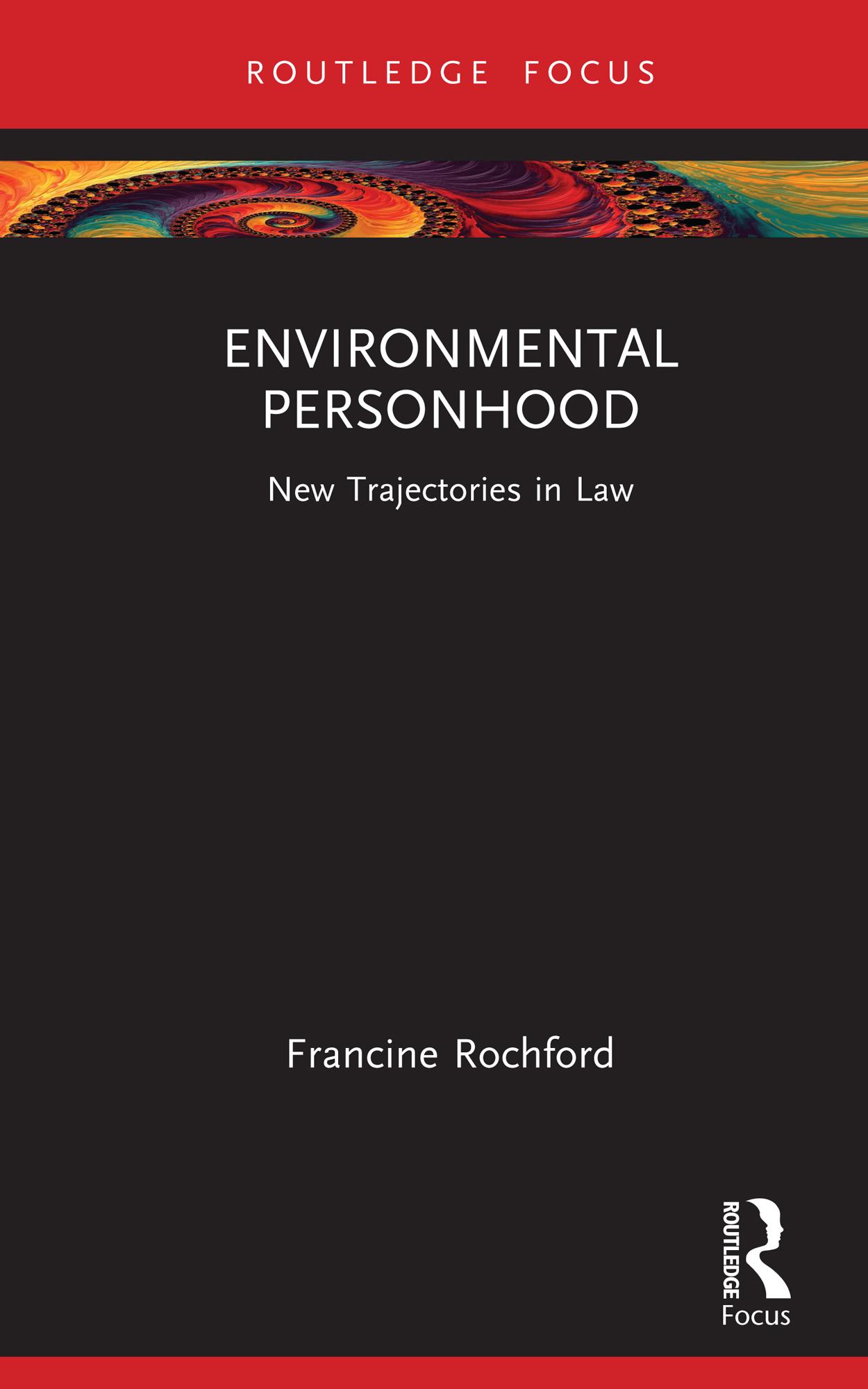
This book examines the increasingly widespread movement to recognise the environment as a legal person.
Several countries have now recognized that nature, or parts of nature, have juristic personhood. In this book, the concept of legal personhood and its incidents are interrogated with a view to determining whether this is, or could be, a positive contribution to modern environmental problems. Surveying historical and current positions on the juristic concept of legal personhood, the book engages recent legislation and case law, in order to consider the attempt in several countries to vest personhood in rivers, river basins and ecosystems. Comparing approaches in a range of countries – including New Zealand, India, Ecuador, the United States and Australia, it addresses the methods employed, the purported aims, the mechanisms for enforcement, and the entrenchment of legal protections. Throughout, the book elicits the difficult relationship between an historically anthropocentric idea of personhood and its extension beyond the human; concluding that the attribution of personhood to the environment is an important, but limited, contribution to environmental sustainability.
Accessibly written, this book will appeal to scholars, students and others with interests in environmental law, environmental science and public policy, and ecology more generally.
Pay easily by card, Klarna, Apple Pay or Google Pay. Not happy? You always have a 14-day money-back guarantee. Read more in our terms. If you have any questions, email us at hello@memmo.org.
Memmo makes studying easier – wherever you are in the world. We bring your course books and smart study tools together in one place: summaries, quizzes, podcasts and flashcards. Plus Ted, your study buddy who answers anything you wonder. Over 50,000 students already study here – built to help you learn faster and stress less.