
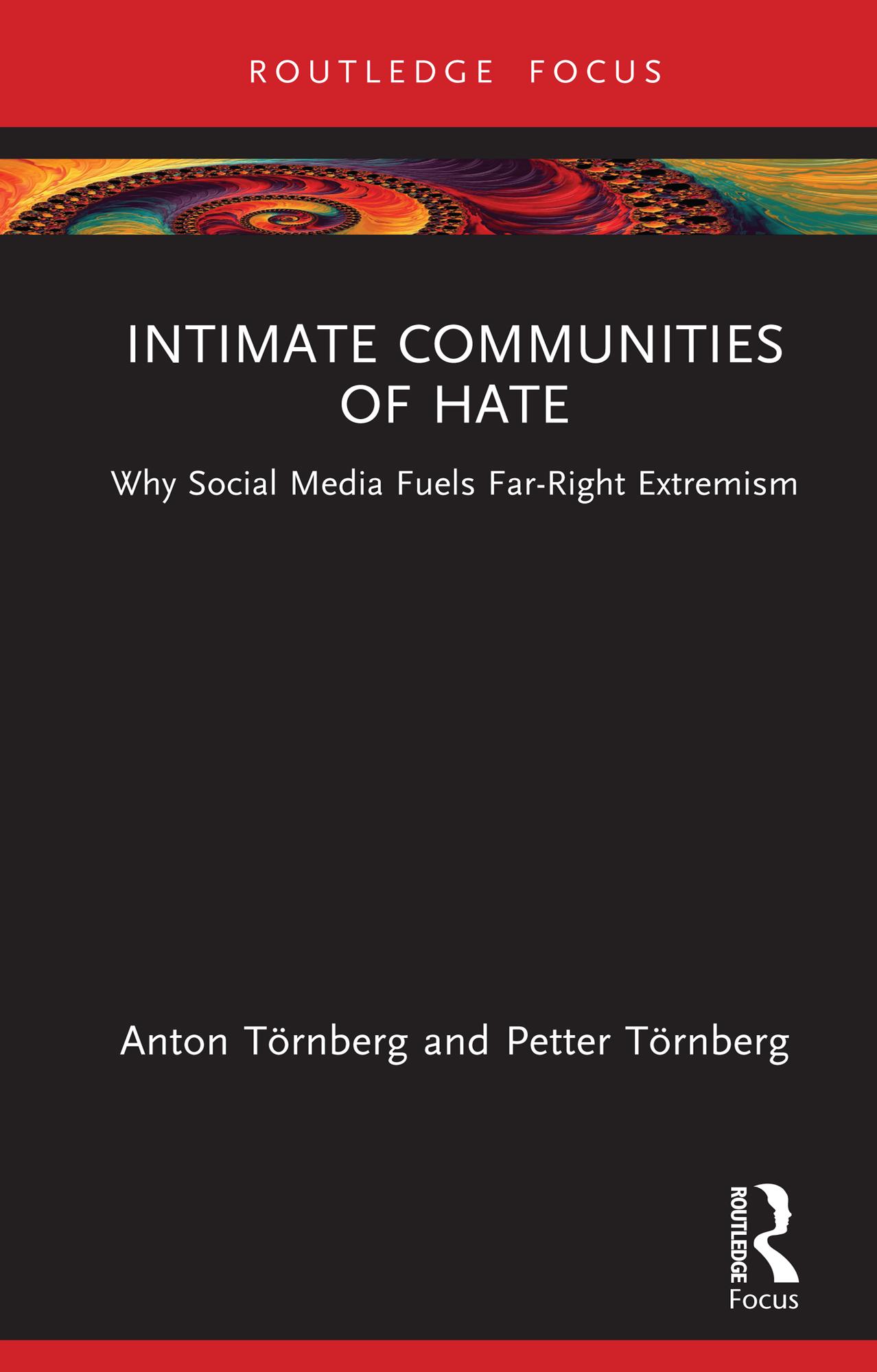
Social media has fundamentally transformed political life, driving a surge in far-right extremism. In recent years, radical anti-democratic ideologies have entered into the political mainstream, fueled by energy from extreme online environments. But why do far-right extremist movements seem to thrive so well on social media platforms? What takes place within the fringe online spaces that seem to function as incubators for violent extremists? To answer these questions, this book goes inside the “murder capital of the racist Internet”, examining 20 years of conversations on Stormfront.org. Using a combination of computational text analysis and close reading, we seek a deeper understanding of the emotional and social effects of being part of an extremist community. We lay the foundation of a new way of understanding online extremism, building on the tradition of Émile Durkheim and Randall Collins. We find that online radicalization is not merely an effect of repeated one-sided arguments, as suggested by metaphors such as “echo chambers”. Instead, social media politics can be better understood through Durkheim’s concept of rituals: moments of shared attention and emotion that create emotional energy and a sense of intersubjectivity, weaving from participants a political tribe – united, energized, and poised to act.
Pay easily by card, Klarna, Apple Pay or Google Pay. Not happy? You always have a 14-day money-back guarantee. Read more in our terms. If you have any questions, email us at hello@memmo.org.
Memmo makes studying easier – wherever you are in the world. We bring your course books and smart study tools together in one place: summaries, quizzes, podcasts and flashcards. Plus Ted, your study buddy who answers anything you wonder. Over 50,000 students already study here – built to help you learn faster and stress less.