
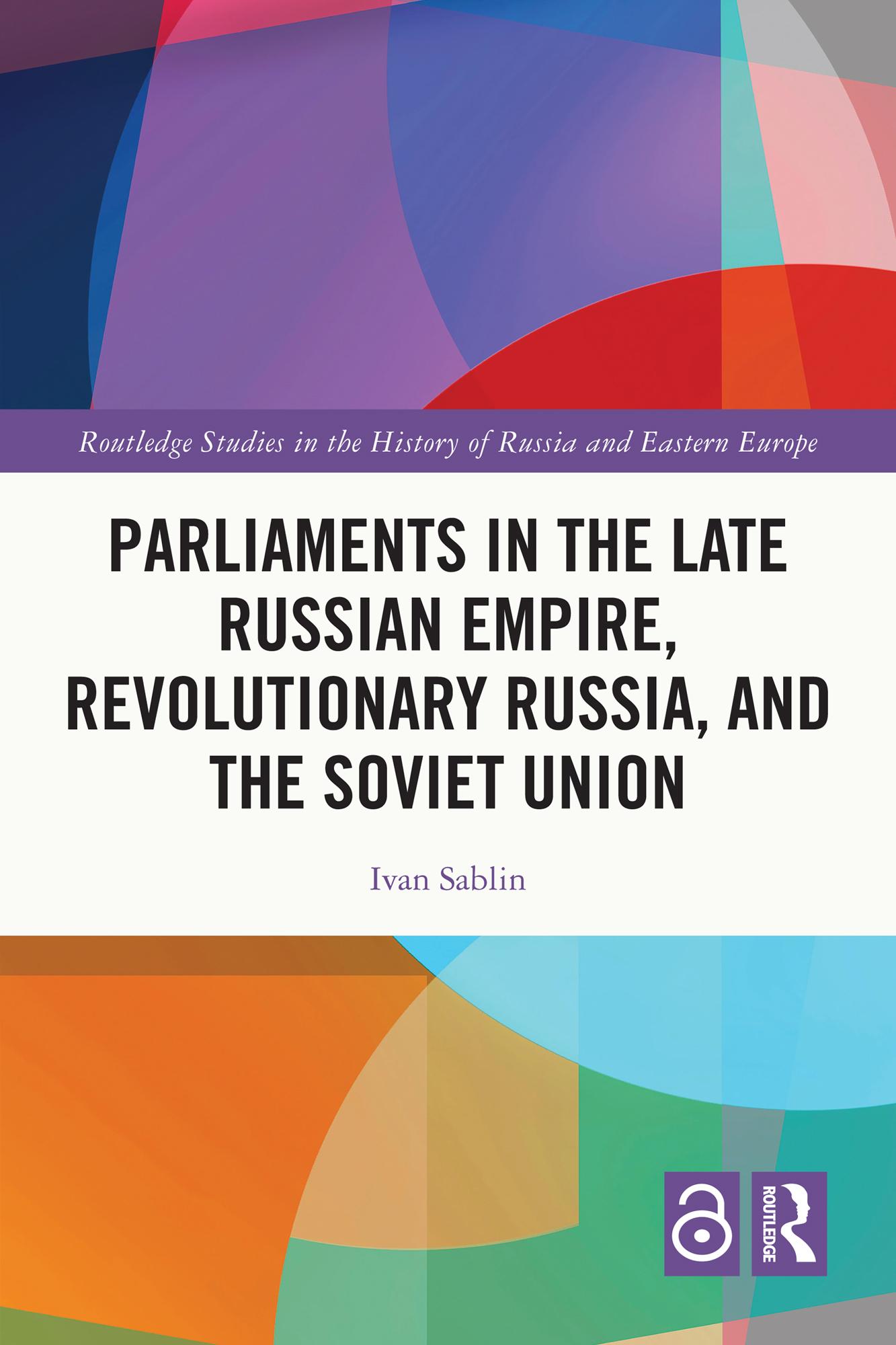
This book examines the meanings that were attached to the terms “parliament” and “parliamentarism” in the different historical and discursive contexts of the late Russian Empire, revolutionary and Soviet Russia, and the Soviet Union. It discusses those institutions referred to as parliaments by contemporaries, gives special attention to their functions, and traces the broader debates on parliamentarism within Russia and the Soviet Union, in Russian émigré circles, and among foreign observers. It highlights that only the late imperial and perestroika assemblies can be considered legislative institutions that expressed dissensus but argues that other assemblies, often referred to as “rubber-stamp” parliaments due to their lack of legislative competence and influence over other authorities, should not be dismissed. The Supreme Soviet, for instance, provided an integrative function binding society and elites in a top-down manner, while its deputies engaged in information acquisition and state micromanagement through interactions with their constituents. It also played an important role in interparliamentary relations and, as one of the first institutions of nominal parliamentarism in an autocratic single-party regime, of which there were many in the twentieth century, served as a model for numerous state socialist regimes. By addressing the role of parliaments in reassembling imperial spaces through political representation and the functions of nominal legislative institutions, the book explores the contribution of Russian and Soviet assemblies to global political modernity.
Winner of the 2024 Ab Imperio Best Book Award for the best study in new imperial history and history of diversity in Northern Eurasia, up to the late twentieth century.
Pay easily by card, Klarna, Apple Pay or Google Pay. Not happy? You always have a 14-day money-back guarantee. Read more in our terms. If you have any questions, email us at hello@memmo.org.
Memmo makes studying easier – wherever you are in the world. We bring your course books and smart study tools together in one place: summaries, quizzes, podcasts and flashcards. Plus Ted, your study buddy who answers anything you wonder. Over 50,000 students already study here – built to help you learn faster and stress less.