
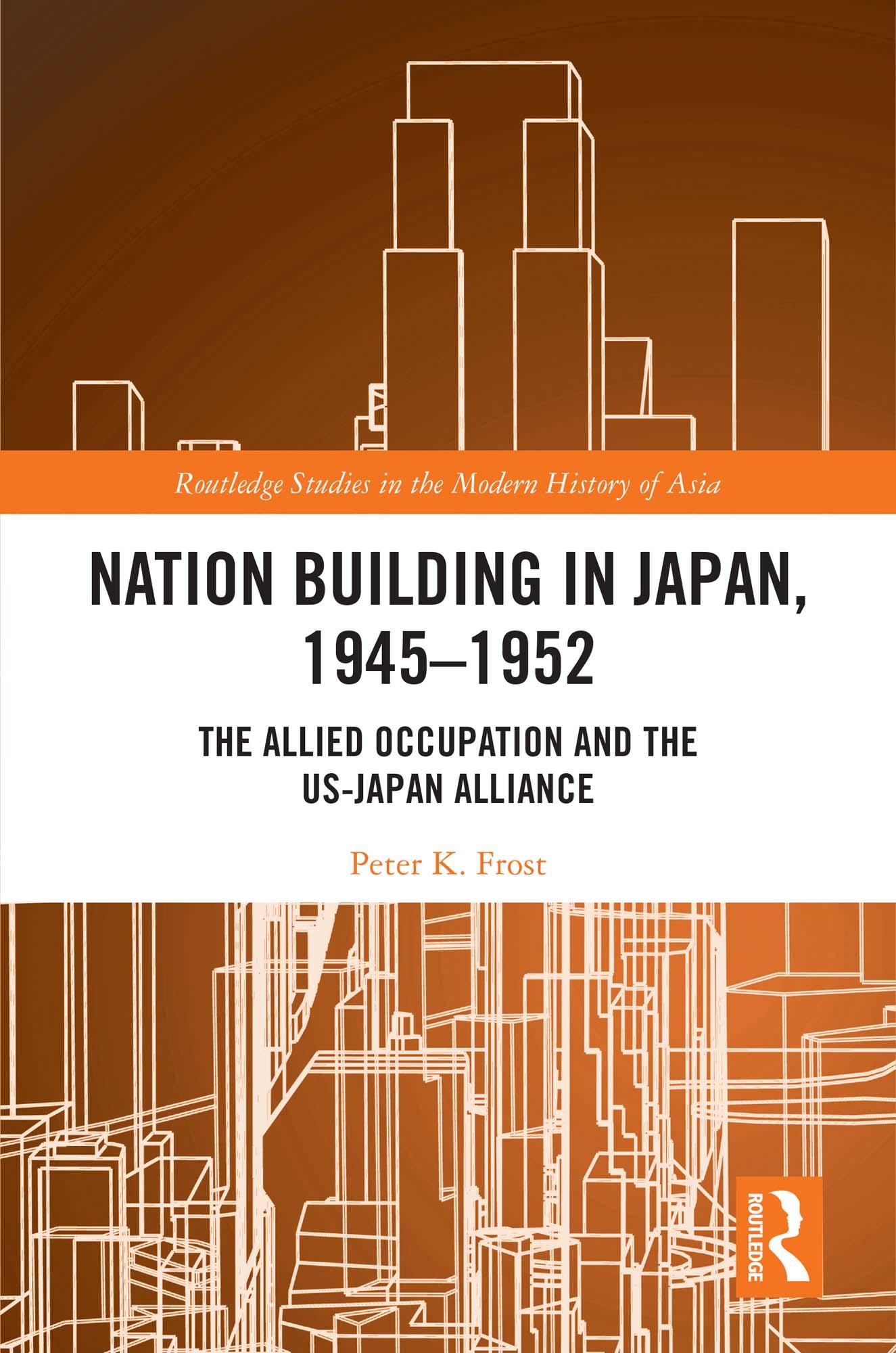
This book analyzes the Allied Occupation of Japan (1945–1952). It begins by explaining why Japan spent roughly fifty years building its own colonial system and declaring war on China and the Western Allies, only to decide after military defeats, two atomic bombings and the Soviet declaration of war, to surrender before being invaded. It goes on to describe the controversial issues surrounding the conduct of the Occupation forces, the largely American reform proposals and the shifts in policy as the Cold War developed. Particular emphasis is placed on women’s issues, the Japanese and American reactions to President Truman’s decision to fire General Douglas MacArthur, the tensions surrounding the requirement that the Japanese allow US military bases to stay in Japan and the still ongoing debate over the American decision to drop two atomic bombs on Japan. Despite all this, the book concludes that particularly when compared with later Allied nation building efforts in Vietnam, Afghanistan and Iraq and the current state of US politics, the Occupation experience was, on the whole, a relatively positive one for both the Japanese and the US-Japan alliance.
Pay easily by card, Klarna, Apple Pay or Google Pay. Not happy? You always have a 14-day money-back guarantee. Read more in our terms. If you have any questions, email us at hello@memmo.org.
Memmo makes studying easier – wherever you are in the world. We bring your course books and smart study tools together in one place: summaries, quizzes, podcasts and flashcards. Plus Ted, your study buddy who answers anything you wonder. Over 50,000 students already study here – built to help you learn faster and stress less.