
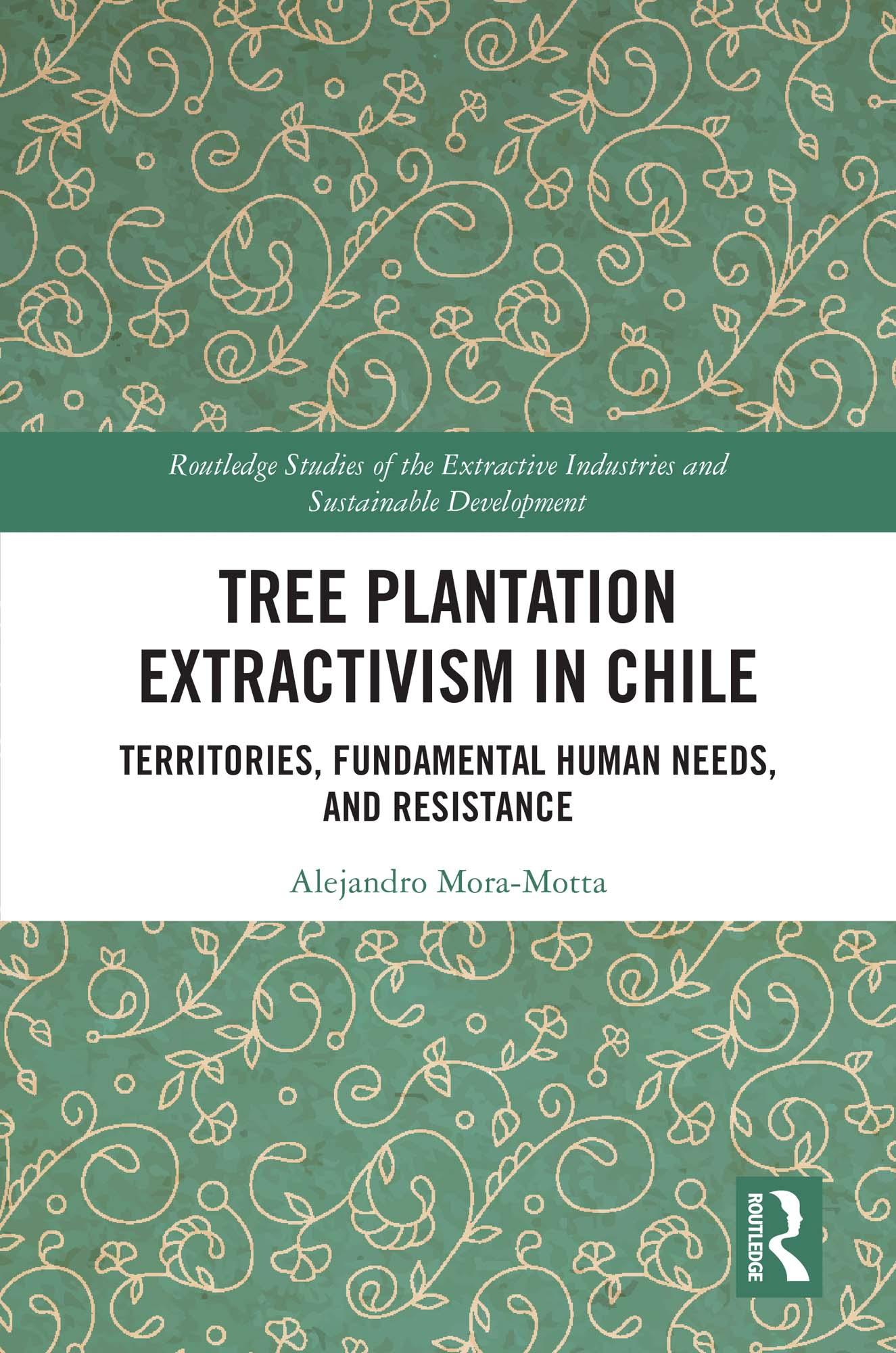
This book examines how extractivism transforms territories and affects the well-being of rural people, drawing on in-depth fieldwork conducted on tree plantations in Chile.
The book argues that pine and eucalyptus monoculture plantations in southern Chile are a form of extractivism representing a mode of nature appropriation that captures large amounts of natural resources to produce wooden-based raw materials with little processing and an export-oriented focus. The book discusses the nexus of extractivism, territorial transformations, well-being, and emerging resistances using a participatory action research methodological approach in the Region of Los Ríos, southern Chile. The findings show how the configuration of an extractivist logging enclave generated a substantial and irrevocable reordering of human-nature relations, resulting in the territorial and ontological occupation of rural places that disrupted the fundamental human needs of peasants and indigenous people. The book maintains that Chile's green growth development approach does not challenge the consolidated tree plantation enclave controlled by large multinationals. Instead, green growth legitimises the extractivist logic. The book draws parallels with other countries and regions to contribute to wider debates surrounding these topics.
This book will be of great interest to students and scholars of the extractive industries, development studies, political ecology, and natural resource governance.
Pay easily by card, Klarna, Apple Pay or Google Pay. Not happy? You always have a 14-day money-back guarantee. Read more in our terms. If you have any questions, email us at hello@memmo.org.
Memmo makes studying easier – wherever you are in the world. We bring your course books and smart study tools together in one place: summaries, quizzes, podcasts and flashcards. Plus Ted, your study buddy who answers anything you wonder. Over 50,000 students already study here – built to help you learn faster and stress less.