
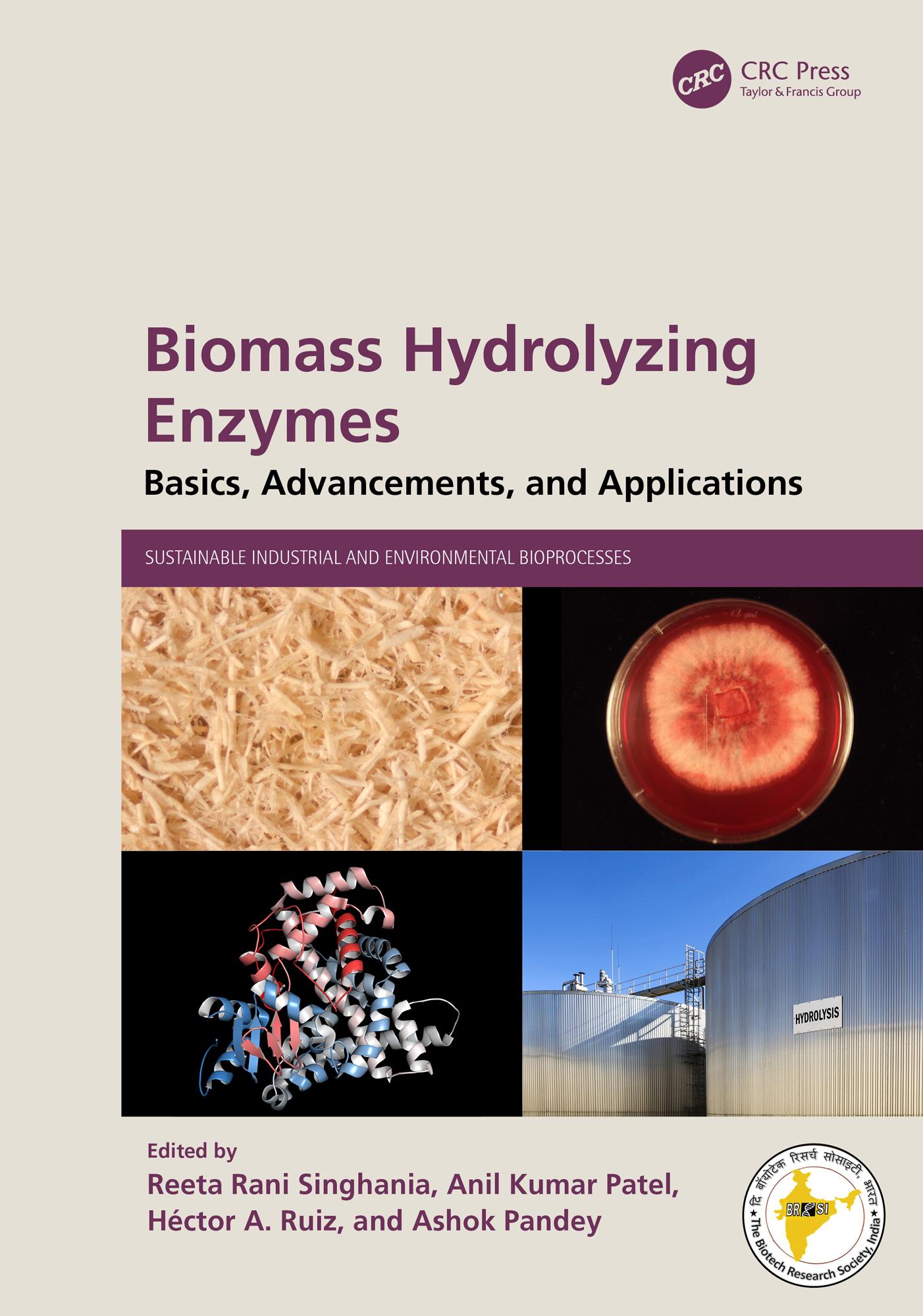
This reference book provides advanced knowledge about lignocellulosic biomass production and its application in biomass hydrolysis. Lignocellulosic biomass is the most abundant, ubiquitous, and renewable raw material in the world. Though biomass can be deconstructed by other means, biological ways through enzymes are eco-friendly and sustainable. Biomass Hydrolyzing Enzymes: Basics, Advancements, and Applications discusses the different enzymes used for degrading biomass into its monomeric components. It covers important topics like biorefineries, hydrolysis of algal mass, kinetic modelling for hydrolysis, inhibitory effects, and more.
Key Features
- Highlights recent developments in biorefineries, specific enzymes, inhibitor tolerance, and enhanced efficiencies
- Provides details on various kinds of biomass hydrolysis including algal biomass
- Includes the best practices for getting economic and efficient high conversions of biomass
- Covers strategies to be adopted for increasing the production of highly efficient enzymes
- Explores the advancements in lignocellulosic biomass hydrolysis
The book is suitable for researchers and students in biotechnology, applied microbiology, and environmental sciences.
Pay easily by card, Klarna, Apple Pay or Google Pay. Not happy? You always have a 14-day money-back guarantee. Read more in our terms. If you have any questions, email us at hello@memmo.org.
Memmo makes studying easier – wherever you are in the world. We bring your course books and smart study tools together in one place: summaries, quizzes, podcasts and flashcards. Plus Ted, your study buddy who answers anything you wonder. Over 50,000 students already study here – built to help you learn faster and stress less.