
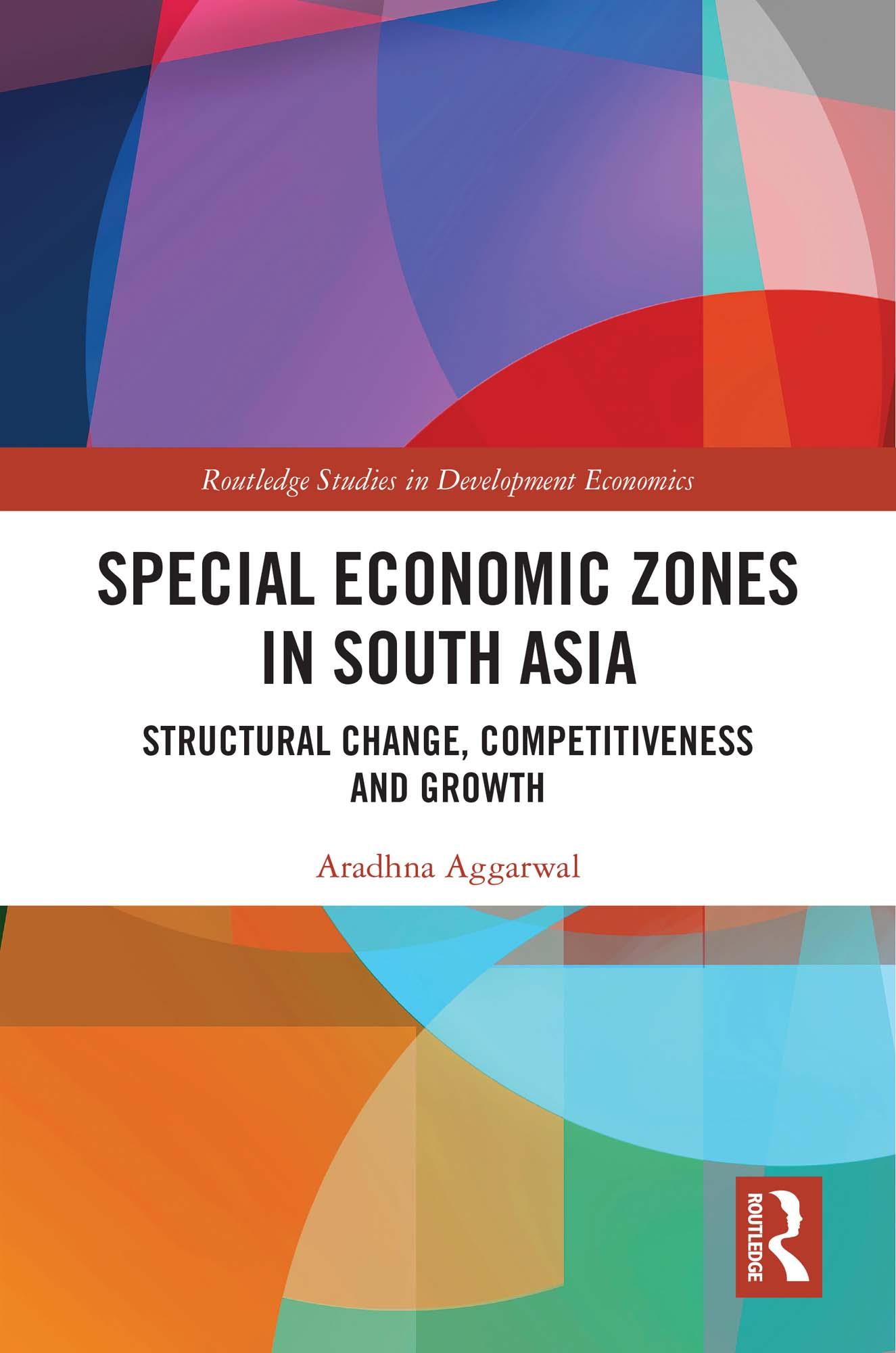
Growth‑enhancing structural change—a relocation of labour from low‑ to high‑productivity sectors—is increasingly perceived as inextricably linked with the sustainable development agenda. In the pursuit of structural change, policymakers have pinned their hopes on targeted policy tools such as special economic zones (SEZs). These geographically demarcated spaces designed to attract investment with a wide set of advantages have become de rigueur; however, a systematic evaluation of evidence‑informed policymaking is scarce due to conceptual and practical challenges. This book fills that gap and shows that SEZs are no ‘shortcut’ to economic development; their success in driving economic transformation depends on the complex interplay of sociopolitical, economic and strategic factors.
This book contributes to the burgeoning literature on SEZs by providing the first systematic evaluation of the SEZ policy. It adopts the ‘policy cycle approach’ to organise policy evaluation into three hierarchical layers: input evaluation (agenda building), output evaluation (policy designs) and outcome evaluation (immediate effects of SEZs on firms’ behaviour and performance) with special reference to South Asian countries. The strategy is to bring together the findings of microeconomic evaluations to draw macro inferences on the contribution of SEZs to the broader objectives of structural transformation and competitiveness. Part I of the book delves into development challenges facing the region, lays out theoretical foundations underlying the relevance of SEZs in addressing them and examines the relevance of SEZs in the context of South Asia. Part II evaluates the policy first at systemic level to gauge whether and how the policy is rooted in broader development goals and then at the design level to examine the fit between the policy goals and designs. Part III presents a counterfactual evaluation of the impact of SEZs on investment climate; export competitiveness of firms; technology and innovation; and knowledge linkages of SEZ firms with the wider economy. The final chapter concludes by discussing the emerging challenges and the way forward.
This will be a useful reference for academics, researchers, policymakers and professionals in international trade and business, public policy, industrial economics and regional integration.
Pay easily by card, Klarna, Apple Pay or Google Pay. Not happy? You always have a 14-day money-back guarantee. Read more in our terms. If you have any questions, email us at hello@memmo.org.
Memmo makes studying easier – wherever you are in the world. We bring your course books and smart study tools together in one place: summaries, quizzes, podcasts and flashcards. Plus Ted, your study buddy who answers anything you wonder. Over 50,000 students already study here – built to help you learn faster and stress less.