
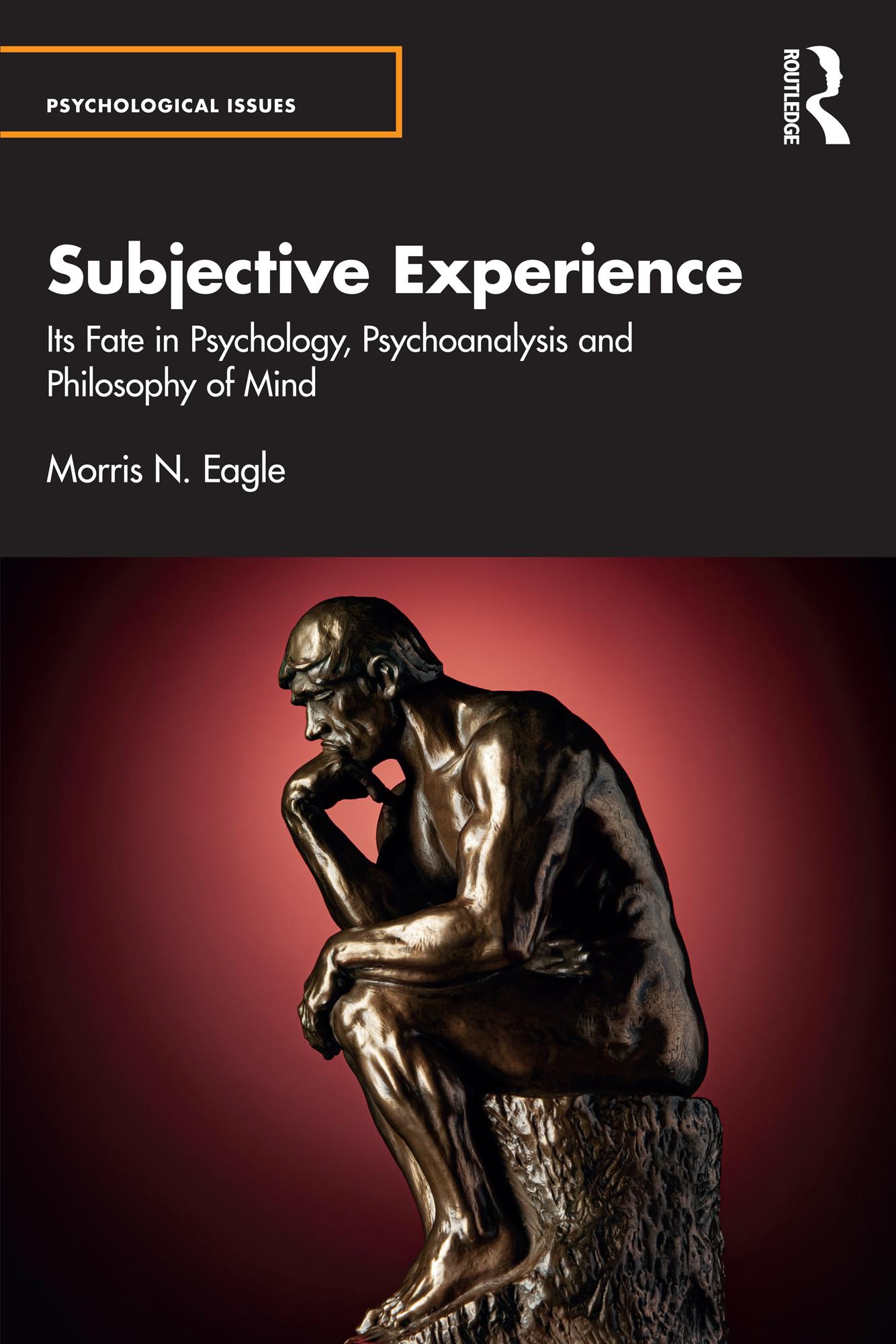
Morris N. Eagle explores the understanding and role of subjective experience in the disciplines of psychology, psychoanalysis, and philosophy of mind.
Elaborating how different understandings of subjective experience give rise to very different theories of the nature of the mind, Eagle then explains how these shape clinical practices. In particular, Eagle addresses the strong tendency in the disciplines concerned with the nature of the mind to overlook the centrality of subjective experience in one's life, to view it with suspicion, and to reduce it to neural processes. Describing examples of research in which subjective experience is a central variable, Eagle provides an outline of a model in which the dichotomy of conscious and unconsious is supplemented by subjective experience as a continuum.
This book is essential reading for psychoanalysts, psychoanalytic psychotherapists, psychologists and anyone wishing to gain a deeper understanding of the importance of theories of the mind to therapeutic practice.
Pay easily by card, Klarna, Apple Pay or Google Pay. Not happy? You always have a 14-day money-back guarantee. Read more in our terms. If you have any questions, email us at hello@memmo.org.
Memmo makes studying easier – wherever you are in the world. We bring your course books and smart study tools together in one place: summaries, quizzes, podcasts and flashcards. Plus Ted, your study buddy who answers anything you wonder. Over 50,000 students already study here – built to help you learn faster and stress less.