
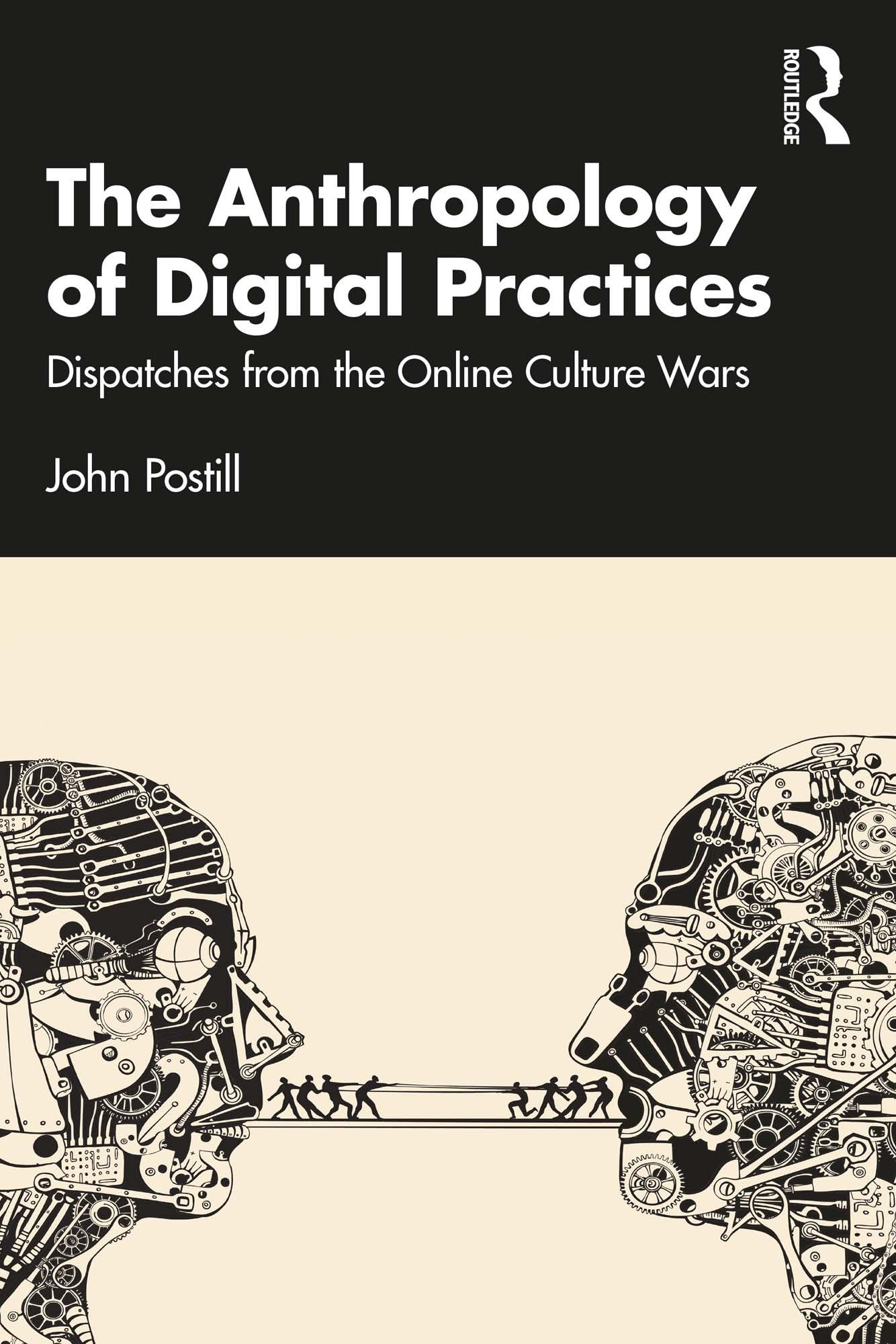
The Anthropology of Digital Practices connects for the first time three distinct research areas – digital ethnography, causal ethnography, and media practice theory – to explore how we might track the effects of new media practices in a digital world. It invites media and communication students and scholars to overcome the field’s old aversion to ‘media effects’ and explores the messy, complex, open-ended effects of new media practices in a digital age.
Based on long-term ethnographic research and drawing from recent advances in the study of causality and ethnography, this book tells the ‘formation story’ of the anti-woke movement through a series of critical media events. It argues that digital media practices (e.g. podcasting, YouTubing, tweeting, commenting, broadcasting) will have ‘formative’ effects on an emerging social world at different points in time. One important task of the digital ethnographer is precisely to distinguish between the formative and non-formative effects of specific media practices.
This book makes three contributions to our understanding of media practices in the digital era, namely a theoretical, methodological, and empirical contribution. Theoretically, it furthers the ‘practice turn’ in media and communication studies by engaging with the latest thinking on causality and ethnography. Methodologically, it serves as a compelling, up-to-date guide to doing digital ethnography, with special reference to the study of digitally mediated practices. Empirically, it is the first book-length study of the anti-woke movement, a major actor in the ‘culture wars’ currently being fought across the Western world.
With its accessible language and rich case studies, The Anthropology of Digital Practices will make an ideal supplementary textbook for a range of undergraduate and graduate courses in research methods, digital ethnography/anthropology, and digital activism.
Pay easily by card, Klarna, Apple Pay or Google Pay. Not happy? You always have a 14-day money-back guarantee. Read more in our terms. If you have any questions, email us at hello@memmo.org.
Memmo makes studying easier – wherever you are in the world. We bring your course books and smart study tools together in one place: summaries, quizzes, podcasts and flashcards. Plus Ted, your study buddy who answers anything you wonder. Over 50,000 students already study here – built to help you learn faster and stress less.