
Emergencies are ubiquitous in 21st-century societal discourses. From the rise of emergency pronouncements in the United States since 9/11 accompanied by the associated violations of fundamental rights, through talks of ‘crises’ in the EU in relation to the economy, Putin’s occupation of Crimea (as recently amplified by the full-scale invasion of Ukraine) or refugees, to the long-neglected looming climate catastrophe, emergency discourses have been catapulted to the centre of attention by the critical juncture of the COVID-19 pandemic.
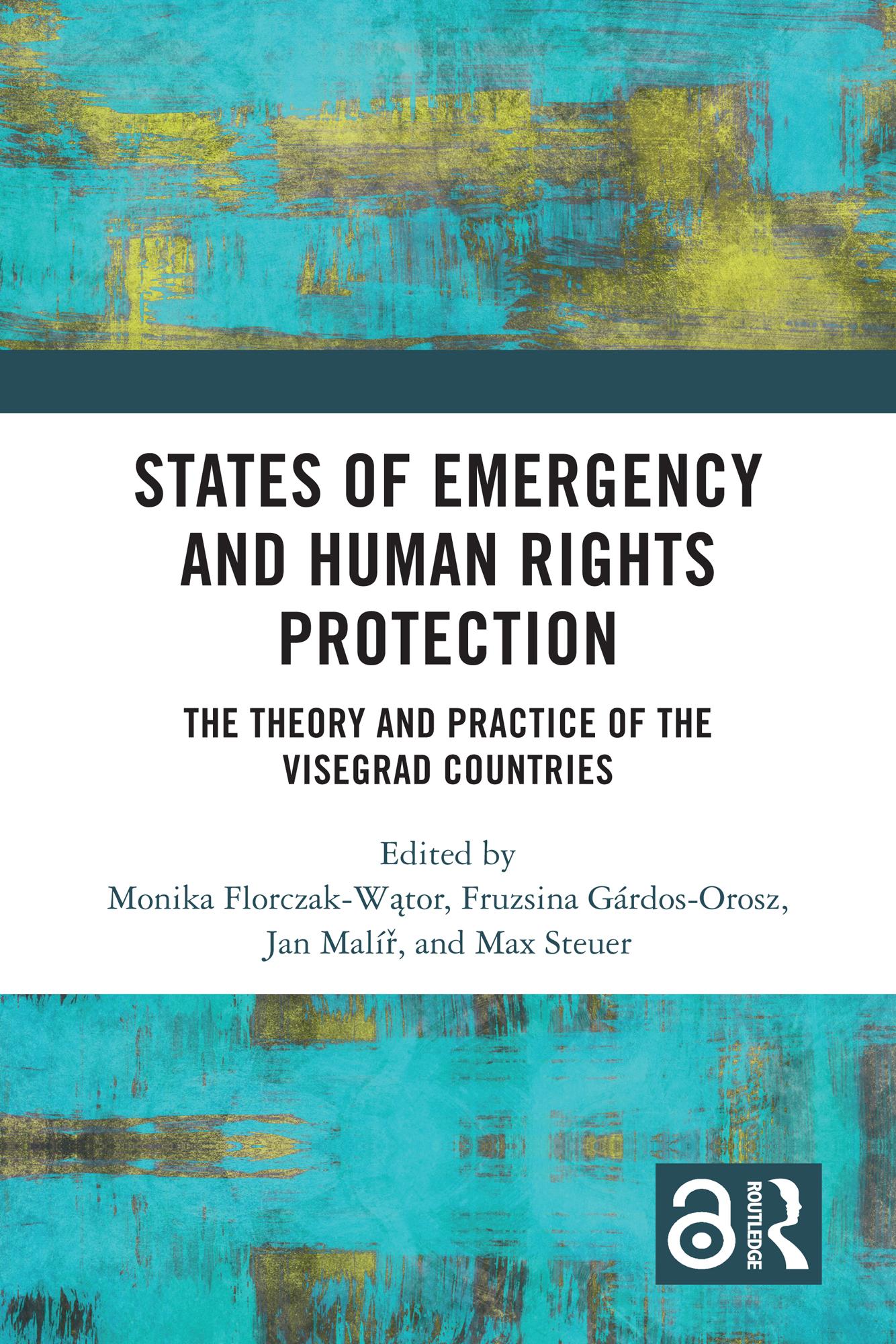
This volume presents and compares the existing regulations and practices of emergencies and human rights protection in the Visegrad (V4) countries. As such, the analysis covers Czech Republic, Hungary, Poland, and Slovakia. Although these European countries share a common historical experience and are now members of the EU and NATO, they differ in some of their constitutional traditions and, also, in the dynamics of their political regimes. Divided into three parts, the first two comprehensively discuss the constitutional models of emergency and human rights protection in each of the V4 countries, while the third part illustrates how these models and the general framework of rights protection materialised in the limitations of the selected human rights during the COVID-19 pandemic.
The volume provides a compass for more in-depth, comparative, and interdisciplinary inquiries into the forms and practices of emergencies in one of the EU regions that faces illiberalisation and the consequences of the ongoing invasion of Ukraine by the Russian Federation on its eastern borders. It will be a valuable resource for academics, researchers, and policymakers working in the areas of Constitutional Law and Politics.
The Introduction, Chapter 7 and Chapter 10 of this book are freely available as a downloadable Open Access PDF at http://www.taylorfrancis.com under a Creative Commons Attribution-Non Commercial-No Derivatives (CC-BY-NC-ND) 4.0 license.
Pay easily by card, Klarna, Apple Pay or Google Pay. Not happy? You always have a 14-day money-back guarantee. Read more in our terms. If you have any questions, email us at hello@memmo.org.
Memmo makes studying easier – wherever you are in the world. We bring your course books and smart study tools together in one place: summaries, quizzes, podcasts and flashcards. Plus Ted, your study buddy who answers anything you wonder. Over 50,000 students already study here – built to help you learn faster and stress less.