
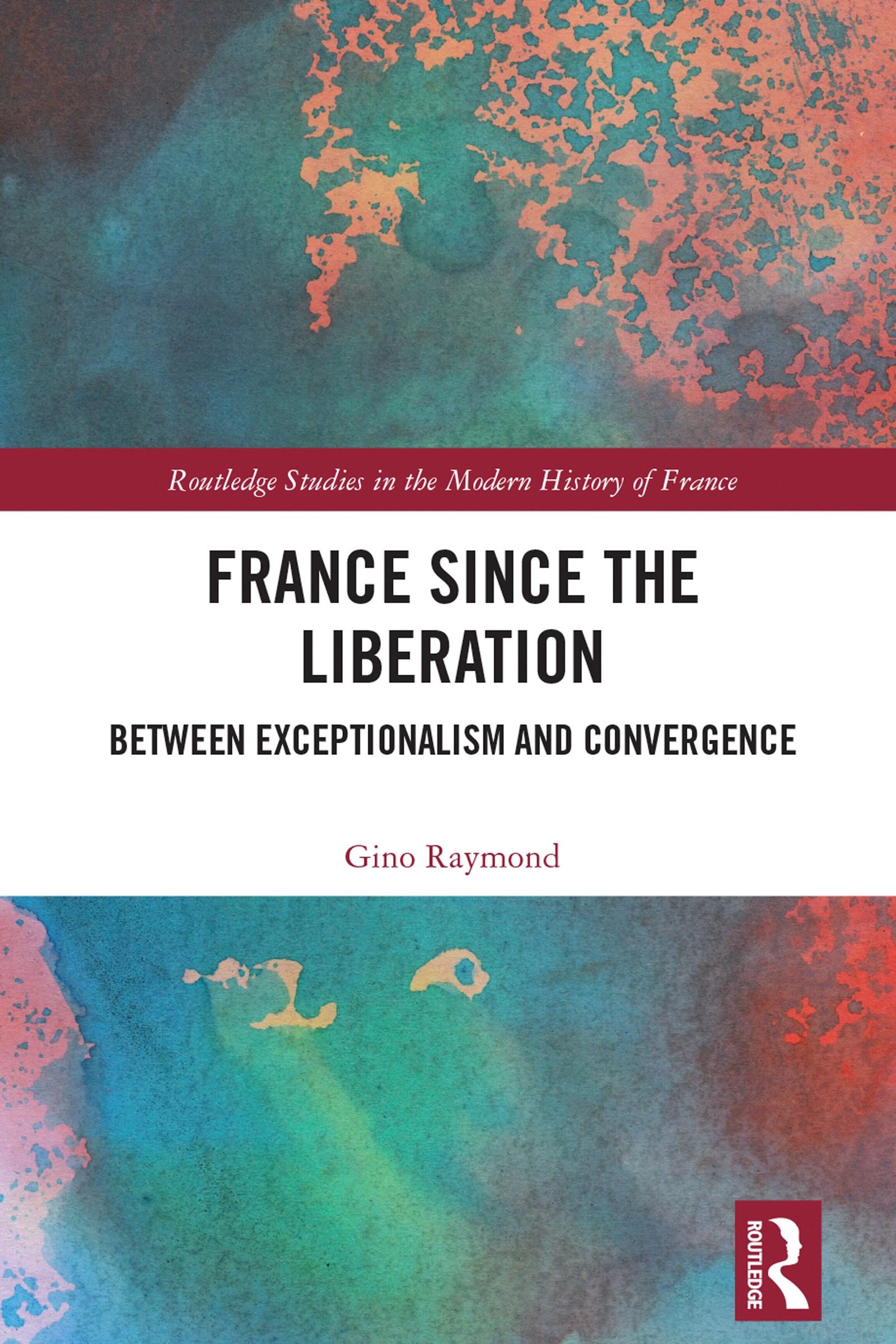
This book focuses on the tension between the modernising thrust that places France on a trajectory of convergence with comparable liberal democracies and the defence of a national specificity that can act as a brake, complicating France’s relationship with its neighbours, its present and its past.
This ambivalence in French political and social life stems from the conscious attempt to rebuild the nation after the trauma of Occupation during World War II and the new beginning provided by the Liberation. The government of the Fourth Republic embraced the pursuit of a modernisation that would enable it to regain its place among the world’s leading democratic states. However, this modernising ambition co-exists with the belief in a specific destiny and a unique sense of mission that are intrinsic to the emergence of a sense of nationhood after the revolution of 1789. Raymond defines a critical perspective that draws together historical, economic, social, and political issues into a coherent understanding of what makes France the way it is today.
Written with both academic rigour and a highly accessible clarity of style, this volume is a valuable resource for students, educators, and researchers in French and European Studies.
Pay easily by card, Klarna, Apple Pay or Google Pay. Not happy? You always have a 14-day money-back guarantee. Read more in our terms. If you have any questions, email us at hello@memmo.org.
Memmo makes studying easier – wherever you are in the world. We bring your course books and smart study tools together in one place: summaries, quizzes, podcasts and flashcards. Plus Ted, your study buddy who answers anything you wonder. Over 50,000 students already study here – built to help you learn faster and stress less.