
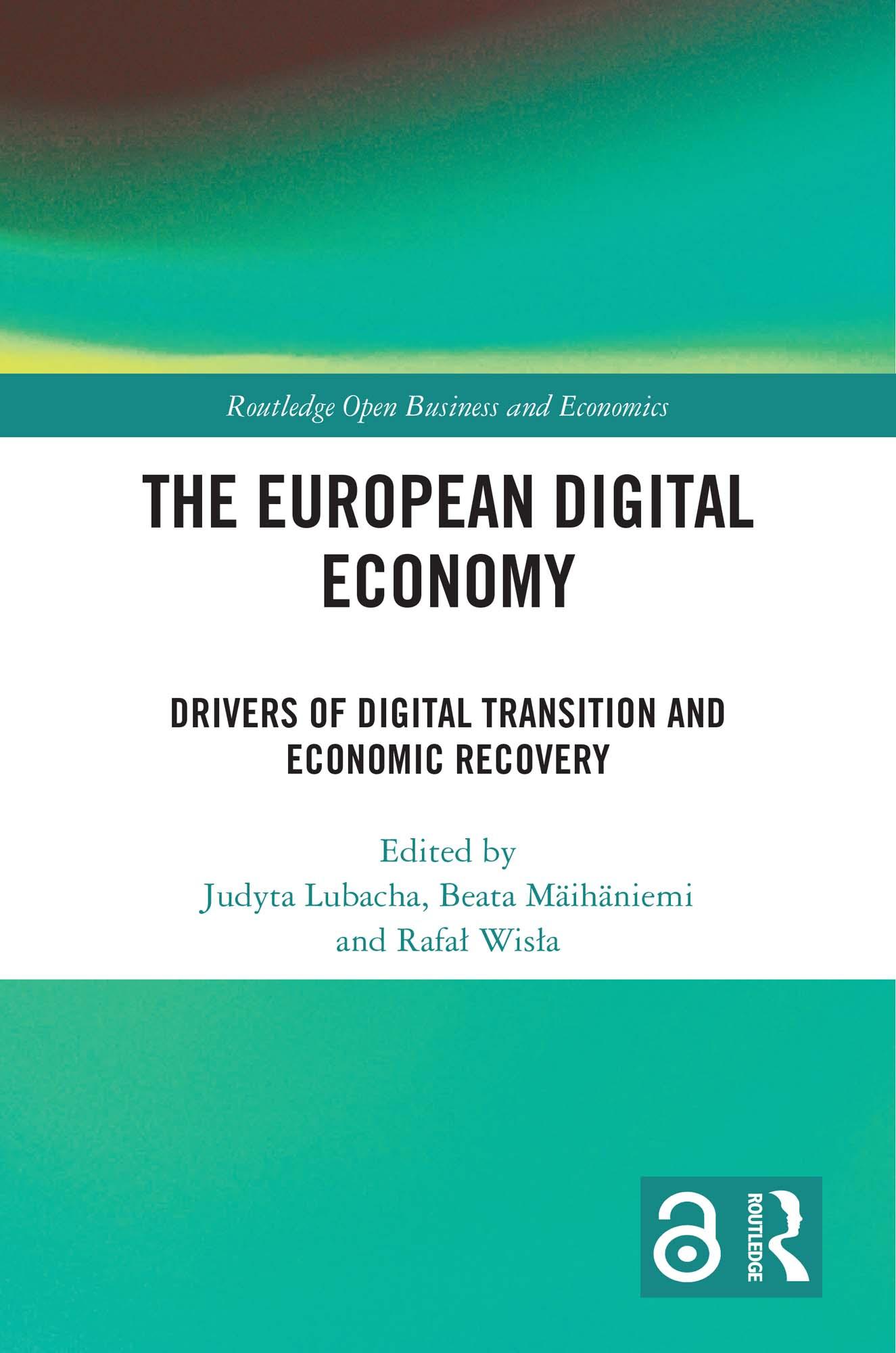
The “digital economy” is a conceptual umbrella referring to markets, organizations and their networks that are based on digital technologies, communication, data processing and e-commerce. It is multidimensional and its dynamic structure must be analysed from various dimensions, such as economic – changes in the nature of resources, production factors and economic processes; technological – technological progress viewed from a macroeconomic perspective vs. technological innovation viewed from a microeconomic perspective; regulatory – challenges facing regulators, new risks affecting the institutional order; and sociological – changes in society’s functioning principles, attitudes towards work and human relations.
The purpose of this book is to analyse the effectiveness of digital technologies as well as the fundamental factors that contribute to technological progress in the long run. It also examines structural and qualitative shifts in economies and societies. It investigates many research questions, such as the gap between the level of digital economic development in European Union countries; digital transformation and its impact on workplace skills development patterns; and also the legal framework for data as resource. The book approaches these issues from a multidisciplinary perspective, from law to economics and sociology. It focuses on definitional discussions, the measurement challenges, drivers for digital transition, the impact on labour relations, digital skills and education, data reuse and data extractivism.
This is a comprehensive introduction to the different contexts from which the digital economy can be addressed, offering an innovative method for studying this complex phenomenon, and as such, it will be a valuable resource for students, scholars and researchers across a range of disciplines.
The Open Access version of this book, available at www.taylorfrancis.com, has been made available under a Creative Commons Attribution-Non Commercial-No Derivatives (CC-BY-NC-ND) 4.0 license.
Pay easily by card, Klarna, Apple Pay or Google Pay. Not happy? You always have a 14-day money-back guarantee. Read more in our terms. If you have any questions, email us at hello@memmo.org.
Memmo makes studying easier – wherever you are in the world. We bring your course books and smart study tools together in one place: summaries, quizzes, podcasts and flashcards. Plus Ted, your study buddy who answers anything you wonder. Over 50,000 students already study here – built to help you learn faster and stress less.