
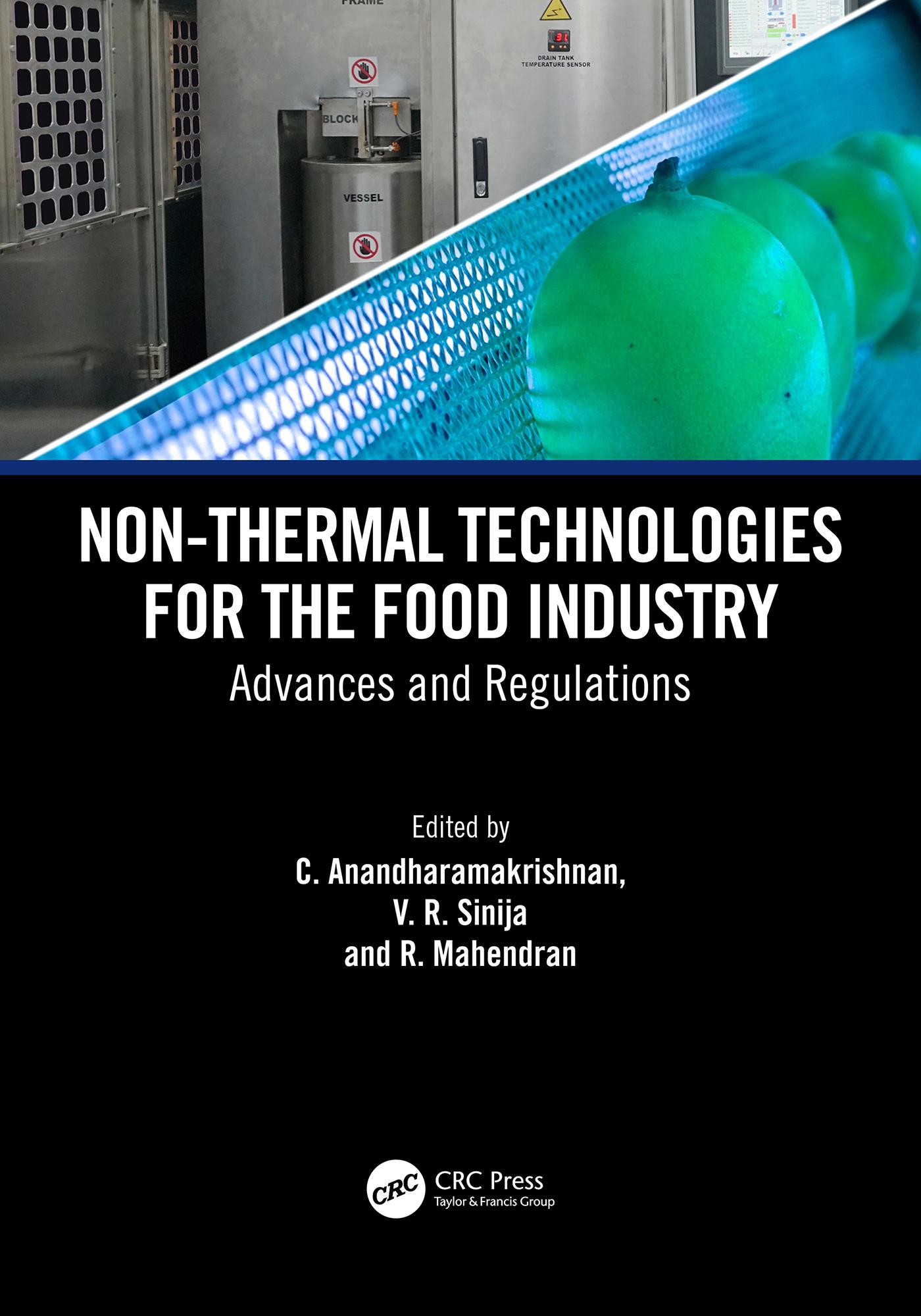
Depending on the mechanisms involved in non-thermal technologies (such as ozonization, irradiation, ultrasound processing, plasma processing, and advanced oxidative processes), interaction with food molecules differs, which might lead to desirable reactions. Non-Thermal Technologies for the Food Industry: Advances and Regulations explores the possibility of using non-thermal technologies for various purposes such as shelf-life extension, reduced energy consumption, adhesion, and safety improvement. Further, it reviews the present status of these technologies, international regulations, and sustainability aspects in food processing including global case studies.
Features:
- Provides a comprehensive overview of all the non-thermal processing technologies that have potential for use within food manufacturing
- Covers novel disinfectant technologies and packaging methods for non-thermal processing
- Includes electro-spraying and electrospinning; low-temperature drying techniques, cold plasma techniques, hydrodynamic cavitation, oscillating magnetic field processing, and so forth
- Focus on topics such as the valorization of agri-food wastes and by-products and sustainability
- Reviews ClO2 in combined/hybrid technologies for food processing
This book is aimed at researchers and graduate students in food and food process engineering.
Pay easily by card, Klarna, Apple Pay or Google Pay. Not happy? You always have a 14-day money-back guarantee. Read more in our terms. If you have any questions, email us at hello@memmo.org.
Memmo makes studying easier – wherever you are in the world. We bring your course books and smart study tools together in one place: summaries, quizzes, podcasts and flashcards. Plus Ted, your study buddy who answers anything you wonder. Over 50,000 students already study here – built to help you learn faster and stress less.