
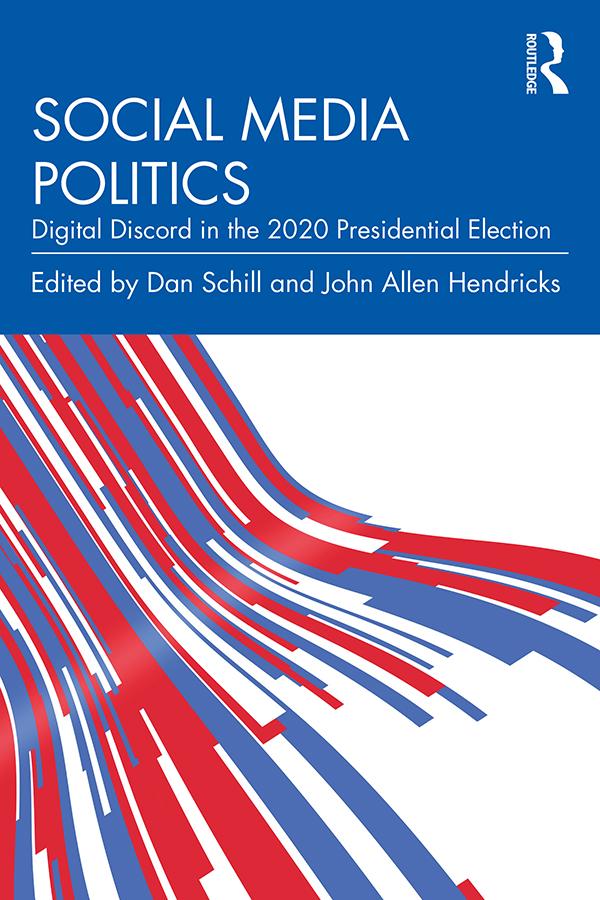
Social media and social networking services are integrated into the American political process and have profoundly influenced political communication and participation. Social media platforms have transformed the political landscape by revolutionizing information dissemination, citizen engagement, and public opinion formation and change. Politicians use social media to communicate directly with voters in an unmediated and unfiltered manner. Comparatively, voters use social media to follow the latest messaging from politicians accompanied by demonstrating their support for particular politicians.
This book is a comprehensive examination of the role of digital and social media in the 2020 U.S. presidential election. Political discourse during the 2020 election revealed political disharmony and a deep political division among vast swaths of Americans that was powered, in part, by social media. This book reveals how digital and social media have reshaped power dynamics by altering the relationships among citizens, politicians, and traditional media outlets, the emergence of new influencers, and the impact of online activism on policy agendas.
This book, Social Media Politics, includes scholars with varied backgrounds and experience, using both quantitative and qualitative methodologies, from leading research institutions around the nation. Students, scholars, and practitioners will gain new knowledge to more clearly understand the role social media played in the 2020 presidential campaign.
Pay easily by card, Klarna, Apple Pay or Google Pay. Not happy? You always have a 14-day money-back guarantee. Read more in our terms. If you have any questions, email us at hello@memmo.org.
Memmo makes studying easier – wherever you are in the world. We bring your course books and smart study tools together in one place: summaries, quizzes, podcasts and flashcards. Plus Ted, your study buddy who answers anything you wonder. Over 50,000 students already study here – built to help you learn faster and stress less.