
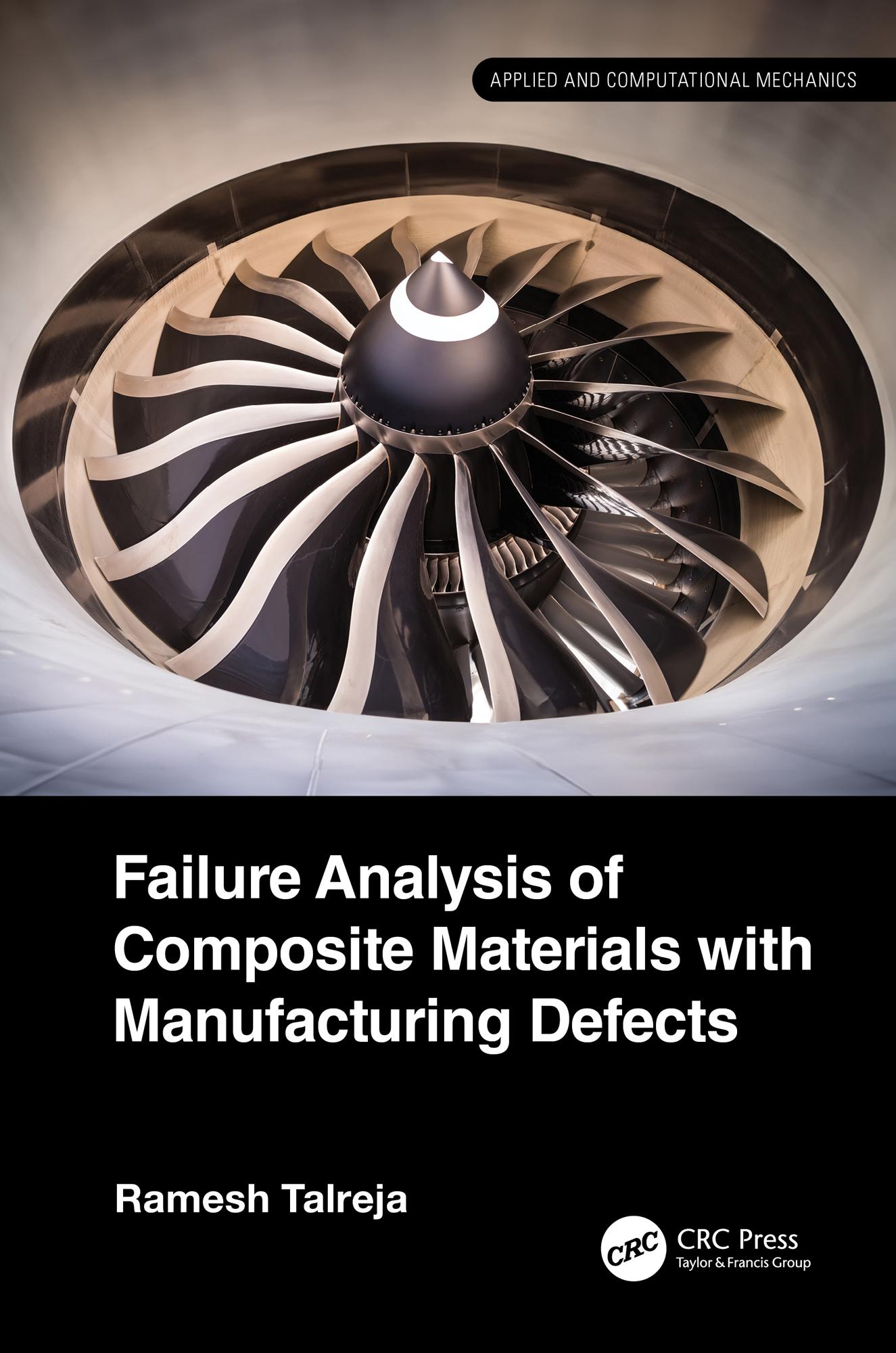
In contrast to metals, a composite material acquires an internal structure where the imprint of its manufacturing process history is a significant part of the internal structure’s makeup and in many cases determines how the material responds to external impulses. The performance for which a composite material is designed must therefore be assessed with due consideration to the manufacturing-induced features in the material volume. Failure theories based on homogenized composites cannot deliver reliable methodologies for performance assessment. This book details approaches that depart from traditional treatments by accounting for manufacturing defects in composite materials. It discusses how manufacturing defects are produced and how they affect the performance of composite materials.
- Serves as the only book to bring knowledge on manufacturing and failure modeling together in a coherent manner.
- Guides readers on mechanisms-based modeling with a focus on defects.
- Treats statistical simulation of microstructure with defects aimed at physical modeling.
- Covers manufacturing methods for polymer matrix composites.
- Describes failure modes in unidirectional composites and laminates in the presence of defects.
- Discusses fatigue damage in the presence of defects.
This book is aimed at researchers in industry and academia in aerospace engineering, mechanical engineering, and materials science and engineering. It also serves as a reference for students taking advanced courses in composite materials.
Pay easily by card, Klarna, Apple Pay or Google Pay. Not happy? You always have a 14-day money-back guarantee. Read more in our terms. If you have any questions, email us at hello@memmo.org.
Memmo makes studying easier – wherever you are in the world. We bring your course books and smart study tools together in one place: summaries, quizzes, podcasts and flashcards. Plus Ted, your study buddy who answers anything you wonder. Over 50,000 students already study here – built to help you learn faster and stress less.