
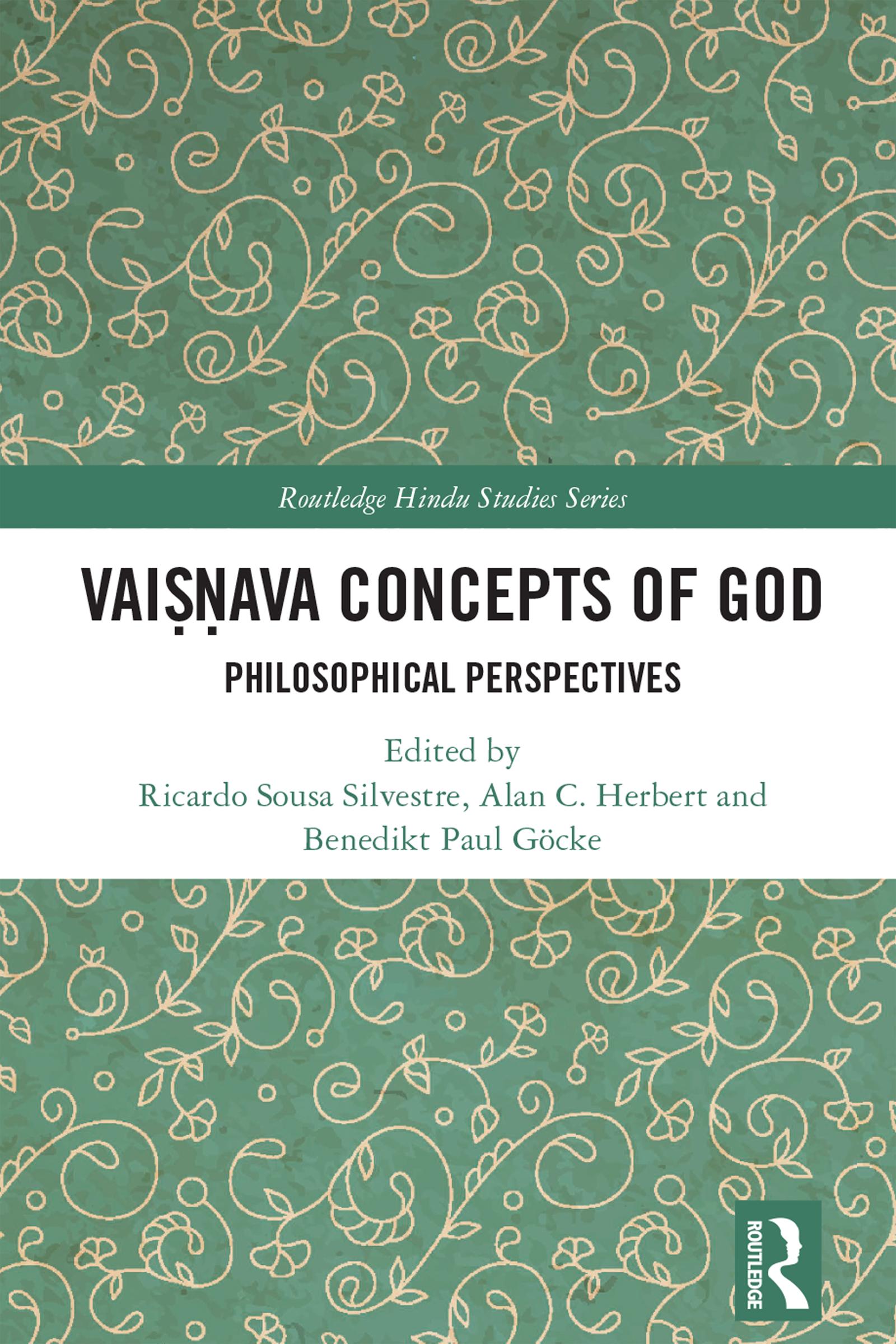
This book explores a number of concepts of God in Vaiṣṇavism, which is commonly referred to as one of the great Hindu monotheistic traditions. By addressing the question of what attributes God possesses according to particular Vaiṣṇava textual sources and traditions, the book locates these concepts within a global philosophical framework.
The book is divided into two parts. The first part, God in Vaiṣṇava Texts, deals with concepts of God found in some of the more prominent canonical Vaiṣṇava texts: the Bhagavad-Gītā, the Bhagavata-Purāṇa, the Jayākhya-Saṃhitā as representative of the Pāñcarātras, and the Mahābhārata. The second part, God in Vaiṣṇava Traditions, addresses concepts of God found in several Vaiṣṇava traditions and their respective key theologians. In addition to the Āḻvārs, the five traditional Vaiṣṇava schools—the Śrī Vaiṣṇava tradition, the Madhva tradition, the Nimbārka tradition, the Puṣṭimārga tradition, and the Caitanya Vaiṣṇava tradition—and two contemporary ones—those of Ramakrishna (who has Vaiṣṇava leanings) and Swami Bhaktivedanta—are considered.
The book combines normative, critical, and descriptive elements. Some chapters are philosophical in nature, and others are more descriptive. Each unpacks a specific Vaiṣṇava concept of God for future philosophical analysis and critique. Written by experts who break new ground in this presentation and representation of the diversity of Vaiṣṇava texts and traditions, the book provides approaches that reflect the amount of philosophical and historical deliberation on the specific issues and divine attributes so far considered in the field of Hindu Studies. This book will be of interest to researchers in disciplines including philosophy of religion and Indian philosophy, cross-cultural and comparative philosophy, analytic philosophy of religion, Hindu Studies, theology, and religious studies.
Pay easily by card, Klarna, Apple Pay or Google Pay. Not happy? You always have a 14-day money-back guarantee. Read more in our terms. If you have any questions, email us at hello@memmo.org.
Memmo makes studying easier – wherever you are in the world. We bring your course books and smart study tools together in one place: summaries, quizzes, podcasts and flashcards. Plus Ted, your study buddy who answers anything you wonder. Over 50,000 students already study here – built to help you learn faster and stress less.