
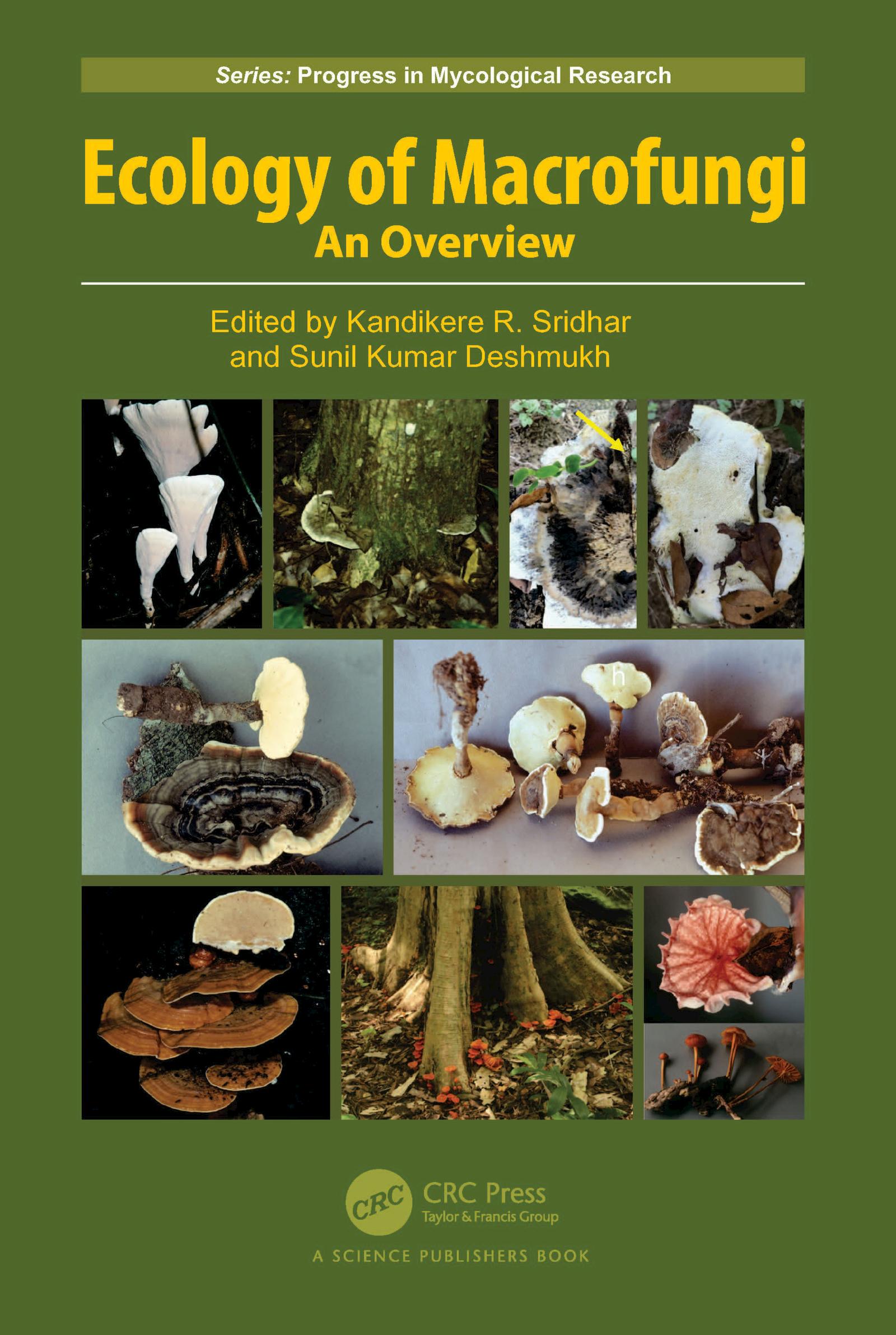
Macrofungi have significant importance in human health, particularly in nutrition, medicine, pharmaceuticals, agriculture and industries. They occupy a variety of ecosystems such as terrestrial (agricultural lands, forests and deserts), freshwater (bogs and marshes) and maritime (mangroves and coastal sand dunes) habitats. Their ecosystem services like nutrition (humans and animals), medicinal pursuits (antibiotics and pharmaceuticals) and bioremediation (degradation of xenobiotics and insect control) potential are dependent on their diversity and ecological conditions. Macrofungal ecology serves as the basis for nutraceutical values, agricultural benefits, plant productivity, environmental protection and industrially valued biocomposites.
This book focuses on various aspects of macrofungal distribution in diverse habitats, participation in organic matter decomposition, ectomycorrhizal associations and participation in biogeochemical cycles. This book reviews the current developments in macrofungal ecology in different habitats and their benefits. Due to the topics dealt with on macrofungal diversity, distribution, dynamics, lifestyles, ecosystem or substrate preferences and ecosystem services, this book is valuable to mycologists, botanists, zoologists, ecologists, foresters, geneticists, agronomists and field biologists.
Pay easily by card, Klarna, Apple Pay or Google Pay. Not happy? You always have a 14-day money-back guarantee. Read more in our terms. If you have any questions, email us at hello@memmo.org.
Memmo makes studying easier – wherever you are in the world. We bring your course books and smart study tools together in one place: summaries, quizzes, podcasts and flashcards. Plus Ted, your study buddy who answers anything you wonder. Over 50,000 students already study here – built to help you learn faster and stress less.