
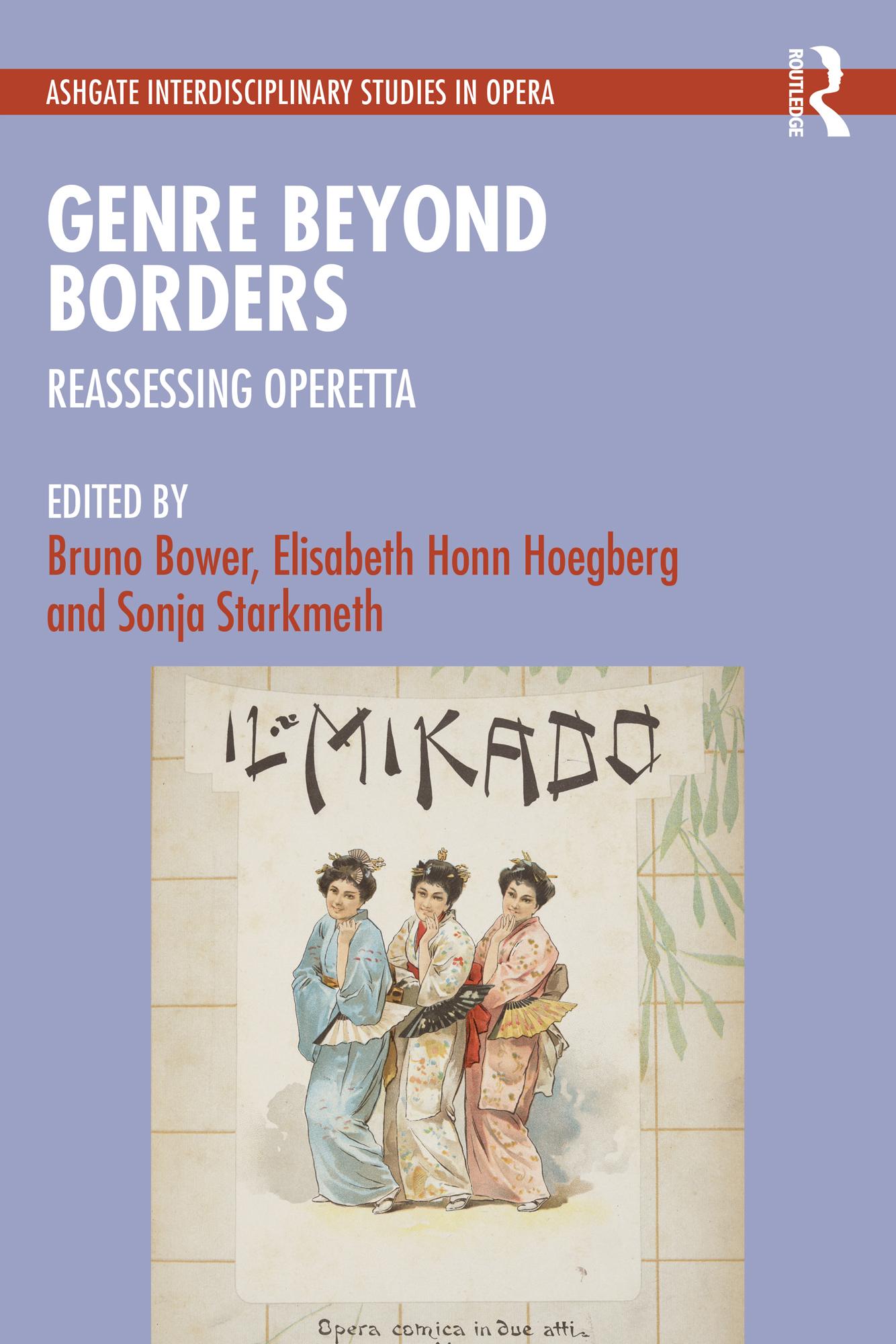
This book offers an innovative approach to understanding operetta, drawing attention to its malleability and resistance to boundaries. These shows have traversed (and continue to traverse) with ease the national borders which might superficially define them, or draw on features from many other genres without fundamentally changing in tone or approach. The chapters move from nineteenth-century London and Paris to twentieth-century North America, South America and Europe to present-day Australia. Some offer fresh understandings of familiar composers, such as Johann Strauss or Gilbert and Sullivan, while others examine works or composers that are less well-known. The chapter on Socialist operetta in Czechoslovakia in particular will almost certainly be a revelation to anyone from Western Europe or the US, where operetta is often understood to be a bourgeois phenomenon. As a summary of the current state of the field, this collection showcases the many possible pathways for future scholars who wish to explore it.
Pay easily by card, Klarna, Apple Pay or Google Pay. Not happy? You always have a 14-day money-back guarantee. Read more in our terms. If you have any questions, email us at hello@memmo.org.
Memmo makes studying easier – wherever you are in the world. We bring your course books and smart study tools together in one place: summaries, quizzes, podcasts and flashcards. Plus Ted, your study buddy who answers anything you wonder. Over 50,000 students already study here – built to help you learn faster and stress less.