
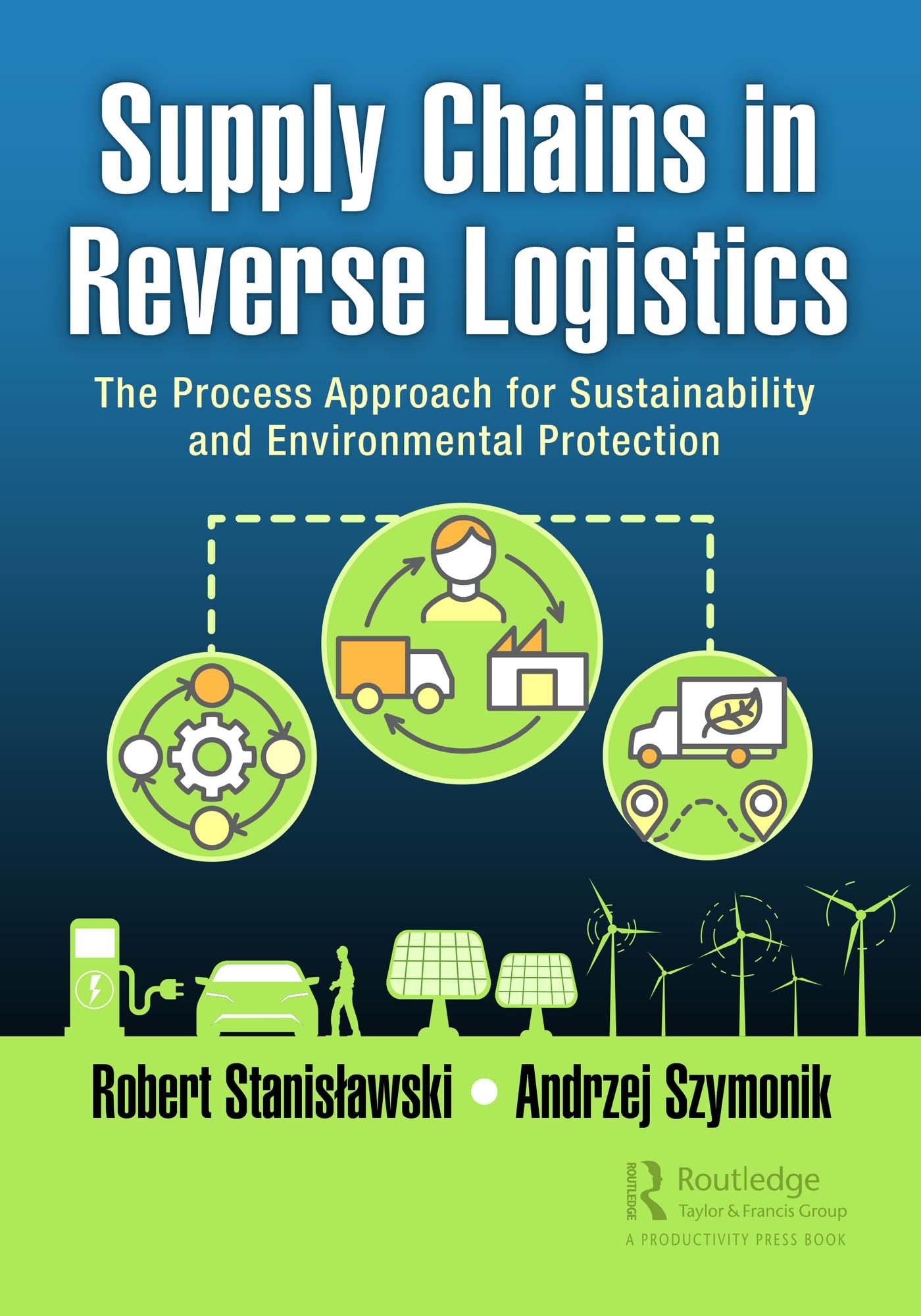
Currently, it is obvious that new types of production (Industry 4.0) are accompanying new ways of distribution, which advance logistics, physical distribution science, and even supply chain management. The changing environment for carrying out logistics activities is also important for the development of the supply chain. Care for ecology, the recent pandemic, and the situation in Ukraine are other reasons to adapt logistics to the needs of an individual customer/recipient. It would be impossible without developing an appropriate strategy and applying appropriate tools for managing supply chains in the national and international dimensions. This book specifically addresses these issues.
When analyzing the needs and structure of modern supply chains, in the context of their safety and risk reduction, it is impossible to ignore the problem of digitization, which allows for logistic analysis of the company, determining optimal routes, designing logistic systems, optimizing storage processes and costs, and predicting possible threats (crisis situations) and their effects (losses). IT support, automatic data exchange, e-logistics, telematics, traceability, and chatbots between various departments of the company along the upper and lower parts of the supply chain improve the flow of material and accompanying information through automation, robotization, proactivity, and document digitization. These new trends make it possible to define logistics as modern logistics using new achievements of science and technology.
Modern logistics must also consider ecological aspects in line with assumptions about protecting the environment and improving our climate. Efficiently organized reverse logistics is not without significance for ecology. It is supported by renewable energy, electric vehicles, proper education in the field of a closed economy, cleaner production, waste minimization, the use of passive infrastructure, and proper waste management that allows us to positively influence environmental protection and human health. To meet the needs of creating modern supply chains, the authors developed this powerful book in which they analyze and present current and future solutions that influence the development of these issues in modern reverse logistics.
Pay easily by card, Klarna, Apple Pay or Google Pay. Not happy? You always have a 14-day money-back guarantee. Read more in our terms. If you have any questions, email us at hello@memmo.org.
Memmo makes studying easier – wherever you are in the world. We bring your course books and smart study tools together in one place: summaries, quizzes, podcasts and flashcards. Plus Ted, your study buddy who answers anything you wonder. Over 50,000 students already study here – built to help you learn faster and stress less.