
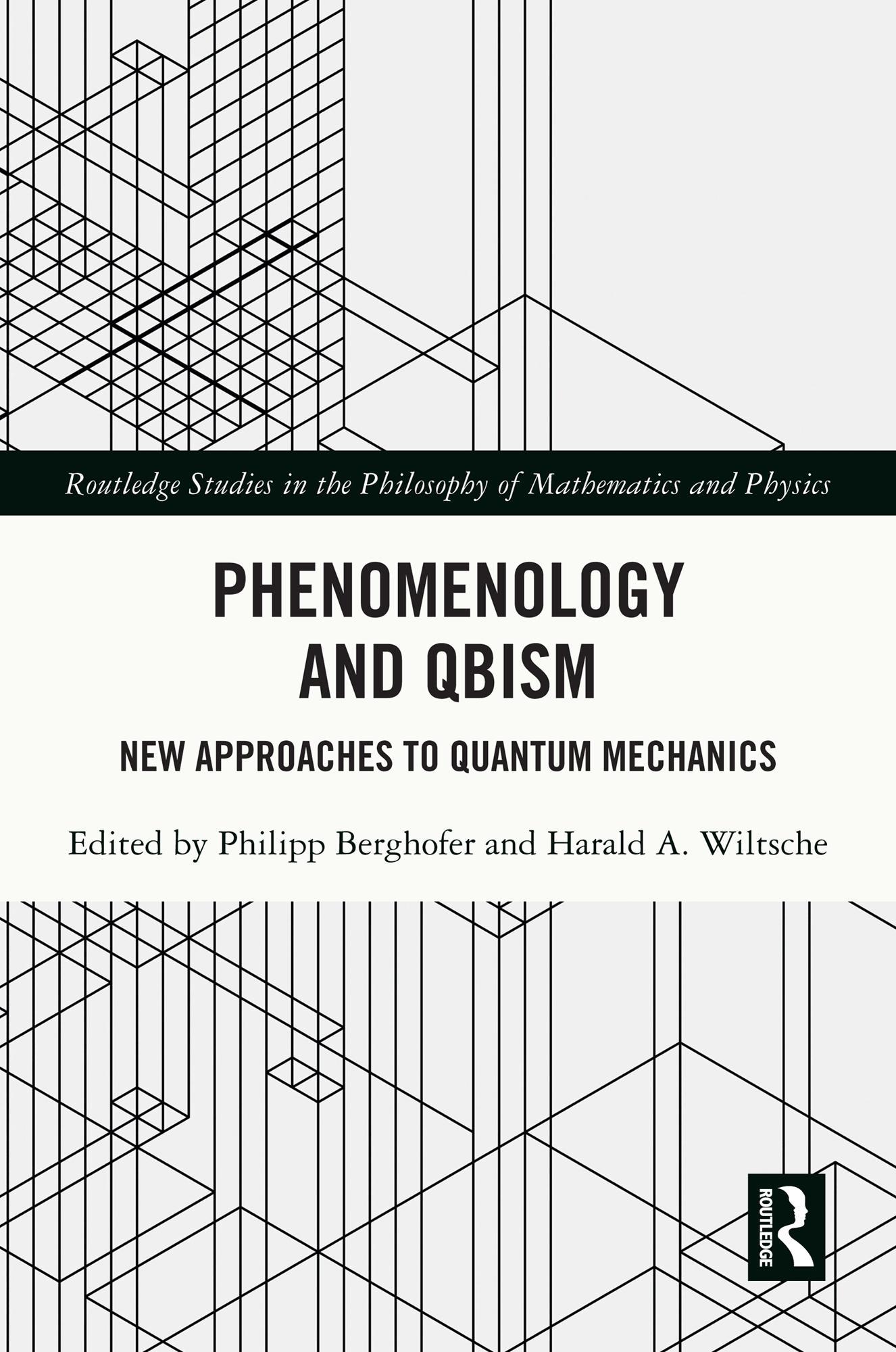
This volume brings together philosophers and physicists to explore the parallels between Quantum Bayesianism, or QBism, and the phenomenological tradition. It is the first book exclusively devoted to phenomenology and quantum mechanics.
By emphasizing the role of the subject’s experiences and expectations, and by explicitly rejecting the idea that the notion of physical reality could ever be reduced to a purely third-person perspective, QBism exhibits several interesting parallels with phenomenology. The central message of QBism is that quantum probabilities must be interpreted as the experiencing agent’s personal Bayesian degrees of belief – degrees of belief for the consequences of their actions on a quantum system. The chapters in this volume elaborate on whether and specify how phenomenology could serve as the philosophical foundation of QBism. This objective is pursued from the perspective of QBists engaging with phenomenology as well as the perspective of phenomenologists engaging with QBism. These approaches enable us to realize a better understanding of quantum mechanics and the world we live in, achieve a better understanding of QBsim, and introduce the phenomenological foundations of quantum mechanics.
Phenomenology and QBism is an essential resource for researchers and graduate students working in the philosophy of physics, philosophy of science, quantum mechanics, and phenomenology.
Pay easily by card, Klarna, Apple Pay or Google Pay. Not happy? You always have a 14-day money-back guarantee. Read more in our terms. If you have any questions, email us at hello@memmo.org.
Memmo makes studying easier – wherever you are in the world. We bring your course books and smart study tools together in one place: summaries, quizzes, podcasts and flashcards. Plus Ted, your study buddy who answers anything you wonder. Over 50,000 students already study here – built to help you learn faster and stress less.