
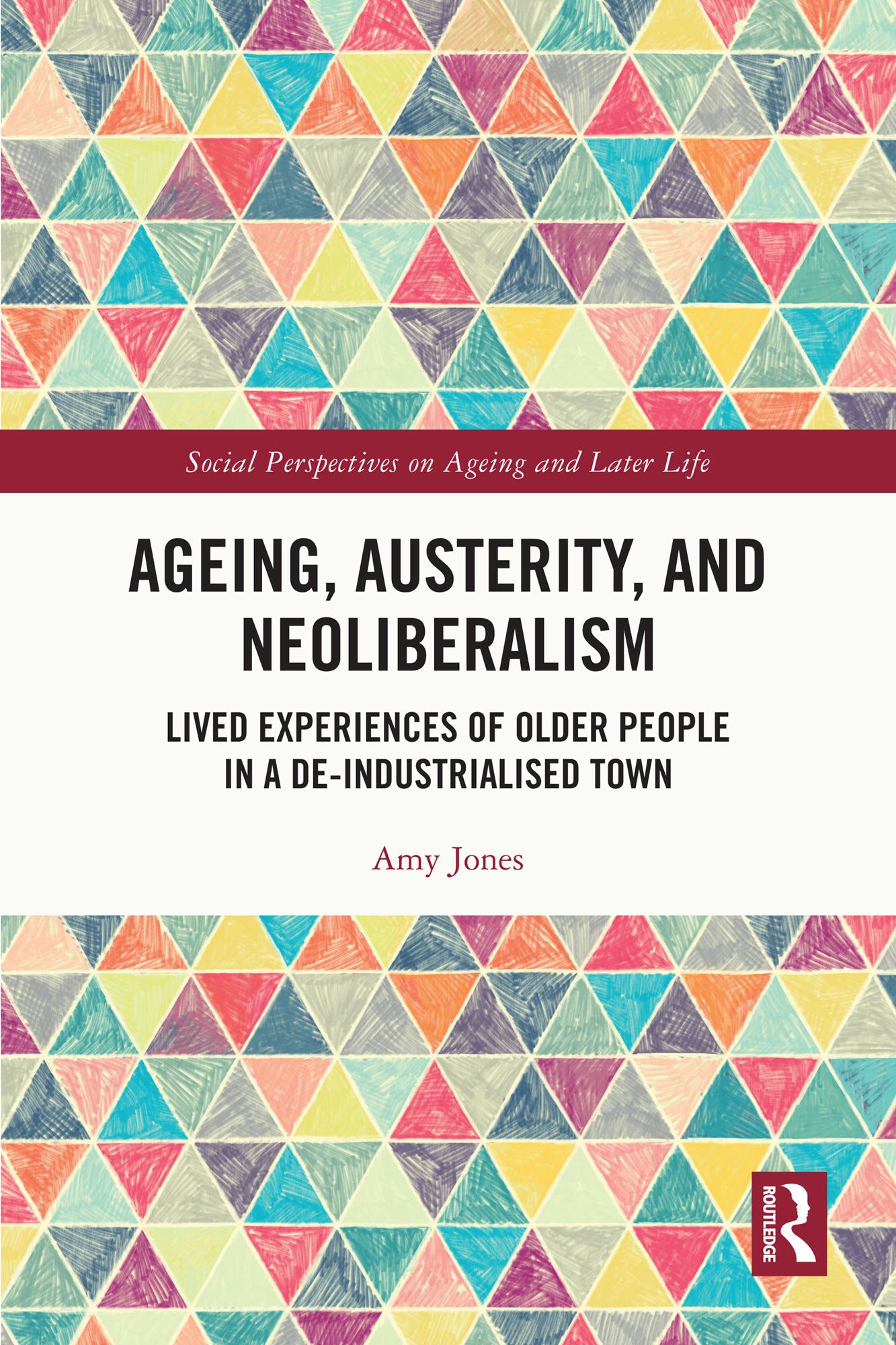
This book explores how neoliberalism and austerity have affected older people living within a deindustrialised town, utilising a Foucauldian approach and an ethnographic methodology.
It seeks to bridge the gap between high sociological theory and a research focus upon older people. The link between the micro (real people, within a real place) and macro (abstract processes) is examined, and a mid-range theory of change is innovatively developed to highlight how older people are having to negotiate national transformations at the everyday level. Key themes within this book include the recreation of human subjectivity, antiwelfarism, the stigmatisation and exclusion of the poor, the fragmentation of the working class, and nostalgia. Innovative terms such as ‘stigma-adaptation’ and ‘abnormal abnormality’ are included to help deepen our knowledge and understanding of the social sciences, to highlight the injustices caused by current global processes, and to ultimately inform change.
This book will be of interest to scholars and students across the social sciences, particularly those studying inequalities in the modern world, neoliberalism and the economy, social theory, ageing and older people and community studies, and postgraduates who are seeking to undertake applied research. It would also be valuable for policymakers and service providers.
Pay easily by card, Klarna, Apple Pay or Google Pay. Not happy? You always have a 14-day money-back guarantee. Read more in our terms. If you have any questions, email us at hello@memmo.org.
Memmo makes studying easier – wherever you are in the world. We bring your course books and smart study tools together in one place: summaries, quizzes, podcasts and flashcards. Plus Ted, your study buddy who answers anything you wonder. Over 50,000 students already study here – built to help you learn faster and stress less.