
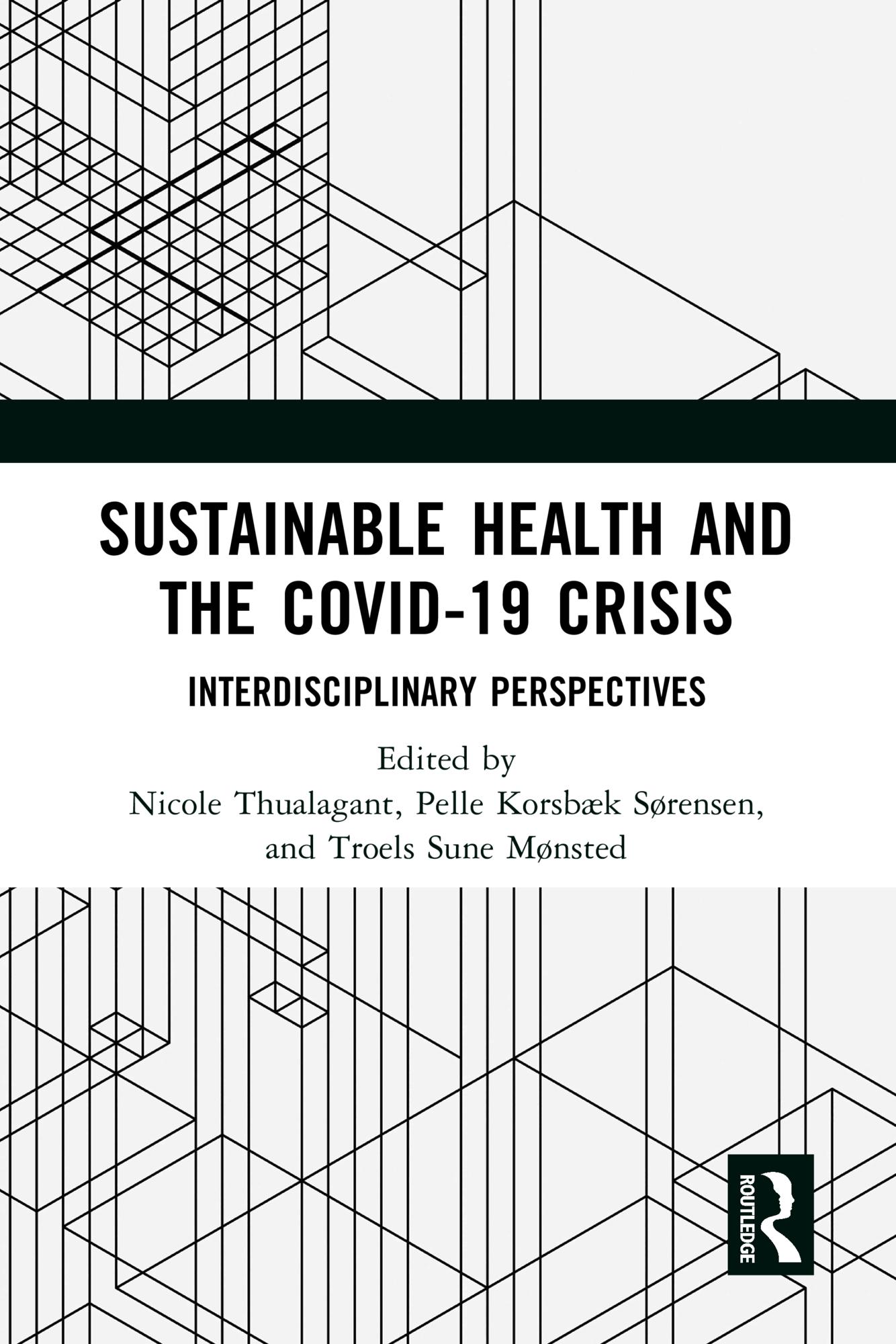
This edited collection offers interdisciplinary perspectives on some of the key health challenges faced by individuals, communities, and governments during the COVID-19 pandemic. Taking the Danish context as a starting point, it extrapolates to discuss the international relevance of a range of issues.
The book contains 4 parts:
- Part 1 looks at the societal reactions to COVID-19, discussing issues around health communication, legitimacy, ethics, and bio-politics
- Part 2 approaches the health and well-being of specific groups during the crisis
- Part 3 assesses how the crisis stimulated sustainable solutions to key problems, from digital methods for delivery of healthcare, to changes to the food supply chain
- Part 4 looks broadly at how historical developments in the study of epidemiology and current scientific perspectives enable the understanding and, to some extent, management of the COVID-19 pandemic
With contributions from scholars across the social sciences, health sciences, and humanities, each chapter provides not only insight into a particular issue, but also the theories and scientific methods applied to understand and overcome the COVID-19 crisis. It will be important reading for both scholars and policy makers, informing an appropriate response to future health crises.
Pay easily by card, Klarna, Apple Pay or Google Pay. Not happy? You always have a 14-day money-back guarantee. Read more in our terms. If you have any questions, email us at hello@memmo.org.
Memmo makes studying easier – wherever you are in the world. We bring your course books and smart study tools together in one place: summaries, quizzes, podcasts and flashcards. Plus Ted, your study buddy who answers anything you wonder. Over 50,000 students already study here – built to help you learn faster and stress less.