
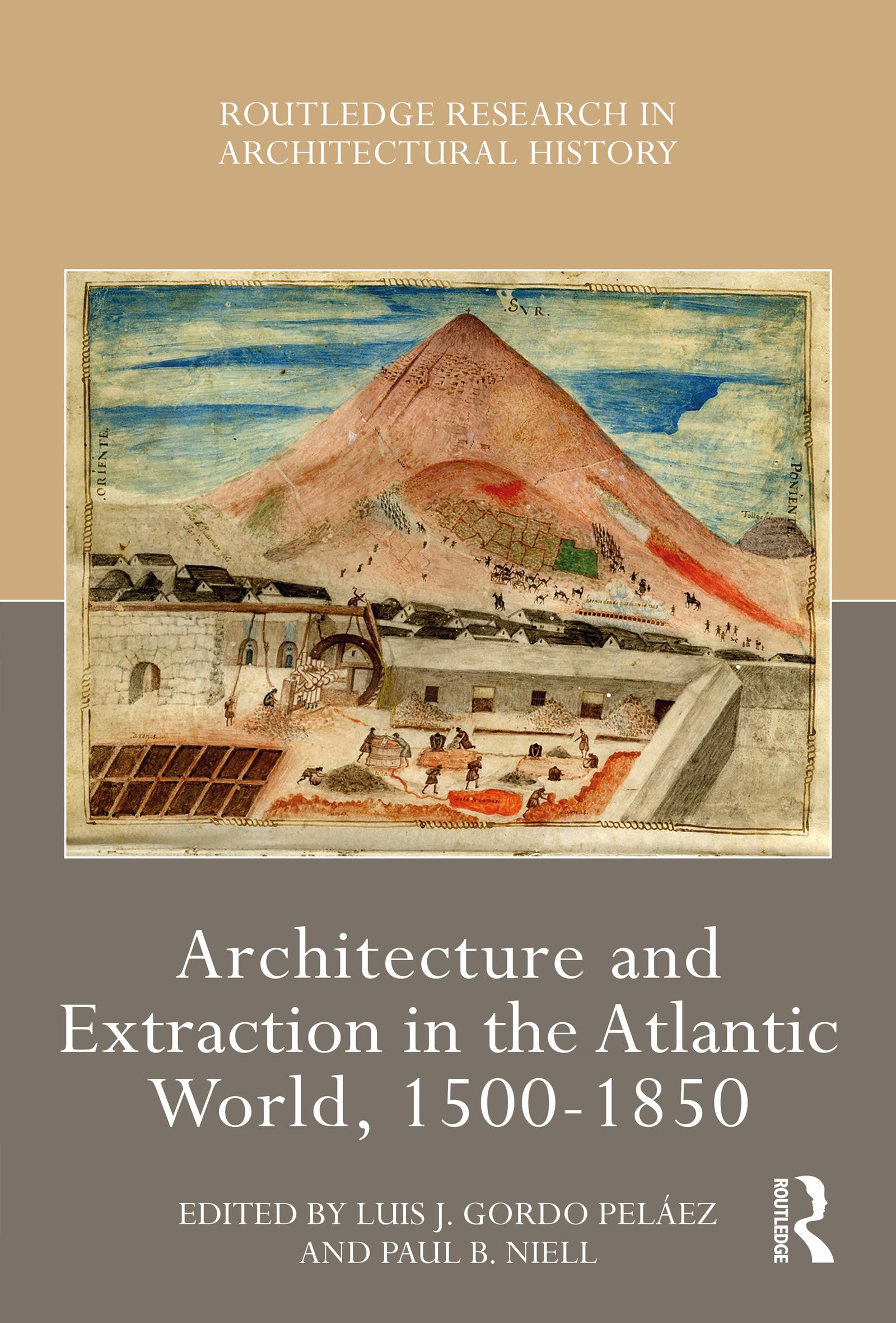
This edited collection examines the development of Atlantic World architecture after 1492. In particular, the chapters explore the landscapes of extraction as material networks that brought people, space, and labor together in harvesting raw materials, cultivating agriculture for export-level profits, and circulating raw materials and commodities in Europe, Africa, and the Americas from 1500 to 1850.
This book argues that histories of extraction remain incomplete without careful attention to the social, physical, and mental nexus that is architecture, just as architecture’s development in the last 500 years cannot be adequately comprehended without attention to empire, extraction, colonialism, and the rise of what Immanuel Wallerstein has called the world system. This world system was possible because of built environments that enabled resource extraction, transport of raw materials, circulation of commodities, and enactment of power relations in the struggle between capital and labor. Separated into three sections: Harvesting the Environment, Cultivating Profit, and Circulating Commodities: Networks and Infrastructures, this volume covers a wide range of geographies, from England to South America, from Africa to South Carolina. The book aims to decenter Eurocentric approaches to architectural history to expose the global circulation of ideas, things, commodities, and people that constituted the architecture of extraction in the Atlantic World. In focusing on extraction, we aim to recover histories of labor exploitation and racialized oppression of interest to the global community.
The book will be of interest to researchers and students of architectural history, geography, urban and labor history, literary studies, historic preservation, and colonial studies.
Pay easily by card, Klarna, Apple Pay or Google Pay. Not happy? You always have a 14-day money-back guarantee. Read more in our terms. If you have any questions, email us at hello@memmo.org.
Memmo makes studying easier – wherever you are in the world. We bring your course books and smart study tools together in one place: summaries, quizzes, podcasts and flashcards. Plus Ted, your study buddy who answers anything you wonder. Over 75,000 students already study here – built to help you learn faster and stress less.