
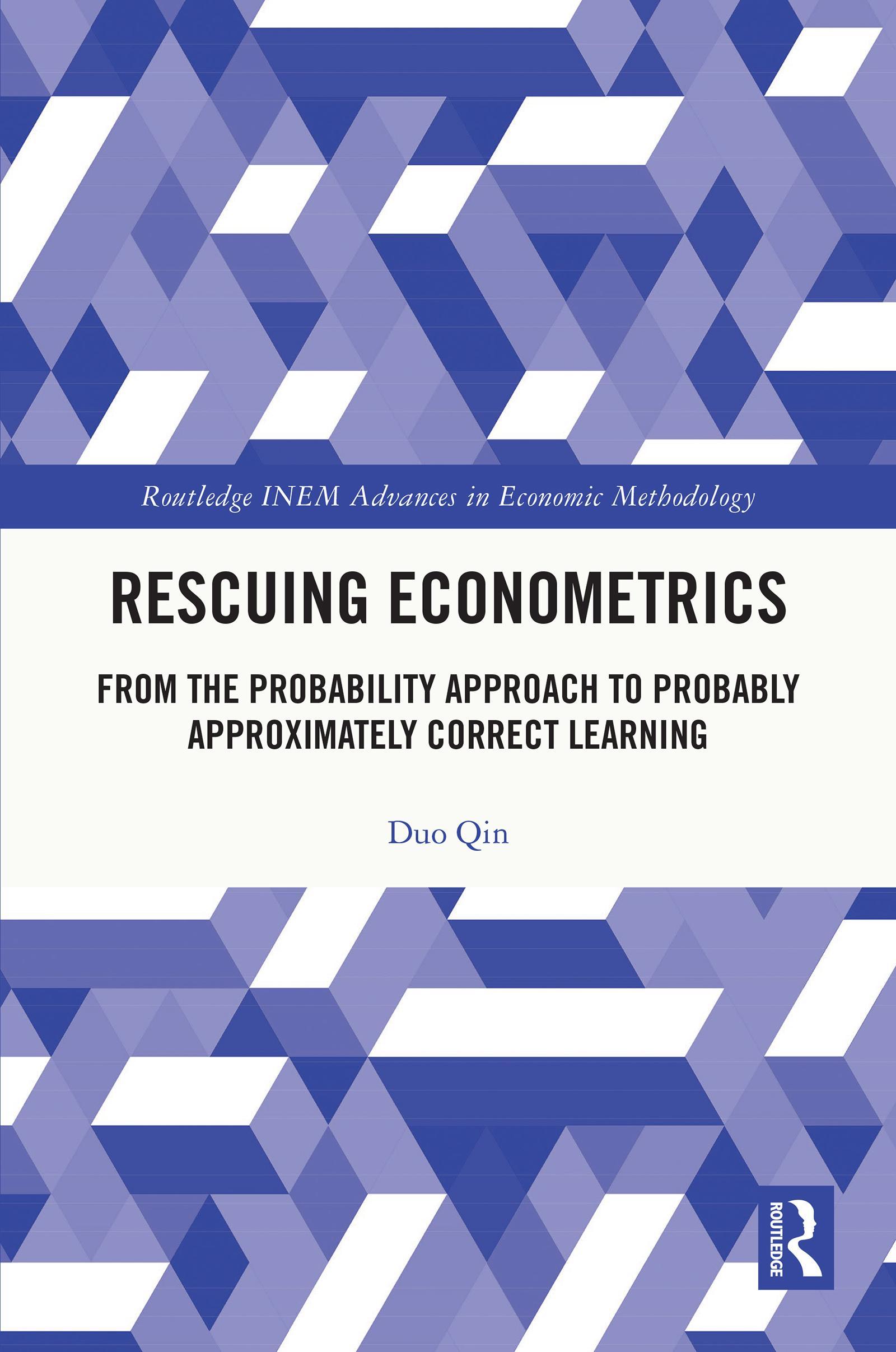
Haavelmo’s 1944 monograph, The Probability Approach in Econometrics, is widely acclaimed as the manifesto of econometrics. This book challenges Haavelmo’s probability approach, shows how its use is delivering defective and inefficient results, and argues for a paradigm shift in econometrics towards a full embrace of machine learning, with its attendant benefits.
Machine learning has only come into existence over recent decades, whereas the universally accepted and current form of econometrics has developed over the past century. A comparison between the two is, however, striking. The practical achievements of machine learning significantly outshine those of econometrics, confirming the presence of widespread inefficiencies in current econometric research. The relative efficiency of machine learning is based on its theoretical foundation, and particularly on the notion of Probably Approximately Correct (PAC) learning. Careful examination reveals that PAC learning theory delivers the goals of applied economic modelling research far better than Haavelmo’s probability approach. Econometrics should therefore renounce its outdated foundation, and rebuild itself upon PAC learning theory so as to unleash its pent-up research potential. The book is catered for applied economists, econometricians, economists specialising in the history and methodology of economics, advanced students, philosophers of social sciences.
Pay easily by card, Klarna, Apple Pay or Google Pay. Not happy? You always have a 14-day money-back guarantee. Read more in our terms. If you have any questions, email us at hello@memmo.org.
Memmo makes studying easier – wherever you are in the world. We bring your course books and smart study tools together in one place: summaries, quizzes, podcasts and flashcards. Plus Ted, your study buddy who answers anything you wonder. Over 50,000 students already study here – built to help you learn faster and stress less.