
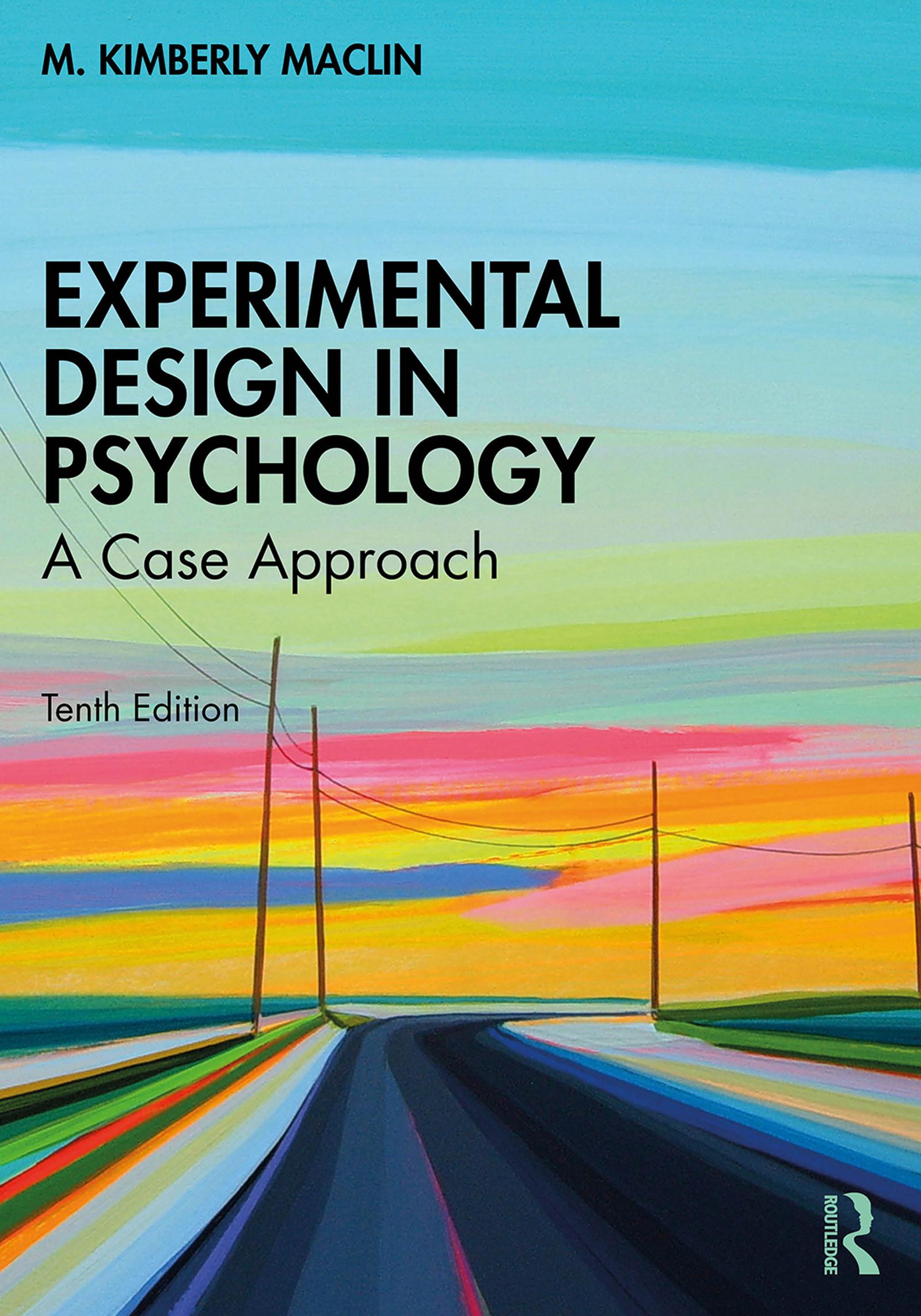
This text is about doing science and the active process of reading, learning, thinking, generating ideas, designing experiments, and the logistics surrounding each step of the research process. In easy-to-read, conversational language, Kim MacLin teaches students experimental design principles and techniques using a tutorial approach in which students read, critique, and analyze over 75 actual experiments from every major area of psychology. She provides them with real-world information about how science in psychology is conducted and how they can participate.
Recognizing that students come to an experimental design course with their own interests and perspectives, MacLin covers many subdisciplines of psychology throughout the text, including IO psychology, child psychology, social psychology, behavioral psychology, cognitive psychology, clinical psychology, health psychology, educational/school psychology, legal psychology, and personality psychology, among others. Part I of the text is content oriented and provides an overview of the principles of experimental design. Part II contains annotated research articles for students to read and analyze.
New sections on how to critically evaluate media reports of scientific findings (in other words, how to identify ‘fake news’), authorship guidelines and decisions, survey research methods and AI tools have been included. Further, expanded information on the Open Science movement, and on ethics in research, and methods to achieve clarity and precision in thinking and writing are included.
This edition is up to date with the latest APA Publication Manual (7th edition) and includes an overview of the bias-free language guidelines, the use of singular "they," and an ethical compliance checklist.. This text is essential reading for students and researchers interested in and studying experimental design in psychology.
Pay easily by card, Klarna, Apple Pay or Google Pay. Not happy? You always have a 14-day money-back guarantee. Read more in our terms. If you have any questions, email us at hello@memmo.org.
Memmo makes studying easier – wherever you are in the world. We bring your course books and smart study tools together in one place: summaries, quizzes, podcasts and flashcards. Plus Ted, your study buddy who answers anything you wonder. Over 50,000 students already study here – built to help you learn faster and stress less.