
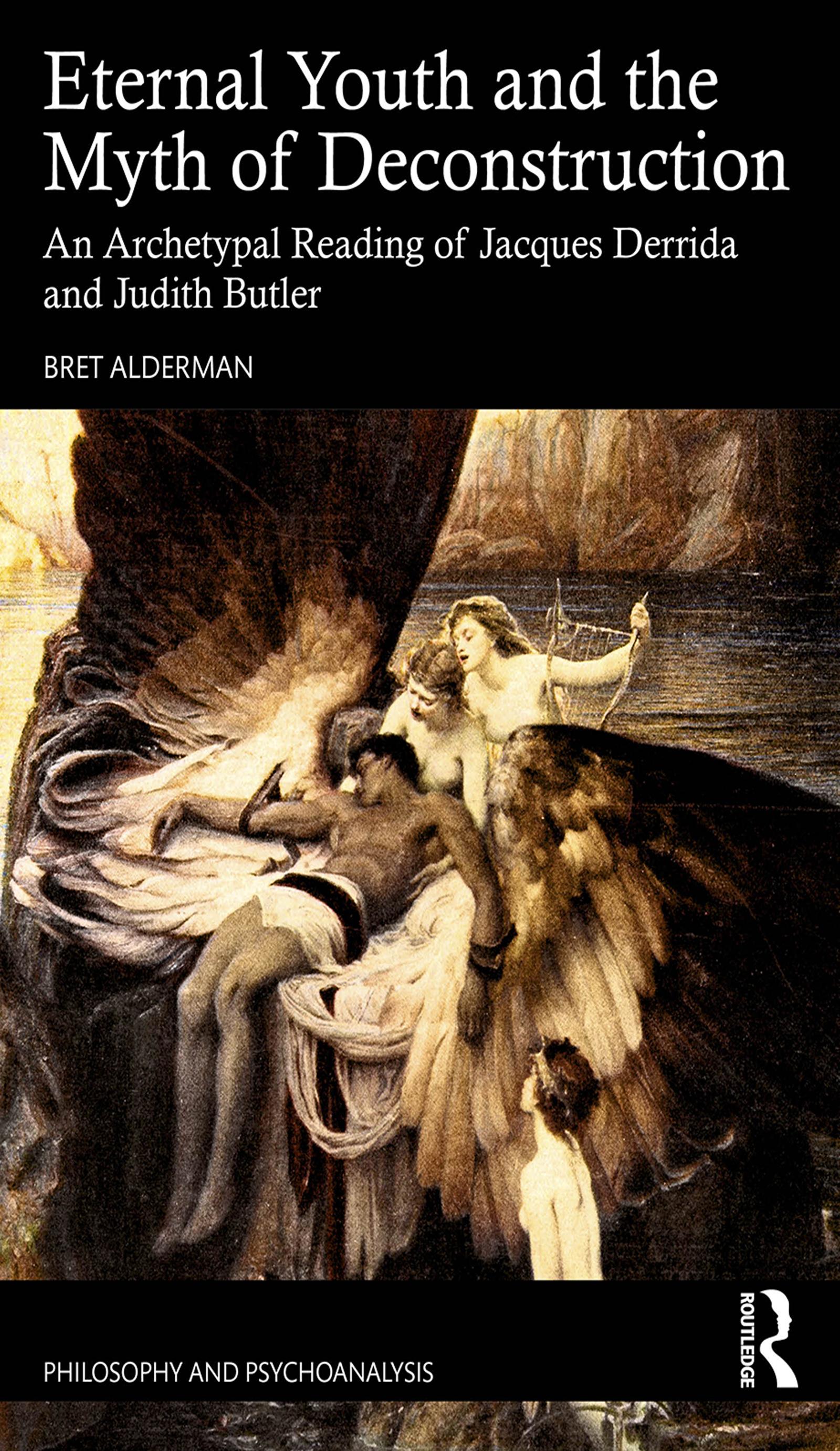
In Eternal Youth and the Myth of Deconstruction, Bret Alderman puts forth a compelling thesis: Deconstruction tells a mythic story. Through an attentive examination of multiple texts and literary works, he elucidates this story in psychological and philosophical terms.
Deconstruction, the method of philosophical and literary analysis originated by Jacques Derrida, arises from what Carl Jung called “a kind of readiness to produce over and over again the same or similar mythical ideas.” In the case of deconstruction, such ideas bear a striking resemblance to a figure that Jungian and Post-Jungian writers refer to as the puer aeternus or eternal youth. To make his case, in addition to a careful analysis of numerous Derridean texts, he offers readings of literary works by Milan Kundera, J.M. Barrie, Dante, Apuleius, and others. These texts help illustrate that deconstruction’s preoccupations over questions of presence, deferral, authority, limits, time, and representation are also recurrent issues for the eternal youth as described by Marie-Louise Von Franz and James Hillman. Judith Butler’s deconstruction of sex and gender reflects similar patterns, and she features in this work as a contemporary exemplar of the deconstructive approach.
Eternal Youth and the Myth of Deconstruction will be a compelling read for both students and teachers of depth psychology and continental philosophy. The clarity of its style will be appealing to advanced scholars and educated laypersons alike.
Pay easily by card, Klarna, Apple Pay or Google Pay. Not happy? You always have a 14-day money-back guarantee. Read more in our terms. If you have any questions, email us at hello@memmo.org.
Memmo makes studying easier – wherever you are in the world. We bring your course books and smart study tools together in one place: summaries, quizzes, podcasts and flashcards. Plus Ted, your study buddy who answers anything you wonder. Over 50,000 students already study here – built to help you learn faster and stress less.