
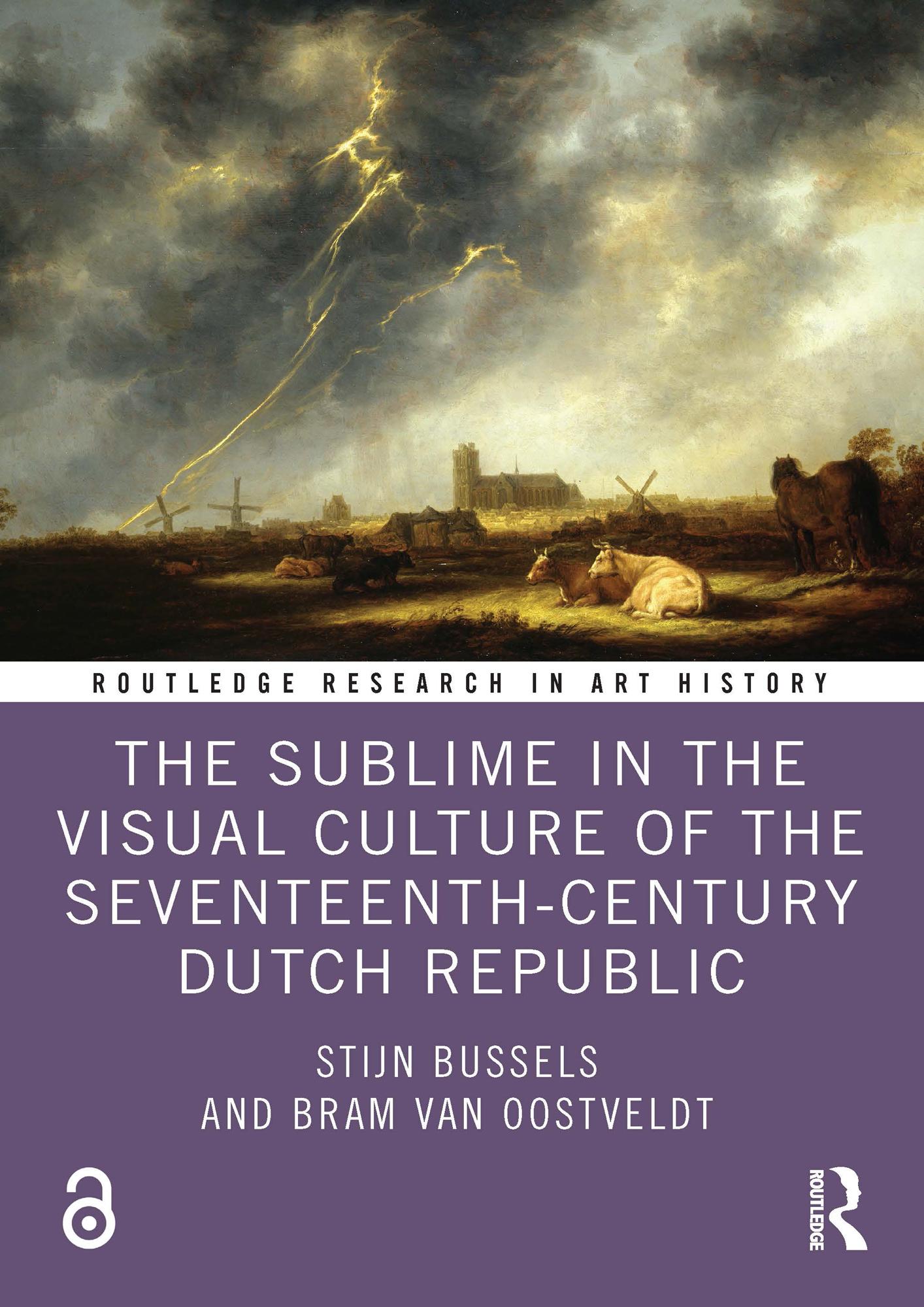
Contrary to what Kant believed about the Dutch (and their visual culture) as “being of an orderly and diligent position” and thus having no feeling for the sublime, this book argues that the sublime played an important role in seventeenth-century Dutch visual culture.
By looking at different visualizations of exceptional heights, divine presence, political grandeur, extreme violence, and extraordinary artifacts, the authors demonstrate how viewers were confronted with the sublime, which evoked in them a combination of contrasting feelings of awe and fear, attraction and repulsion. In studying seventeenth-century Dutch visual culture through the lens of notions of the sublime, we can move beyond the traditional and still widespread views on Dutch art as the ultimate representation of everyday life and the expression of a prosperous society in terms of calmness, neatness, and order.
The book will be of interest to scholars working in art history, visual culture, architectural history, and cultural history.
The Open Access version of this book, available at www.taylorfrancis.com, has been made available under a Creative Commons Attribution-Non Commercial-No Derivatives (CC-BY-NC-ND 4.0) 4.0 International license. Funded by Ghent University.
Pay easily by card, Klarna, Apple Pay or Google Pay. Not happy? You always have a 14-day money-back guarantee. Read more in our terms. If you have any questions, email us at hello@memmo.org.
Memmo makes studying easier – wherever you are in the world. We bring your course books and smart study tools together in one place: summaries, quizzes, podcasts and flashcards. Plus Ted, your study buddy who answers anything you wonder. Over 50,000 students already study here – built to help you learn faster and stress less.