
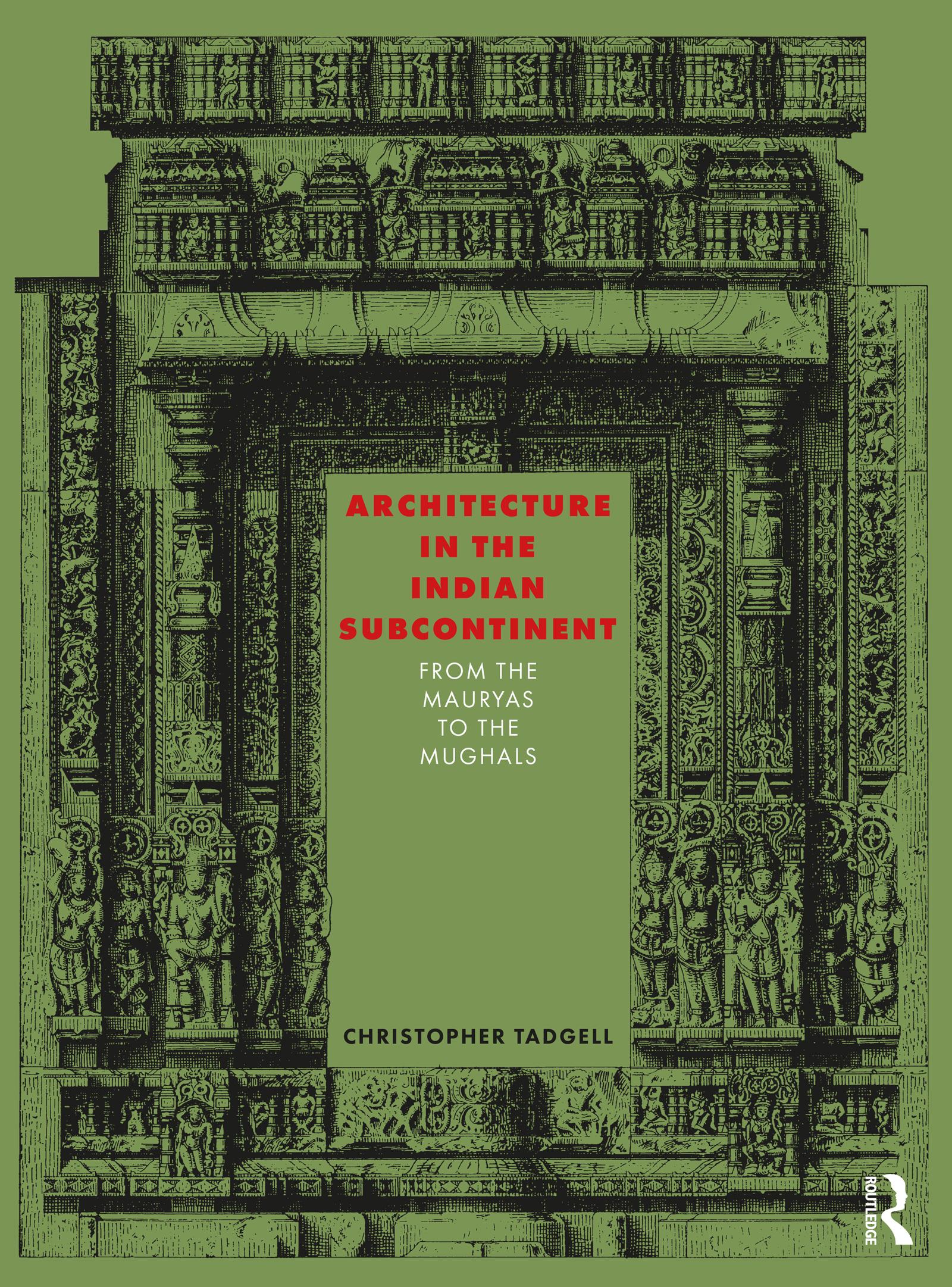
Dedicated to the tracing of continuity across sectarian divides, Christopher Tadgell’s History of Architecture in India (1989) was the first modern monograph to draw together in one volume all the strands of India’s pre-colonial architectural history – from the Vedic and Native traditions of early India, through Hindu, Buddhist, Islamic and secular architecture. This comprehensive revision, Architecture in the Indian Subcontinent: From the Mauryas to the Mughals, expands the structure to acknowledge the great advance in scholarship across this extremely complex subject over the last three decades.
An understanding of Indian history and religion is the basis for understanding the complex pattern of relationships in the evolution of architecture in the subcontinent. Therefore, background material covers major invasions, migrations, dynastic conflicts and cultural and commercial connections, the main religious developments and their significance and repercussions, and external architectural precedents. While avoiding the usual division of the subject into ‘Buddhist and Hindu’ and ‘Islamic’ parts in order to trace continuity, the importance of religion, symbolism and myth to the development of characteristic Indian architectural forms in all their richness and complexity is fully explained in this fully illustrated account of the subcontinent’s architecture.
Pay easily by card, Klarna, Apple Pay or Google Pay. Not happy? You always have a 14-day money-back guarantee. Read more in our terms. If you have any questions, email us at hello@memmo.org.
Memmo makes studying easier – wherever you are in the world. We bring your course books and smart study tools together in one place: summaries, quizzes, podcasts and flashcards. Plus Ted, your study buddy who answers anything you wonder. Over 75,000 students already study here – built to help you learn faster and stress less.