
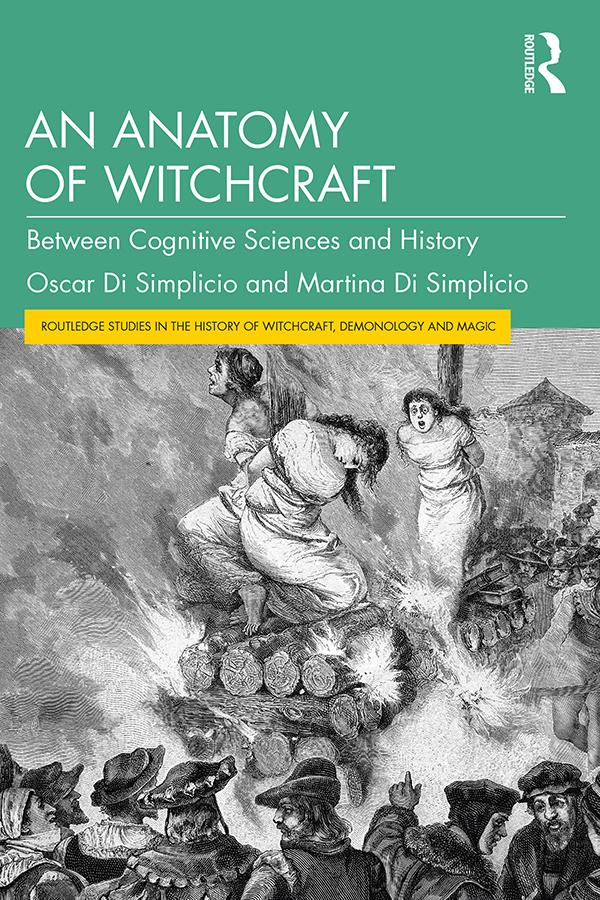
Much has been written on witchcraft by historians, theologians, philosophers, and anthropologists, but nothing by scientists. This book aims to reappraise witchcraft by applying to it the advances in cognitive sciences.
The book is divided into four parts. Part I ("Deep History") deals with human emotions and the drive to represent witches as evil female agents. Part II ("Historical Times") focuses on those rare state and church repressions of malefice, which, surprisingly, did not feature in Islamic lands. Modern urbanization dealt a blow to the rural civilizations where accusations of witchcraft were rife. Part III ("In the Laboratory") applies neuroscience to specific case studies to investigate the personification of misfortune, the millenary stereotype witch = woman, the reality of evil, and the phenomenon of treasure hunting. Part IV ("Millenials") wonders whether intentional malefic hatred in a closed chapter in the history of humanity.
An Anatomy of Witchcraft is ideal reading for students and scholars. Given its interdisciplinary nature, the book will be of interest to scholars from many fields including evolutionary psychology, anthropology, women’s history, and cognitive sciences.
Pay easily by card, Klarna, Apple Pay or Google Pay. Not happy? You always have a 14-day money-back guarantee. Read more in our terms. If you have any questions, email us at hello@memmo.org.
Memmo makes studying easier – wherever you are in the world. We bring your course books and smart study tools together in one place: summaries, quizzes, podcasts and flashcards. Plus Ted, your study buddy who answers anything you wonder. Over 50,000 students already study here – built to help you learn faster and stress less.