
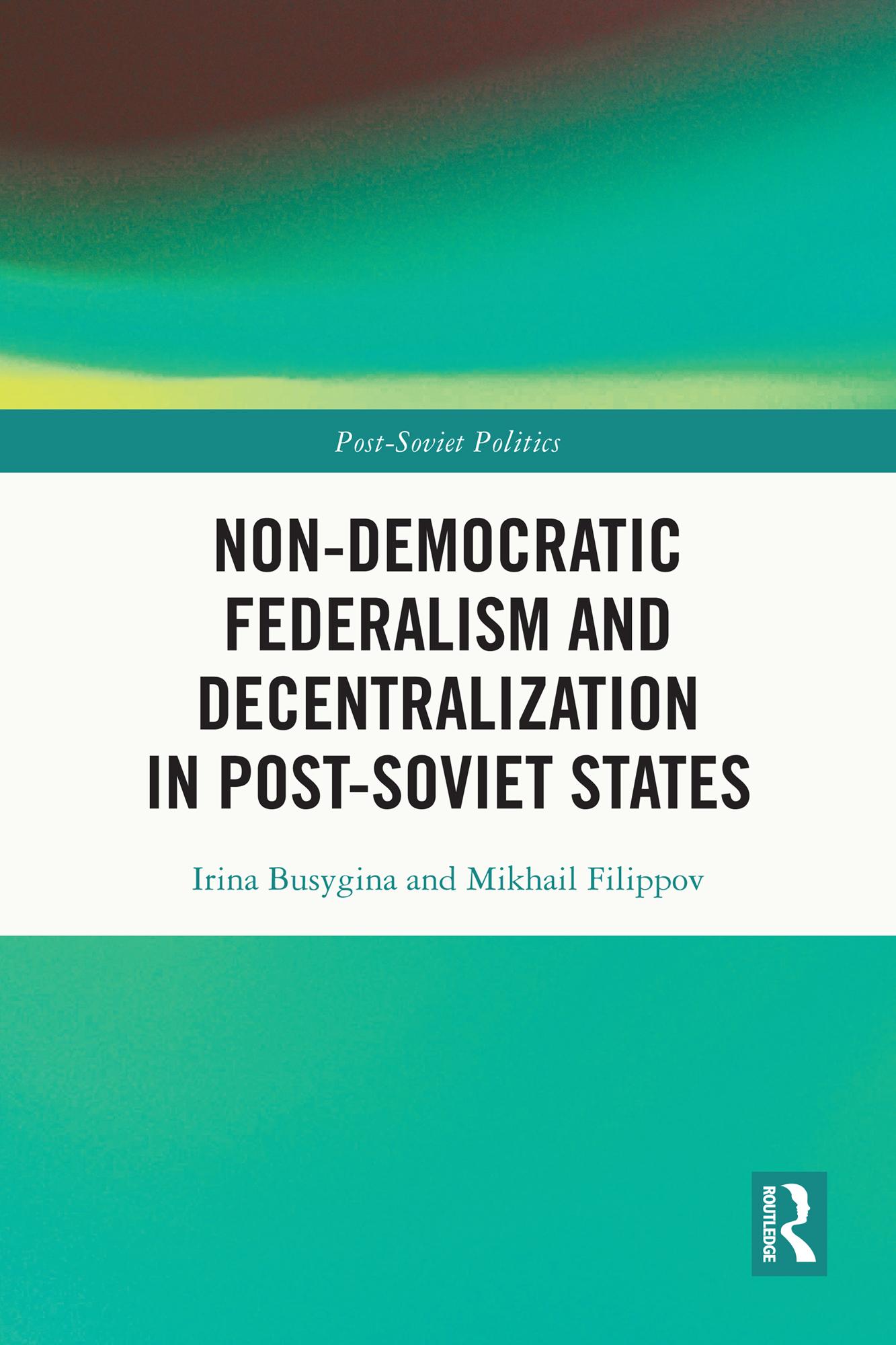
This book challenges the common perception of authoritarian regimes as incompatible with federalism and decentralization. It examines how the leaders of Russia, Ukraine, and Kazakhstan have managed to exploit federalism and decentralization as useful instruments to help them preserve control, avoid political instability, and to shift blame to the regional authorities in times of crises and policy failures. The authors explain how post-Soviet authoritarian regimes balance the advantages and risks and emphasize the contradictory role of external influences and threats to the institutional design of federalism and decentralization. Advancing our understanding of how the institutions of federalism and decentralization are skillfully constrained, but at the same time used by authoritarian incumbents, they show that federalism and decentralization matter in non-democracies, though the nondemocratic character of the political systems greatly modifies their effects. The authors show the implication of the COVID-19 crisis and current Russian war against Ukraine for the center-regional relations in Russia, Ukraine, and Kazakhstan. This book will be of interest to scholars and students of post-Soviet politics, decentralization, federalism, and modern authoritarianism.
Pay easily by card, Klarna, Apple Pay or Google Pay. Not happy? You always have a 14-day money-back guarantee. Read more in our terms. If you have any questions, email us at hello@memmo.org.
Memmo makes studying easier – wherever you are in the world. We bring your course books and smart study tools together in one place: summaries, quizzes, podcasts and flashcards. Plus Ted, your study buddy who answers anything you wonder. Over 50,000 students already study here – built to help you learn faster and stress less.