
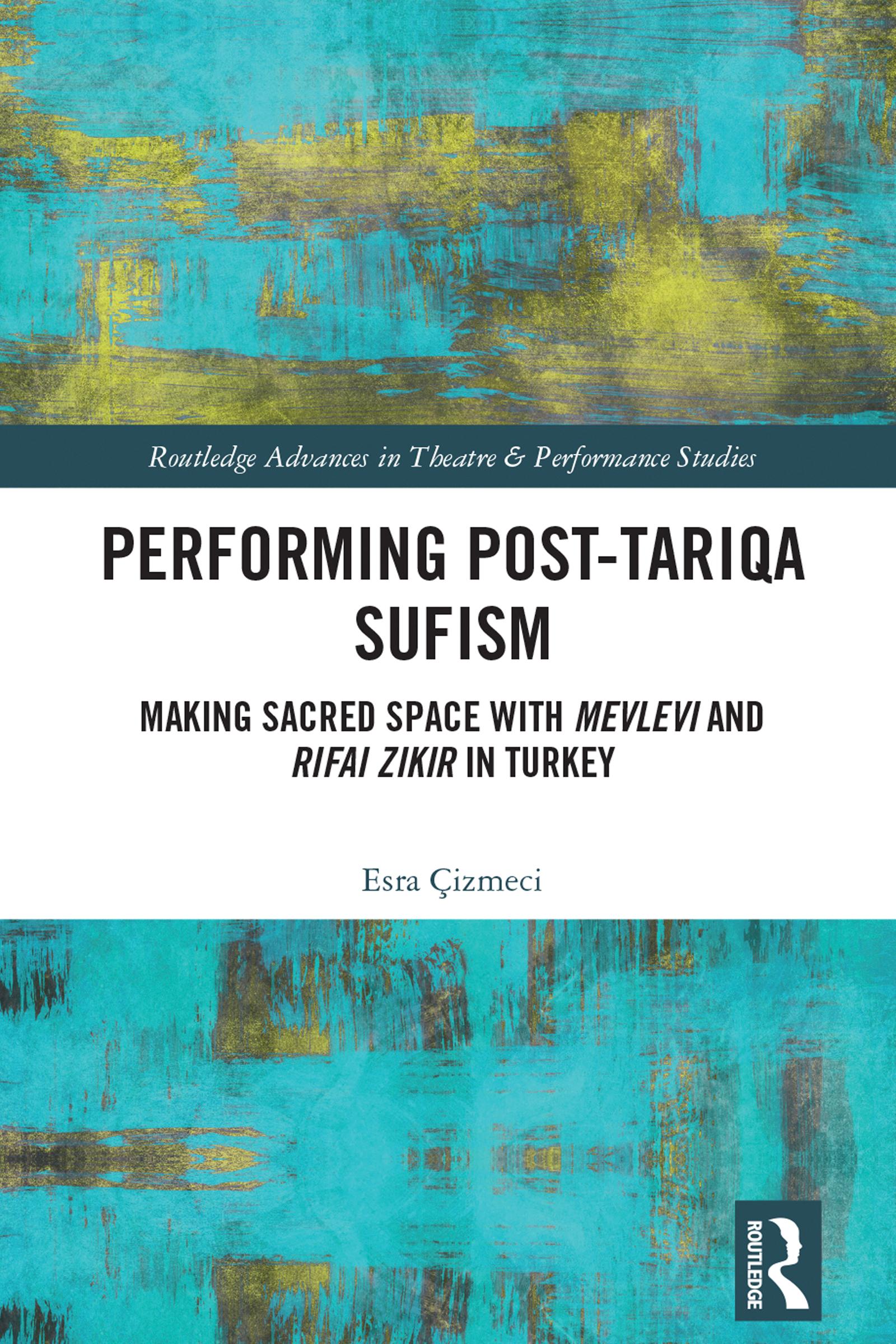
This ethnographic research project examines the generation of post-tariqa Tasavvuf (Sufism: a spiritual practice and philosophy recognised as the inner dimension of Islam) in a variety of private, semi-public, public, secular and sacred urban spaces in present-day Turkey.
Through extensive field research in minority Sufi communities, this book investigates how devotees of specific orders maintain, adapt, mobilise, and empower their beliefs and values through embodied acts of their Sufi followers. Using an ethnographic methodology and theories derived from performance studies, Esra Çizmeci examines the multiple ways in which the post-tariqa Mevlevi and Rifai practice is formed in present-day Turkey, such as through the authority of the spiritual teacher; the individual and collective performance of Sufi rituals; nefs (self) training; and, most importantly, the practice of Sufi doctrines in everyday life through the production of sacred spaces. Drawing on the theories of performance, she examines how the Sufi way of living and spaces are created anew in the process of each devotee’s embodied action.
This book is informed by theories in performance studies, anthropology, religious studies, and cultural studies and places current Sufi practices in a historical perspective.
Pay easily by card, Klarna, Apple Pay or Google Pay. Not happy? You always have a 14-day money-back guarantee. Read more in our terms. If you have any questions, email us at hello@memmo.org.
Memmo makes studying easier – wherever you are in the world. We bring your course books and smart study tools together in one place: summaries, quizzes, podcasts and flashcards. Plus Ted, your study buddy who answers anything you wonder. Over 50,000 students already study here – built to help you learn faster and stress less.