
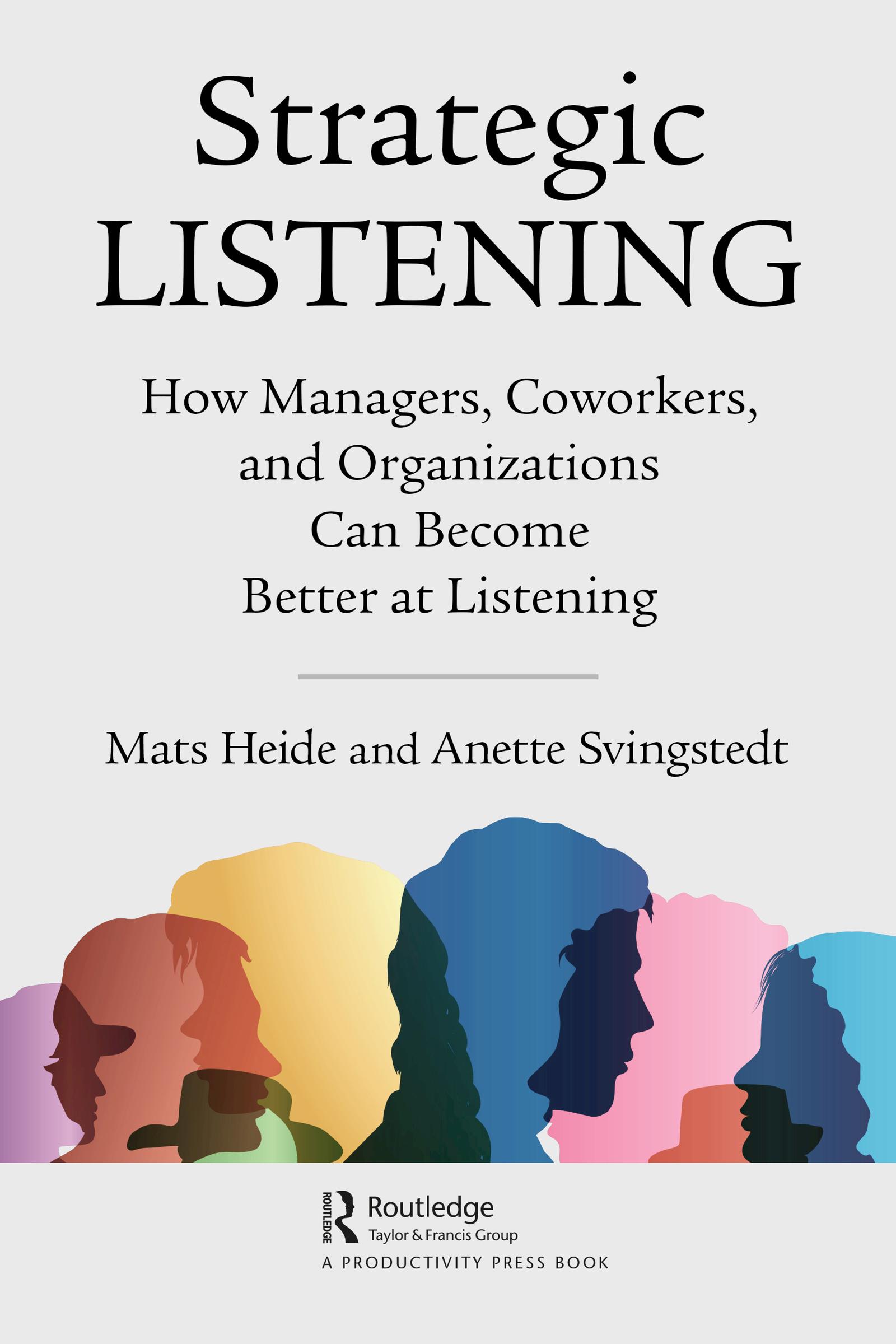
Listening is so simple, yet so difficult. Many times, listening is taken for granted. One could therefore say that listening is the forgotten part of communication. Although organizations have more digital and analog communication channels than ever, too little time is spent listening to customers, employees, and other influential groups. It is a shame that listening is not given more attention, as it is linked to many positive values. Examples include better conversations, increased trust and confidence, more outstanding commitment and job satisfaction, lower absenteeism due to illness, higher productivity and quality of work, increased sales, better relationships with customers and employees, and many other positive effects. To the extent that listening takes place, organizations rarely take a holistic approach to it. Strategic listening means a given objective for listening, thoughts about who should listen, when it should happen, and so on. An organization’s listening must become a strategic issue to exploit the great potential of increased listening.
This book provides answers to the following:
- Why is listening important?
- What are the barriers to listening?
- How can both individuals and organizations become better at listening?
- How can organizations develop strategic listening skills?
- How does one build a system to improve an organization’s strategic listening?
Pay easily by card, Klarna, Apple Pay or Google Pay. Not happy? You always have a 14-day money-back guarantee. Read more in our terms. If you have any questions, email us at hello@memmo.org.
Memmo makes studying easier – wherever you are in the world. We bring your course books and smart study tools together in one place: summaries, quizzes, podcasts and flashcards. Plus Ted, your study buddy who answers anything you wonder. Over 75,000 students already study here – built to help you learn faster and stress less.