
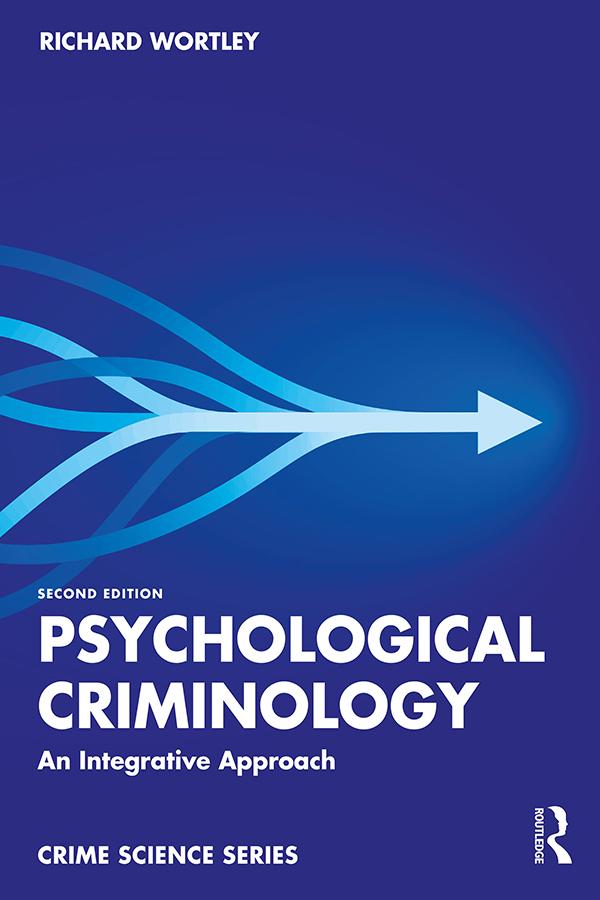
Psychological Criminology explores what is it about individuals and their experiences that causes them to commit crime and/or to become criminal.
Fully updated to include the latest theories and research, this new edition provides comprehensive coverage of psychological theories of crime and criminality. It arranges theories in temporal sequence, from distal to proximal causes of crime, and is organised under three key headings:
- theories that focus on factors present at birth (human nature, heredity);
- theories that focus on factors that influence the offender over the lifespan (learning and development);
- theories that focus on factors present at the crime scene.
The book emphasises the connections among the different approaches, and demonstrates how, taken together rather than as rival explanations, they provide a more complete picture of crime and criminality.
Psychological Criminology highlights the contributions that psychological theory can make to the broader field of criminology. It is essential reading for students, academics, researchers, and practitioners in both criminology and forensic psychology.
Pay easily by card, Klarna, Apple Pay or Google Pay. Not happy? You always have a 14-day money-back guarantee. Read more in our terms. If you have any questions, email us at hello@memmo.org.
Memmo makes studying easier – wherever you are in the world. We bring your course books and smart study tools together in one place: summaries, quizzes, podcasts and flashcards. Plus Ted, your study buddy who answers anything you wonder. Over 50,000 students already study here – built to help you learn faster and stress less.