
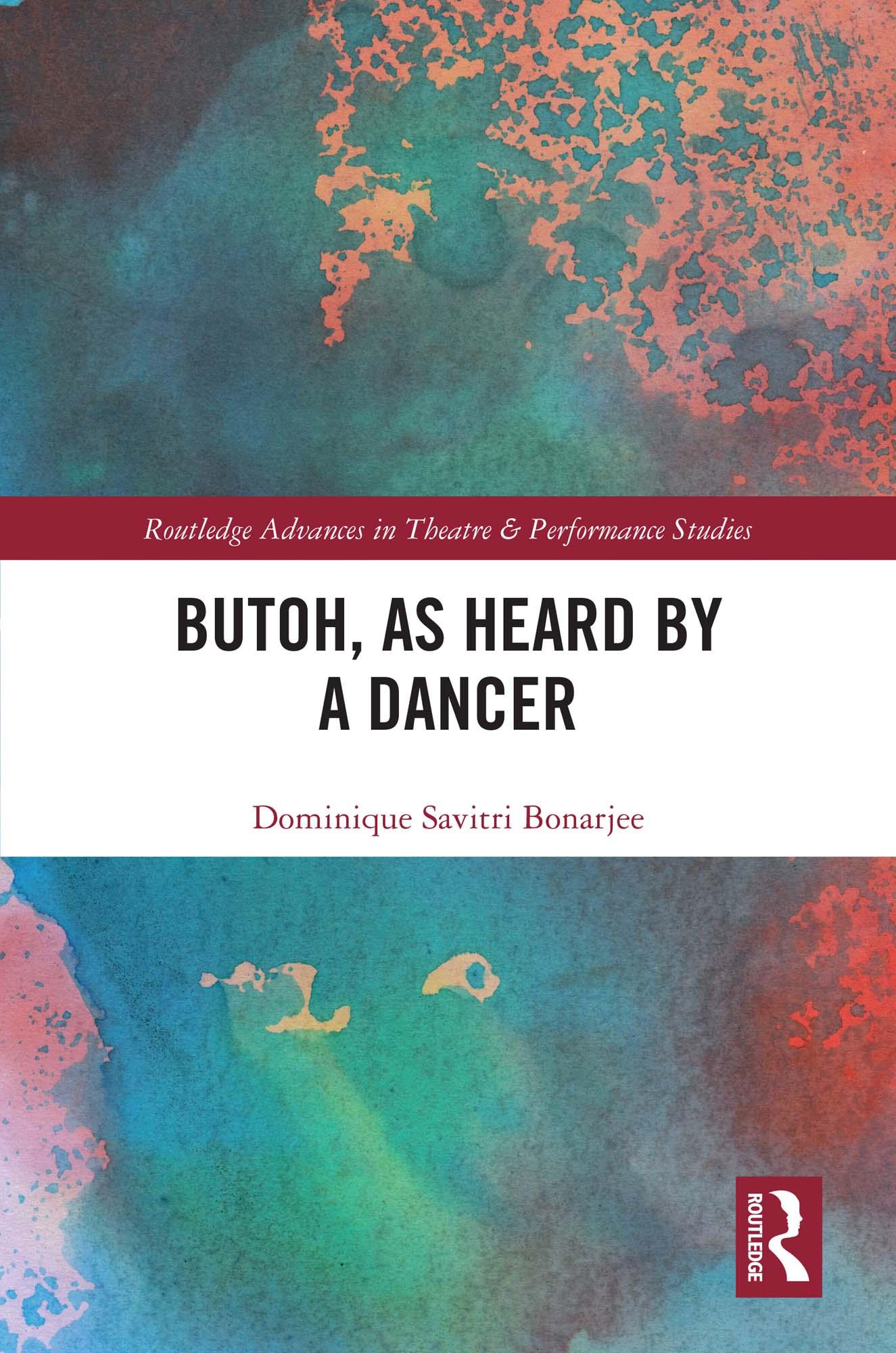
This book explores the origins of Butoh in post-war Japan through orality and transmission, in conjunction with an embodied research approach.
The book is a gathering of seminal artistic voices – Yoshito Ohno, Natsu Nakajima, Yukio Waguri, Moe Yamamoto, Masaki Iwana, Ko Murobushi, Yukio Suzuki, Takao Kawaguchi, Yuko Kaseki, and the philosopher, Kuniichi Uno. These conversations happened during an extended research trip I made to Japan to understand the context and circumstances that engendered Butoh. Alongside these exchanges are my reflections on Butoh’s complex history. These are primarily informed by my pedagogical and performance encounters with the artists I met during this time, rather than a theoretical analysis. Through the words of these dancers, I investigate Butoh’s tendency to evade categorization. Butoh’s artistic legacy of bodily rebellion, plurality of authorship, and fluidity of form seems prescient and feels more relevant in contemporary times than ever before.
This book is intended as a practitioner's guide for dancers, artists, students, and scholars with an interest in non-Western dance and dance history, postmodern performance, and Japanese arts and culture.
Pay easily by card, Klarna, Apple Pay or Google Pay. Not happy? You always have a 14-day money-back guarantee. Read more in our terms. If you have any questions, email us at hello@memmo.org.
Memmo makes studying easier – wherever you are in the world. We bring your course books and smart study tools together in one place: summaries, quizzes, podcasts and flashcards. Plus Ted, your study buddy who answers anything you wonder. Over 75,000 students already study here – built to help you learn faster and stress less.