
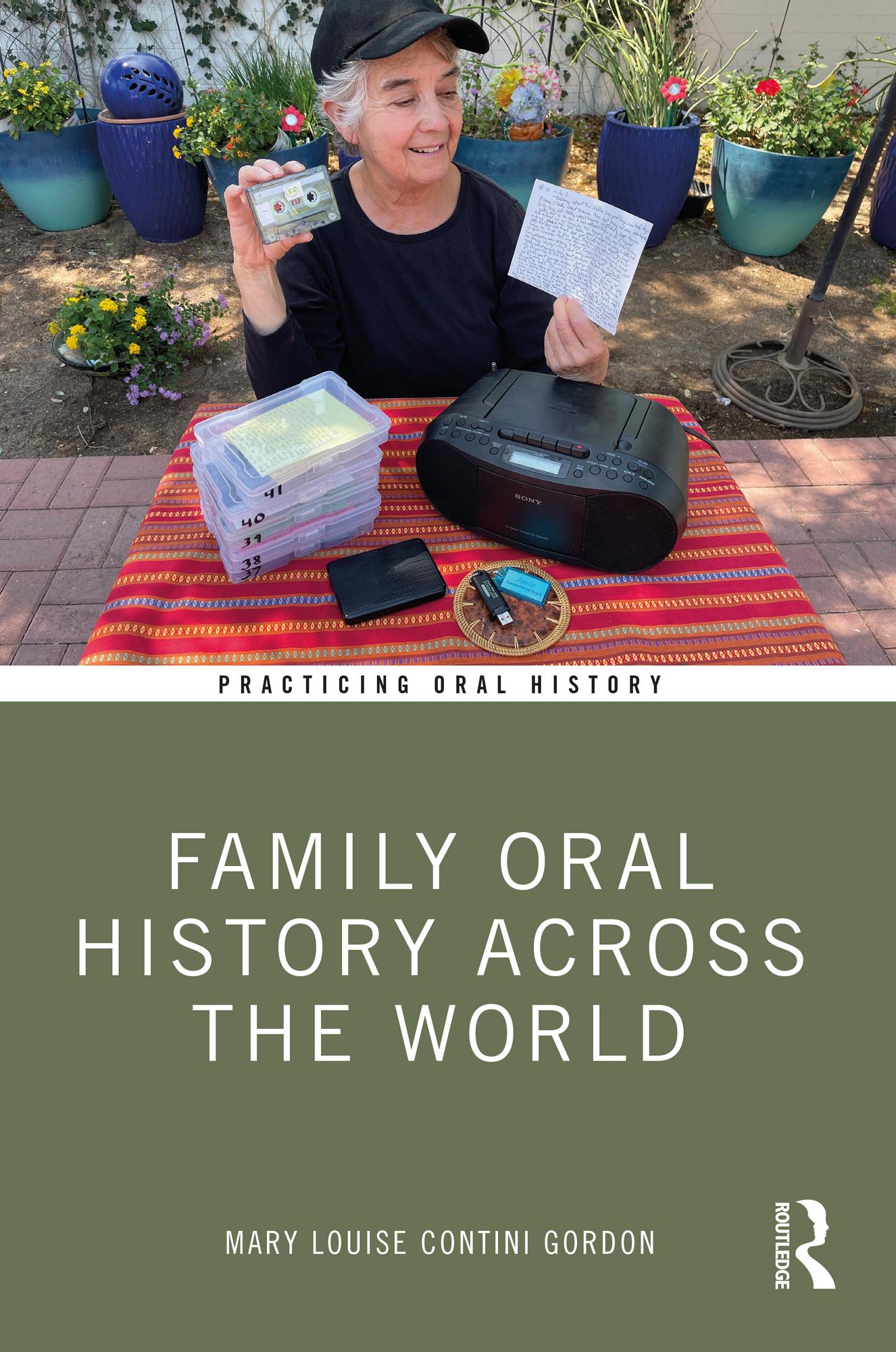
Family Oral History Across the World presents a process for memorializing family histories, bringing together established oral history standards, exploratory research, and narrative data analysis.
Based on and using a prequestionnaire and over 40 recorded interviews with people from across six continents, the analysis system used in the book presents material from these interviews that brings alive the experience of the family history journey. One of the guiding principles is to encourage readers to interview family members, but also others outside the family unit, and to produce a family history in whatever format works. The book illustrates this through the inclusion of many unusual formats and stories uncovered. The book is divided into a number of themes that emerged through the analysis of numerical questionnaire and narrative interview data. Parts I, II, and III cover changing family demography, case studies, and factors such as memory, emotion, and ethics. Part IV offers a pliable process and practice guide with input and examples from interviews. It also discusses developing approaches to presenting oral histories from both oral historians and other interviewers and writers, such as journalists.
With case studies as well as example guidelines and templates, this volume is ideal both for academics interested in family history as well as professional genealogists and families themselves.
For professors and instructors: Student assignment slides connecting this book with the Baylor University Oral History Archive of the 50 transcripts with recordings conducted for this book can be found under Support Material on the Routledge site. The slide set includes an instructor guide, seven assignments, and the corresponding Baylor URL.
Pay easily by card, Klarna, Apple Pay or Google Pay. Not happy? You always have a 14-day money-back guarantee. Read more in our terms. If you have any questions, email us at hello@memmo.org.
Memmo makes studying easier – wherever you are in the world. We bring your course books and smart study tools together in one place: summaries, quizzes, podcasts and flashcards. Plus Ted, your study buddy who answers anything you wonder. Over 50,000 students already study here – built to help you learn faster and stress less.