
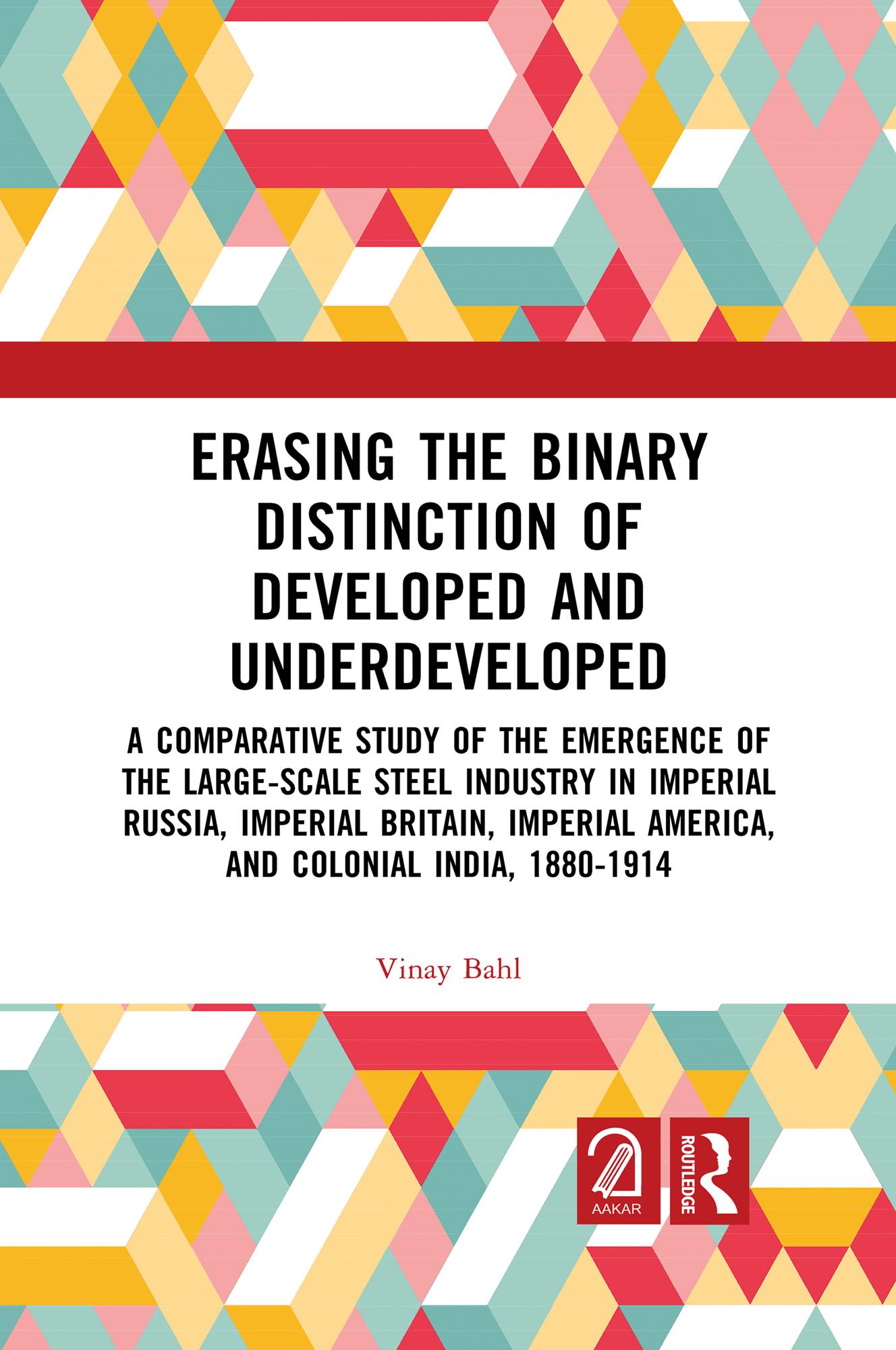
This book challenges the binary distinction of developed and underdeveloped in the categorization of any country while proposing to erase this binary with a yardstick of parity.
Through a sample comparative historical study focusing on the question of the emergence of the large-scale steel industry (1880-1914) of four chosen countries, two considered "developed" (Imperial UK and Post-colonial Imperial USA) and two considered "underdeveloped" (Imperial Russia and Colonial India), it is shown how this yardstick of parity can be applied without the categorization of societies as either developed or underdeveloped.
Print edition not for sale in South Asia (India, Sri Lanka, Nepal, Bangladesh, Pakistan or Bhutan)
Pay easily by card, Klarna, Apple Pay or Google Pay. Not happy? You always have a 14-day money-back guarantee. Read more in our terms. If you have any questions, email us at hello@memmo.org.
Memmo makes studying easier – wherever you are in the world. We bring your course books and smart study tools together in one place: summaries, quizzes, podcasts and flashcards. Plus Ted, your study buddy who answers anything you wonder. Over 50,000 students already study here – built to help you learn faster and stress less.