
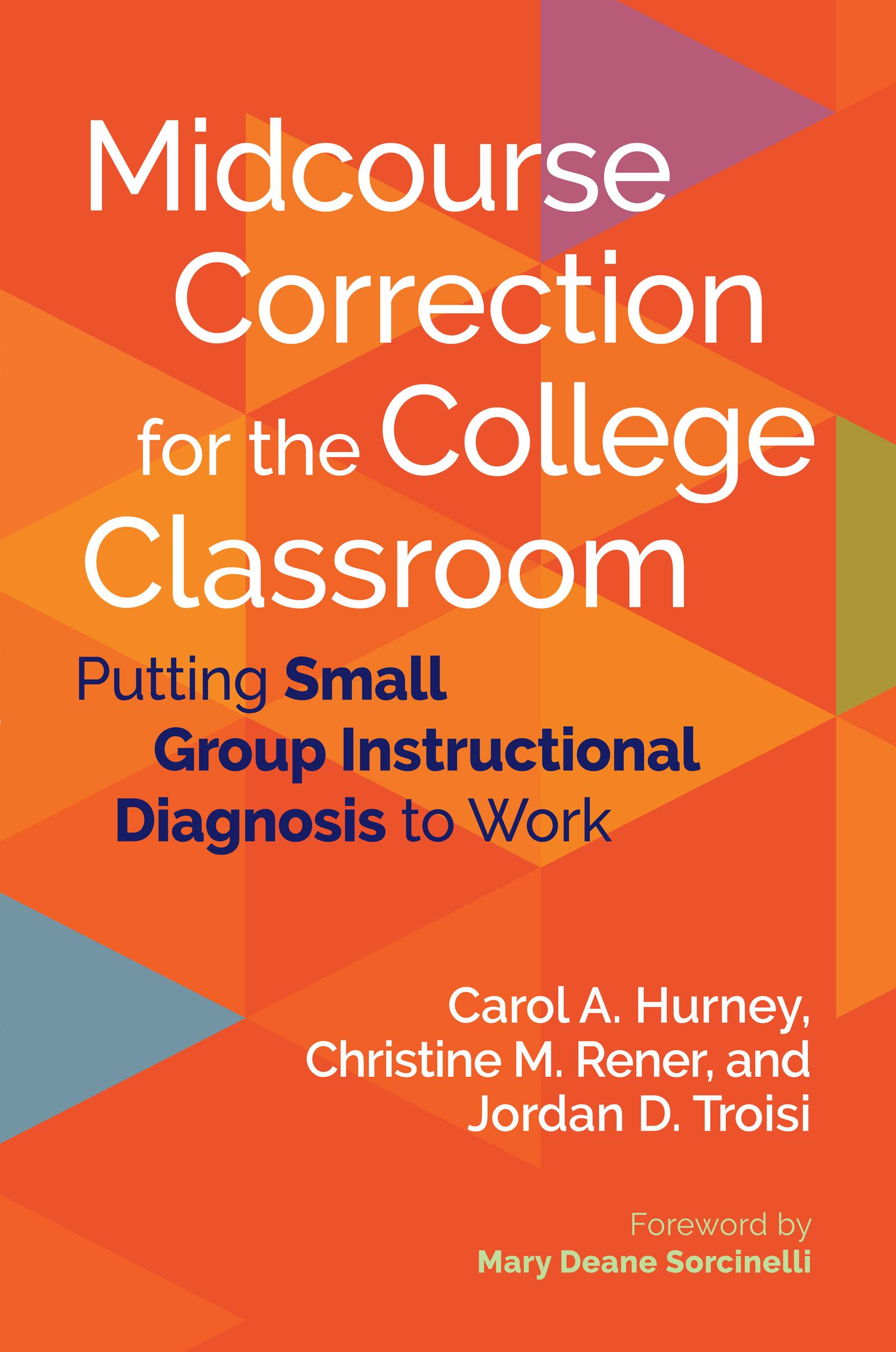
This book is about using the Small Group Instructional Diagnosis (SGID) method to make improvements to the educational experience midcourse. The idea is to use this structured interview process to involve students in helping faculty improve a course while they are in it, potentially making a difference for themselves as well as for future students. Faculty gain the opportunity to work on a course before it ends, and can see what changes work without waiting for the next time the course is offered, or the end of semester student evaluations.SGID is a consultation method developed to collect midsemester feedback from students using structured small and large group conversations, involving four conversations between students, a learned colleague the authors refer to as the SGID consultant, and the instructor. First, student talk with each other in small groups about the learning happening in a course, under the guidance of a consultant (SGID Conversation #1- Student & Students). Then the SGID consultant engages the students in a conversation about how the feedback provided impacts the learning in the course (SGID Conversation #2 - Students & Consultant). Then there is a conversation between the consultant and the instructor, where they discuss how the feedback provided by the students can best inform the pedagogical approaches and strategies used by the instructor (SGID Conversation #3 - Consultant & Instructor). Finally, the instructor closes the feedback loop with a conversation with their students about what they learned and how best to move forward (SGID Conversation #4 - Instructor & Students).These conversations during the middle of the semester change the way students think about the teaching and learning endeavor, the way instructors perceive the learning challenges of their courses, and the quality of the institutional academic culture. Most importantly, the SGID equips the instructor with the knowledge to make midsemester course corrections that can profoundly impact the ways students navigate the course, communicate with the instructor, and realize the ways effective teaching can enhance learning.
Pay easily by card, Klarna, Apple Pay or Google Pay. Not happy? You always have a 14-day money-back guarantee. Read more in our terms. If you have any questions, email us at hello@memmo.org.
Memmo makes studying easier – wherever you are in the world. We bring your course books and smart study tools together in one place: summaries, quizzes, podcasts and flashcards. Plus Ted, your study buddy who answers anything you wonder. Over 50,000 students already study here – built to help you learn faster and stress less.