
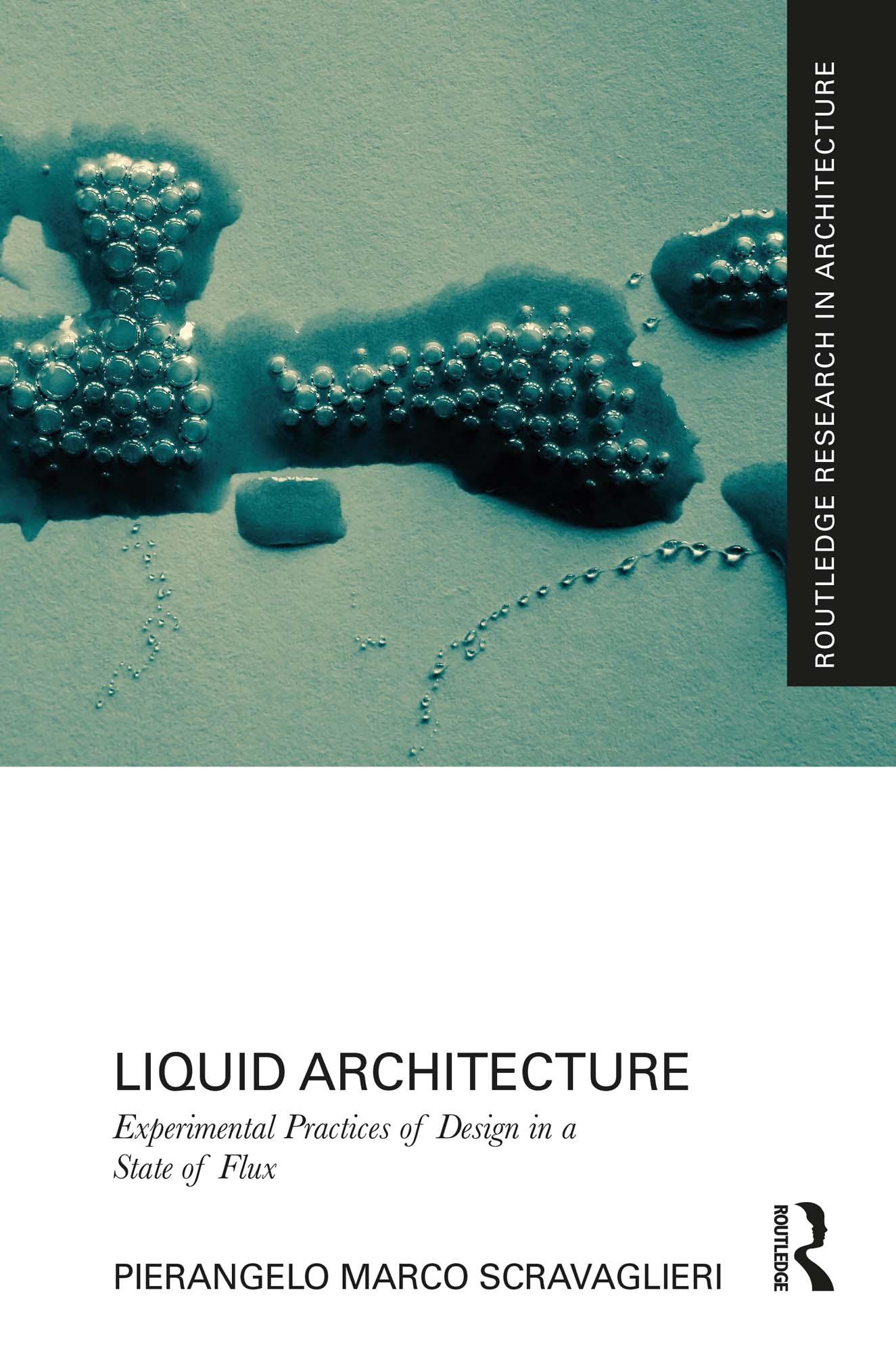
Liquid Architecture challenges the idea of architecture as a fixed, inert container and reconceptualises it as a body whose boundaries are rather blurred and ever-changing. This book moves away from form as the primary driver of spatial protocols and explores what the built environment might look like when viewed through the lenses of a ‘wet ontology’ that is attentive to fluidity, flows and territorial dynamism. A reconfiguration of architectural materials and authorship is thus considered, leading, in turn, to an exploration of the ethical dimensions of co-designing with natural systems (of various viscosities) through liquid paradigms.
The book examines a set of principles for practice-led discoveries that incorporate hybrid, mixed media with the author’s intersubjective relationship with liquid matter. Drawing from qualitative-based analytical investigation models, the text allows comprehension of the liquid phenomena via material contextualisation of an ever-becoming research setting. Through a practical and theoretical engagement with the ontology of liquids, the reader is exposed to a range of design-led experiments and creative propositions, visualisation systems, construction, and testing of physical models that collectively translate into a series of novel insights for architectural agendas.
This book will be of interest to architecture and design research students and academics because it advocates the need for a more symbiotic and resilient approach to natural systems, which could benefit from the integration of regenerating material flows into our buildings and urban settlements.
Pay easily by card, Klarna, Apple Pay or Google Pay. Not happy? You always have a 14-day money-back guarantee. Read more in our terms. If you have any questions, email us at hello@memmo.org.
Memmo makes studying easier – wherever you are in the world. We bring your course books and smart study tools together in one place: summaries, quizzes, podcasts and flashcards. Plus Ted, your study buddy who answers anything you wonder. Over 75,000 students already study here – built to help you learn faster and stress less.