
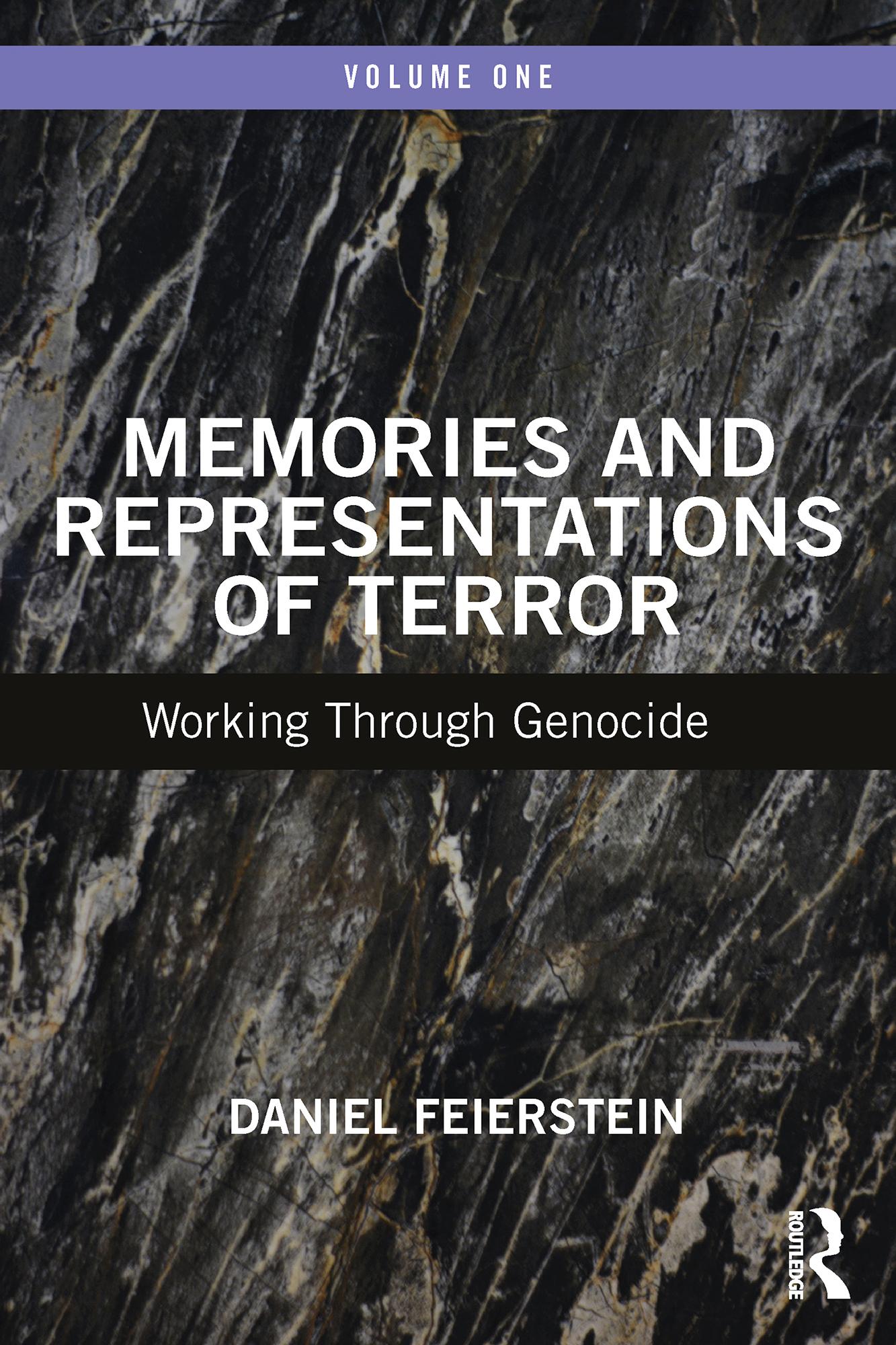
Memories and Representations of Terror: Working Through Genocide explores how memories and representations shape our understanding of historical events, particularly the ways in which societies create narratives about genocide and its aftermath, using Argentina’s last military dictatorship (1976–1983) and its contested legacy as a case study.
Feierstein examines how memories and representations of genocide are the terrain in which both the strategic objectives of genocide and the possibilities of challenging those objectives are contested. These memories and representations provide the foundation upon which critical judgments about the past are constructed and offer the potential for assuming responsibility and working through the consequences of genocide. This book proposes that terror continues to hijack the actions and identities of surviving societies via a process of the construction of memories and social representations of the lived experience in a final stage of genocide Feierstein terms "symbolic enactment". In doing so, Feierstein examines the contributions of various disciplines to comprehending memory processes and social representations. It covers a range of topics, from the nature of memory based on the neuroscientific discoveries of the last half-century to psychoanalytic theories on the functioning of the mind, including the role of psychic defense mechanisms, the unconscious mind, collective pacts of denial and different forms of desensitization. It also explores historiographical debates between forms of history and forms of memory, as well as sociological contributions to the analysis of social frames of memory, cultural memory, generational transmission and related issues.
The first volume of a three-volume work that aims to identify and evaluate the various consequences of genocidal social practices and the possibility of healing the scars left on individuals’ subjectivities and the social fabric by genocide. This book is essential reading for students and academics in the humanities and social sciences with an interest in genocide, collective memory and identity.
Pay easily by card, Klarna, Apple Pay or Google Pay. Not happy? You always have a 14-day money-back guarantee. Read more in our terms. If you have any questions, email us at hello@memmo.org.
Memmo makes studying easier – wherever you are in the world. We bring your course books and smart study tools together in one place: summaries, quizzes, podcasts and flashcards. Plus Ted, your study buddy who answers anything you wonder. Over 50,000 students already study here – built to help you learn faster and stress less.