
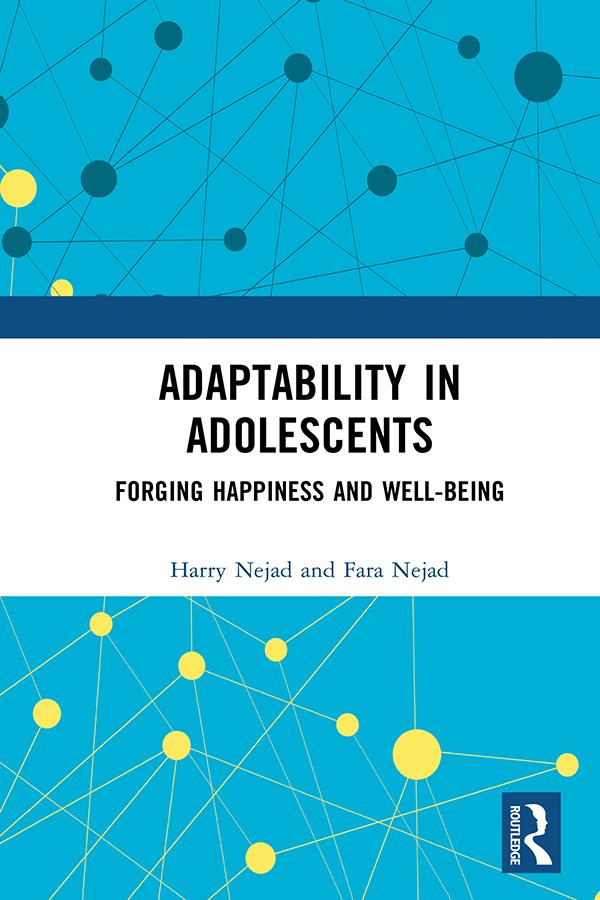
This book discusses a newly developed concept of adaptability capacity and development as an extension of Charles Darwin’s work on adaptability. It looks at how the human mind uses adaptability resources to deal with life-changing, challenging, and varying circumstances and conditions. The volume presents an integrative process model that assesses the roles of socio-demographic and ability covariates, personality, and other dispositional presage factors in predicting psychological well-being outcomes, such as life satisfaction, happiness, and self-esteem. While exploring the concept of adaptability capacity, the volume focuses on making children and adolescents mentally, emotionally, and behaviorally adaptable. It discusses general and domain-specific constructs relevant to phenomena such as self-regulation, resilience, buoyancy, and coping mechanisms. The book focuses on the development and utilization of treatments to assist individuals in becoming positively adaptable and achieve a higher degree of positive well-being and self-actualization.
An important contribution, this book will be of interest to students, researchers and teachers of psychology, educational psychology, and social work. It will also be helpful for academicians, mental health professionals, social workers, psychiatrists, counsellors, and those working in related areas.
Pay easily by card, Klarna, Apple Pay or Google Pay. Not happy? You always have a 14-day money-back guarantee. Read more in our terms. If you have any questions, email us at hello@memmo.org.
Memmo makes studying easier – wherever you are in the world. We bring your course books and smart study tools together in one place: summaries, quizzes, podcasts and flashcards. Plus Ted, your study buddy who answers anything you wonder. Over 50,000 students already study here – built to help you learn faster and stress less.