
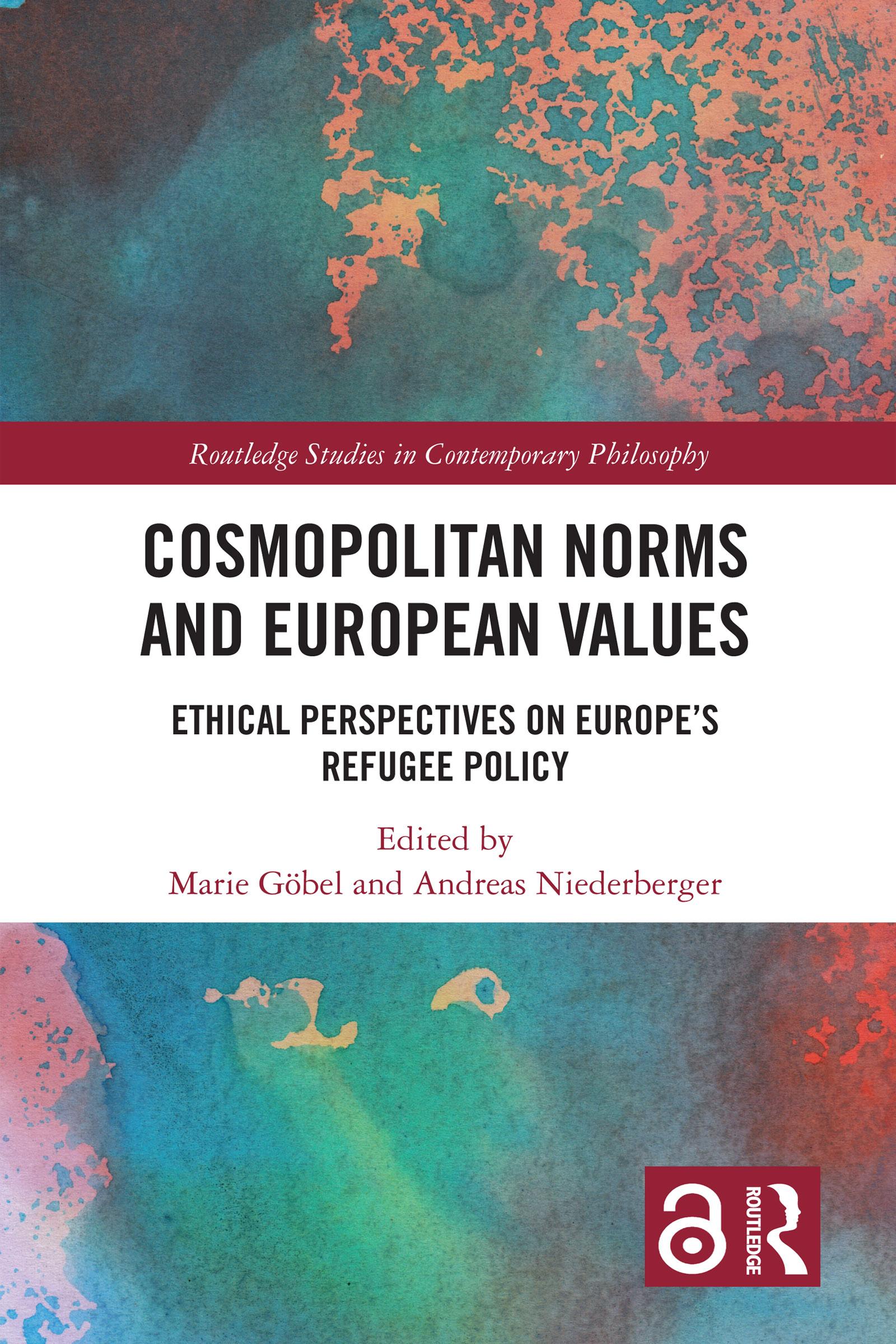
This volume offers a systematic philosophical analysis of the normative challenges facing European refugee policy, focusing on whether the response to it can be based on European values. By considering the refugee policy through the lens of European values, cosmopolitan norms and universal human rights, the contributions expose the weaknesses and limitations of existing regulations and make proposals on how to improve them.
The EU is often seen as a cosmopolitan project. Europe is supposed to be a community of states that aspires to be guided by cosmopolitan norms. However, the idea of a cosmopolitan Europe has never been unanimously shared, and in recent years, it has come under increasing scrutiny, particularly with regard to the EU’s refugee policy. The guiding idea of this book is that a deeper philosophical understanding of the normative issues at stake can foster greater conceptual clarity and enrich political debates on the future of European refugee policy. The first part of the book revolves around the question of whether the rise in refugee numbers over the past decade has led to a crisis in the EU and, if so, how this crisis relates to or impacts European values. The second part traces the history of the discourse on “European values” and examines from a philosophical perspective how we can plausibly understand these values in terms of their moral grammar, their normative content and their implications for the behaviour of the EU and its member states. Finally, the third part puts forth recommendations for a feasible and normatively more compelling European refugee policy based on human rights, human dignity, justice and democratic self-determination as the decisive normative requirements.
Cosmopolitan Norms and European Values: Ethical Perspectives on Europe’s Refugee Policy will be of interest to researchers and advanced students working in ethics, political philosophy, political science, social sciences and law.
The Open Access version of this book, available at www.taylorfrancis.com, has been made available under a Creative Commons Attribution-Non Commercial-No Derivatives 4.0 license.
Pay easily by card, Klarna, Apple Pay or Google Pay. Not happy? You always have a 14-day money-back guarantee. Read more in our terms. If you have any questions, email us at hello@memmo.org.
Memmo makes studying easier – wherever you are in the world. We bring your course books and smart study tools together in one place: summaries, quizzes, podcasts and flashcards. Plus Ted, your study buddy who answers anything you wonder. Over 50,000 students already study here – built to help you learn faster and stress less.