
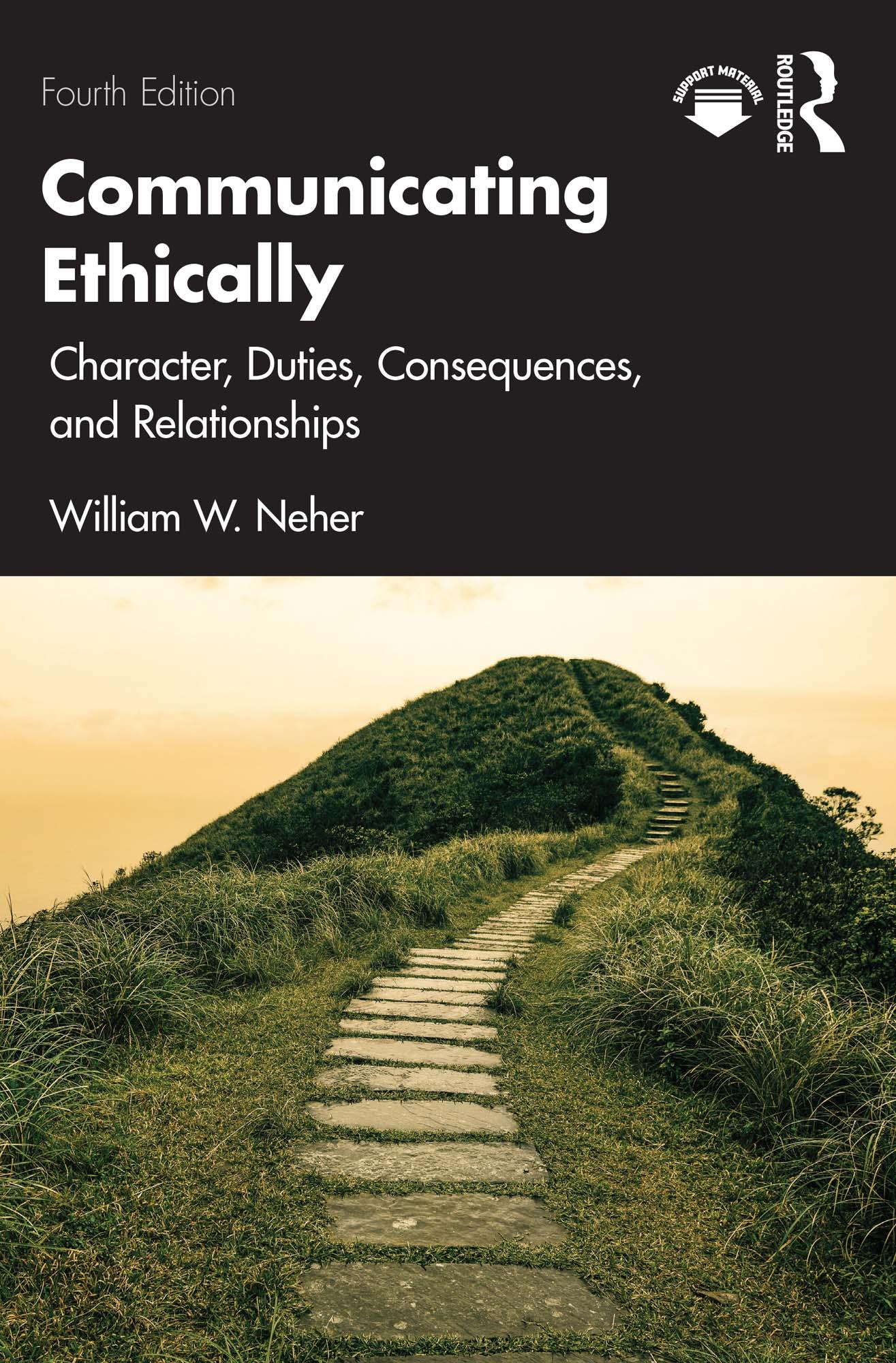
This thoroughly updated fourth edition provides a broad introduction to the major theoretical perspectives on the ethics of communication. It brings together classical and modern theories of ethical philosophy to address issues at play in specific careers and domains throughout the field.
By incorporating a simple framework for ethical reasoning, readers are able to develop their own understanding of various criteria for making ethical judgments. The book applies ethical theories, such as virtue and dialogical ethics, to interpersonal, organizational, political, social media, and digital communication contexts. This edition contains expanded coverage of contemporary and non-Western issues and theories. This includes the Black Lives Matter and #MeToo movements, "fake news", new technologies such as "Deepfake" videos, Confucian ethics, and Igbo ethics. It also includes a new chapter on the ethics of communicating scientific and medical risks.
This book serves as a core textbook for undergraduate courses in Communication and Media Ethics and can also be used as a supplemental resource for field-specific courses in Strategic Communication, Interpersonal Communication, and Public Relations.
Online resources for instructors include sample syllabi, sample assignments, and a test bank for multiple choice and essay questions. They are available at www.routledge.com/9781032507798.
Pay easily by card, Klarna, Apple Pay or Google Pay. Not happy? You always have a 14-day money-back guarantee. Read more in our terms. If you have any questions, email us at hello@memmo.org.
Memmo makes studying easier – wherever you are in the world. We bring your course books and smart study tools together in one place: summaries, quizzes, podcasts and flashcards. Plus Ted, your study buddy who answers anything you wonder. Over 75,000 students already study here – built to help you learn faster and stress less.