
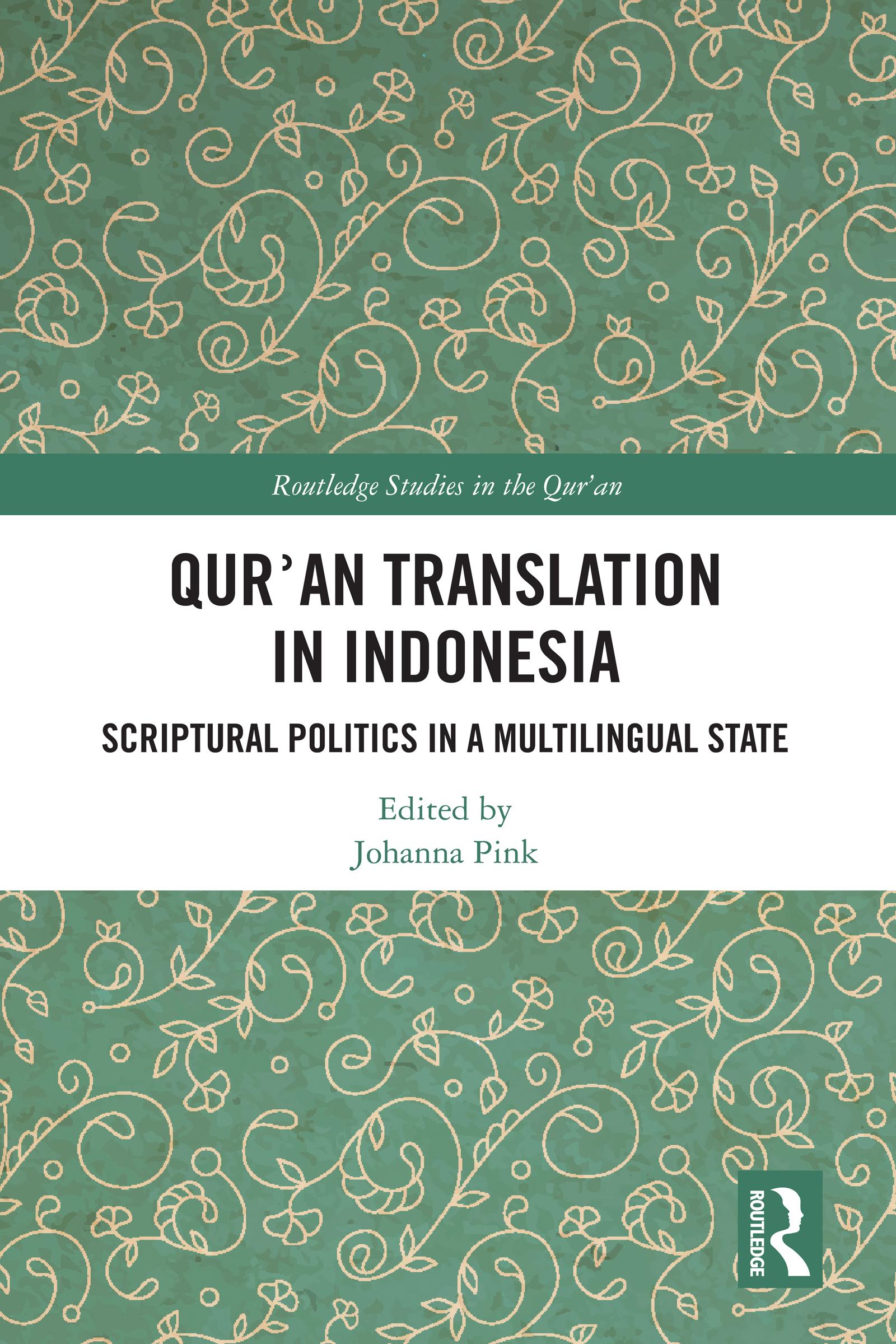
This book provides a comprehensive survey of Qur’an translation in Indonesia – the most populous Muslim-majority country in the world with a highly diverse, multilingual society.
Delving into the linguistic and political dimensions of this field, the contributors – many of whom are Indonesian scholars – employ a wide range of historical, socio-cultural, linguistic and exegetical approaches to offer fresh insights. In their contributions, the negotiation of authority between state and of non-state actors is shown to be a constant theme, from the pre-print era through to the colonial and postcolonial periods. Religious organizations, traditional institutions of scholarship and Wahhabi-Salafi groups struggle over the meaning of the Qur’an while the Ministry of Religious Affairs publishes its own Qur’an translations into many of the country’s languages. The contributors also explore the influential role of the Ahmadiyya movement in shaping Qur’an translation in Indonesia. Moreover, they examine the specific challenges that translators face when rendering the Qur’an in languages with structures, histories and cultural contexts that are vastly different from Arabic.
Opening up the work of Indonesian scholars to a wider audience, this book will appeal to anyone interested in Qur’anic studies and Islam in the Southeast Asia region.
Pay easily by card, Klarna, Apple Pay or Google Pay. Not happy? You always have a 14-day money-back guarantee. Read more in our terms. If you have any questions, email us at hello@memmo.org.
Memmo makes studying easier – wherever you are in the world. We bring your course books and smart study tools together in one place: summaries, quizzes, podcasts and flashcards. Plus Ted, your study buddy who answers anything you wonder. Over 50,000 students already study here – built to help you learn faster and stress less.