
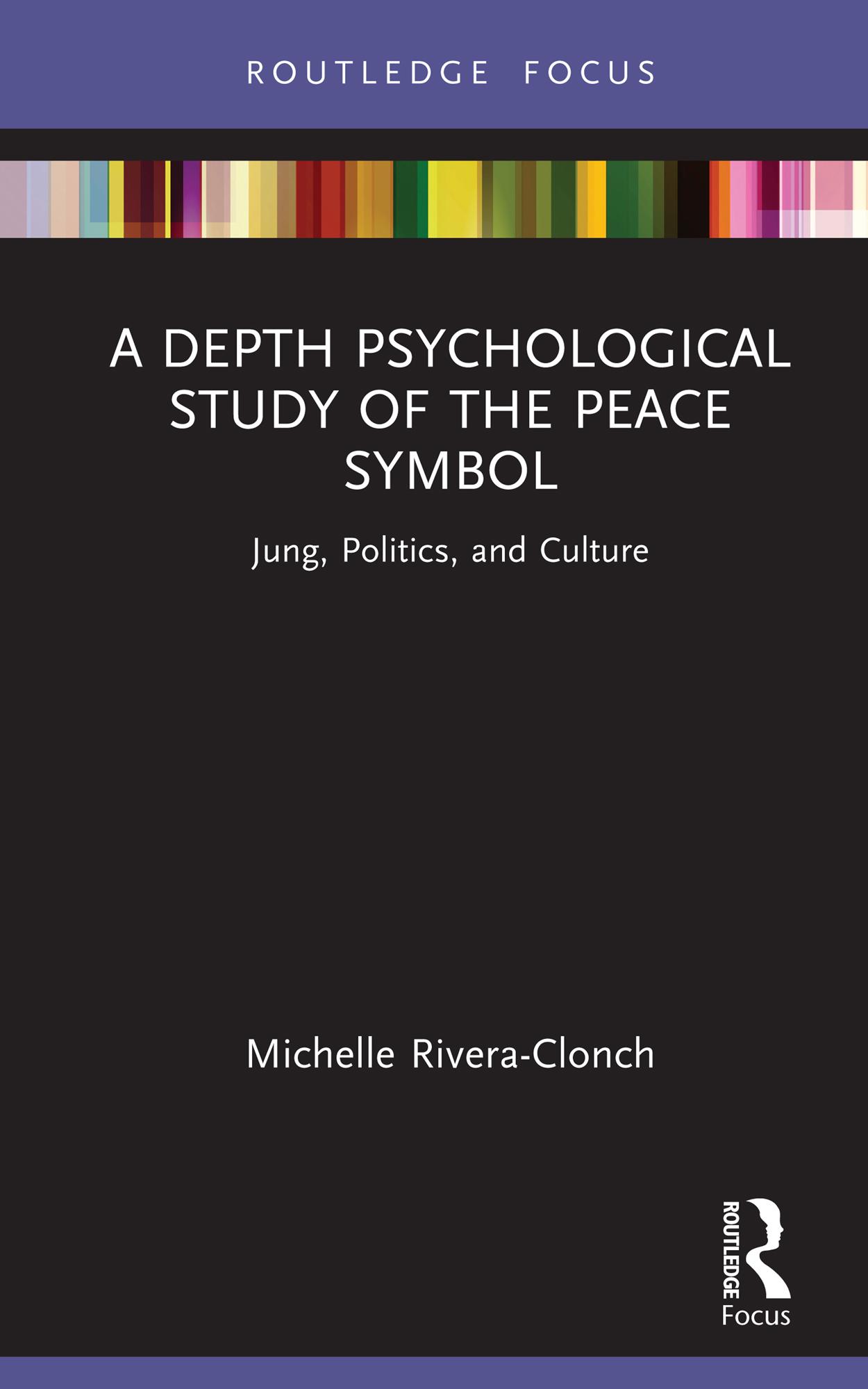
This engaging new book uncovers the cultural context behind the peace symbol’s emergence, its growing significance in the 1960s, and its ongoing presence in today’s worldwide grassroots and nonviolent social action protests.
Since its debut in 1958, the peace symbol has become a ubiquitous presence in broadcasted images of protest and resistance, yet most citizens are unaware of the symbol’s history or psychological evolution. It is a unique modern symbol in that it is at once an omnipresent and yet entirely unknown entity. This noteworthy text engages readers in fresh and thought-provoking ways around the interdependent relationships of peace and war, recognition and secrets, symbol and chaos, and action and inaction to name a few. In this book, Rivera-Clonch brings a depth psychological analysis to Post-World War II’s escalating nuclear tensions and rhetoric and links it to today’s increasing consciousness around social injustices and nonviolent activism. This is a timely and relevant interdisciplinary case study exploring the peace symbol through the dimensions of cultural secrets and psychological shadow, nuclearized storytelling and symbology, and grassroots nonviolent social action.
A Depth Psychological Study of the Peace Symbol will be of interest to Jungian and depth psychologists, as well as students and scholars of peace studies and psychology.
Pay easily by card, Klarna, Apple Pay or Google Pay. Not happy? You always have a 14-day money-back guarantee. Read more in our terms. If you have any questions, email us at hello@memmo.org.
Memmo makes studying easier – wherever you are in the world. We bring your course books and smart study tools together in one place: summaries, quizzes, podcasts and flashcards. Plus Ted, your study buddy who answers anything you wonder. Over 50,000 students already study here – built to help you learn faster and stress less.