
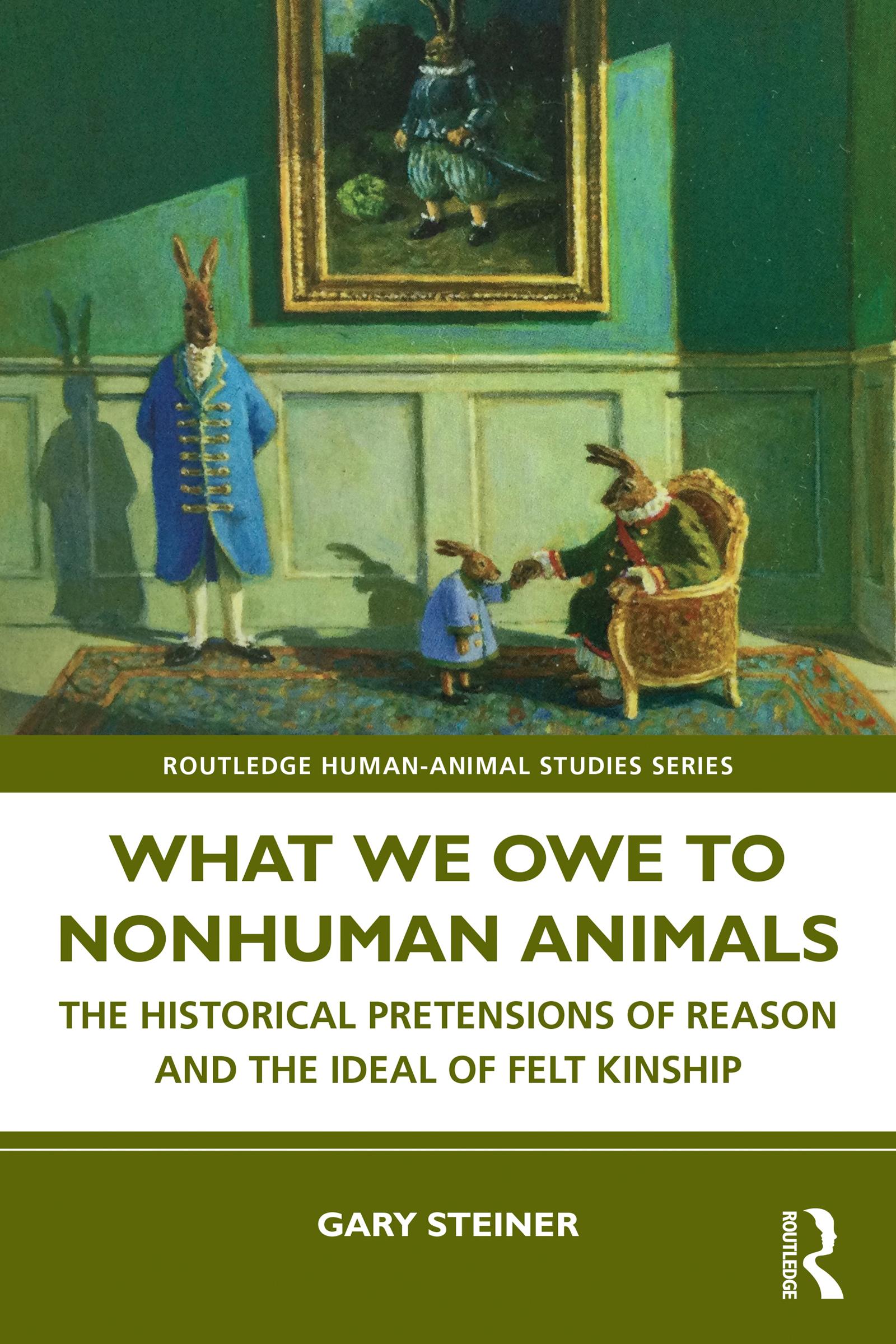
This book strongly challenges the Western philosophical tradition’s assertion that humans are superior to nonhuman animals. It makes a case for the full and direct moral status of nonhuman animals.
The book provides the basis for a radical critique of the entire trajectory of animal studies over the past fifteen years. The key idea explored is that of ‘felt kinship’—a sense of shared fate with and obligations to all sentient life. It will help to inspire some deep rethinking on the part of leading exponents of animal studies. The book’s strong outlook is expressed through an appeal for radical humility on the side of humans rather than a constant reference to the ‘human-animal divide’. Historical figures examined in depth include Aristotle, Seneca, and Kant; contemporary figures examined include Christine Korsgaard and Martha Nussbaum. This book presents an account according to which the tradition has not proceeded on the basis of impartial motivations at all, but instead has made a set of pointedly self-serving assumptions about the proper criteria for assessing moral worth.
Readers of this book will gain exposure to a wide variety of thinkers in the Western philosophical tradition, historical as well as contemporary. This book is suitable for professionals working in nonhuman animal studies, students, advanced undergraduates, and practitioners working in the fields of philosophy, environmental studies, law, literature, anthropology, and related fields.
Pay easily by card, Klarna, Apple Pay or Google Pay. Not happy? You always have a 14-day money-back guarantee. Read more in our terms. If you have any questions, email us at hello@memmo.org.
Memmo makes studying easier – wherever you are in the world. We bring your course books and smart study tools together in one place: summaries, quizzes, podcasts and flashcards. Plus Ted, your study buddy who answers anything you wonder. Over 50,000 students already study here – built to help you learn faster and stress less.