
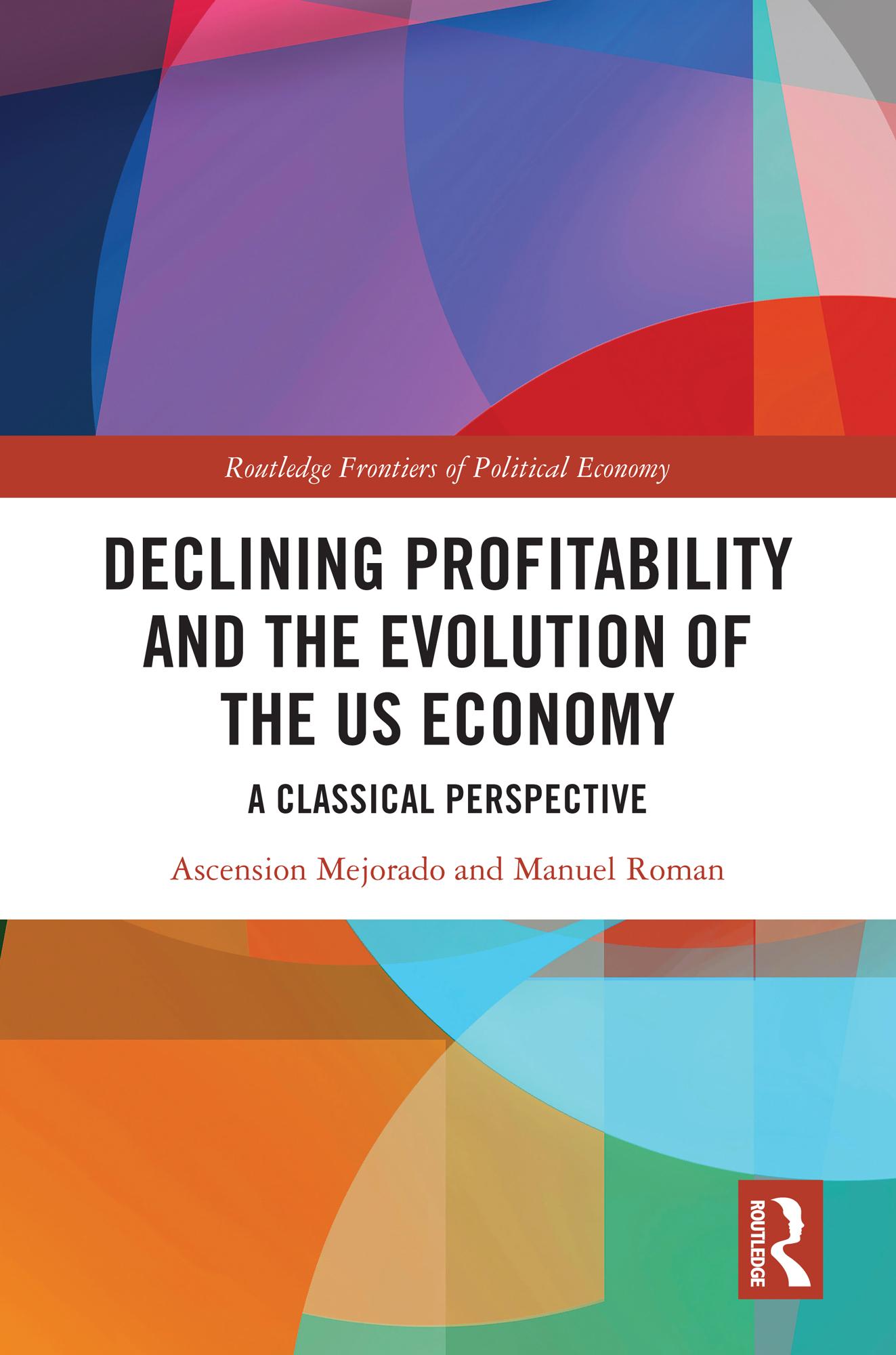
The 1970s were a pivotal decade for the US economy: deindustrialization broke the power of the labor unions and made possible the redistribution of income in favor of corporate profits; globalization and offshore investments opened alternatives to domestic nonfinancial capital accumulation; domestic productivity growth declined; and labor-saving technology empowered superstar corporations to rapidly gain market share. This book argues that the persistent fall in profitability, leading to the stagflation crisis, was a direct result of the transition from the Fordist phase of capital accumulation, based on large-scale manufacturing, to the neoliberal phase and the rising power of finance. Neoliberalism restored the power of rentiers but not the profit rates of nonfinancial corporations. Falling accumulation rates weakened the growth capacity of nonfinancial corporate firms and secular stagnation became the norm. Neo-Keynesian economists, Larry Summers and Paul Krugman, explained the persistence of secular stagnation with arguments borrowed from Alvin Hansen in the 1930s, such as the declining birth rate or the falling relative prices of investment goods, hence a shortfall of demand. In the Classical paradigm, profitability drives capital accumulation and falling profitability slows down growth. As the accumulation rate declined and the capacity growth diminished, breakdowns in supply links, due to the COVID-19 pandemic, prevented large infusions of purchasing power to find matching levels of supply, hence the stagflation crisis returned. The book will be a great asset to researchers and scholars interested in the development of Classical Political Economy concerning issues related to inflation, stagnation, growing inequality, and the next phase of neoliberalism.
Pages: 310
Category: Ekonomi & Utveckling
e-ISBN: 9781000956368
Shipping weight: 1.2 kg
Ships in: 1-2 days
Pay easily by card, Klarna, Apple Pay or Google Pay. Not happy? You always have a 14-day money-back guarantee. Read more in our terms. If you have any questions, email us at hello@memmo.org.
Memmo makes studying easier – wherever you are in the world. We bring your course books and smart study tools together in one place: summaries, quizzes, podcasts and flashcards. Plus Ted, your study buddy who answers anything you wonder. Over 50,000 students already study here – built to help you learn faster and stress less.
You might also like
Buy the book0