
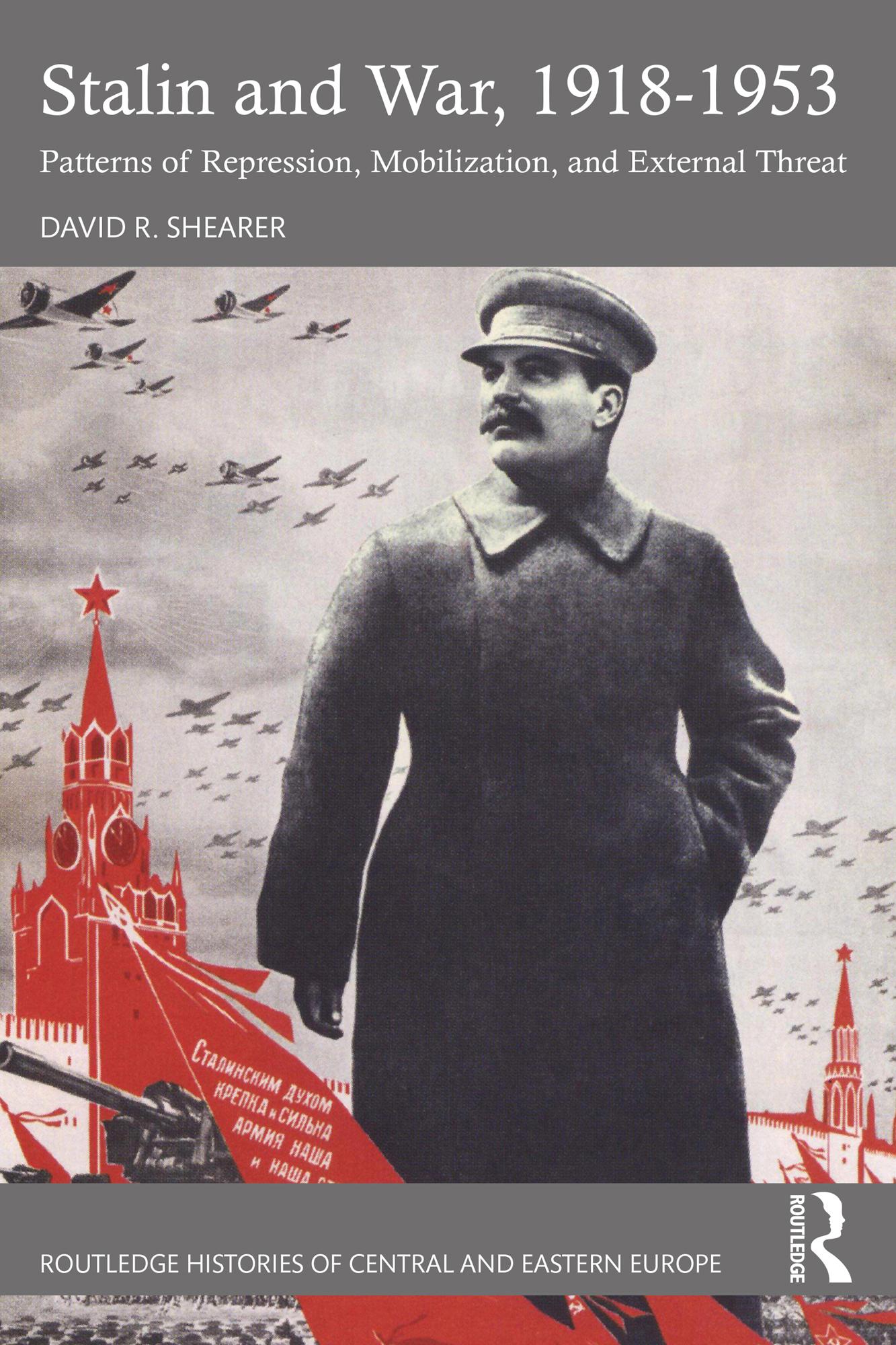
Stalin and War, 1918-1953 is the first book to examine the patterns of radicalized internal violence that characterized the Stalinist regime across the whole of the dictator’s rule, and it is one of the only works to connect patterns of internal violence to the dictator’s perceptions of war and foreign threat.
Discussion focuses on the crisis years 1928-1932, 1936-1939, the Great Fatherland War, and the last war crisis period, 1947-1953. Violent repressions under Stalin were cyclical. They peaked and ebbed but, in each case, they were linked to Stalin’s expectation of war and invasion, to his perceived need for urgent internal mobilization, and to intense foreign policy activity. Stalin’s behavior in each of these perceived war crises followed a pattern established during the dictator's experience as a military commander in the Russian revolutionary wars, and especially during the Polish war in 1919 and 1920. Together, these chapters trace a consistent and interconnected logic of war and repression throughout Stalin’s political life.
This book will be of interest to professional scholars of Soviet history, twentieth-century history, and World War II history, and it is approachable enough to be appreciated by general readers.
Pay easily by card, Klarna, Apple Pay or Google Pay. Not happy? You always have a 14-day money-back guarantee. Read more in our terms. If you have any questions, email us at hello@memmo.org.
Memmo makes studying easier – wherever you are in the world. We bring your course books and smart study tools together in one place: summaries, quizzes, podcasts and flashcards. Plus Ted, your study buddy who answers anything you wonder. Over 50,000 students already study here – built to help you learn faster and stress less.